The first National Industrial and Educational Exhibition—Provincial Opening of a Mission Station
AFTER riding all night on the train from Shanghai, it was my pleasure, one bright, warm morning in June, to find myself in Hsia Gwan, which is the river port of Nanking. I was accompanied by Brother R. A. Caldwell, from Manila; and together we started out to see the sights of this ancient city, which was once the stronghold of the Chinese nation under the first emperor of the Ming dynasty, who reigned from A. D. 1368 to 1399.
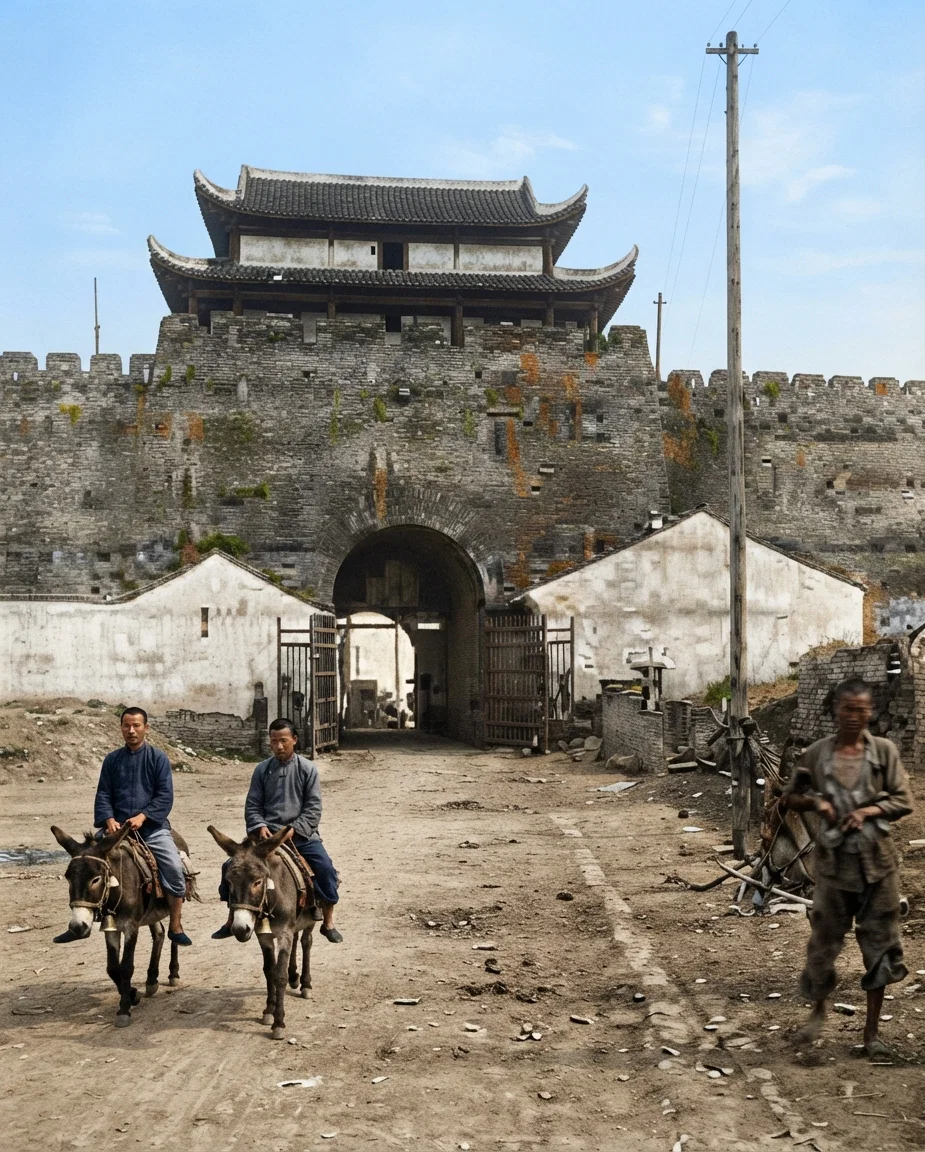
From the moment we entered the north gate, where the wall towers above for about fifty feet, we realized that we were in a large city. The walled city itself is twenty-five miles in circumference, and is in a very good state of preservation, even to the massive iron gates, which are closed every night, in much the same way as they were hundreds of years ago, when the numerous civil wars made it necessary for every city to be able to protect its inhabitants in the event of attack or siege.
One of the first things we noticed was the presence of many little donkeys, which are patient little burden-bearers of both men and freight. The constant little tinkle-tinkle of the bells on the donkeys’ necks gives a quiet pastoral air to the place which was quite refreshing after leaving the crowded, noisy streets of Shanghai.
However, it was a laughable sight to see the little beasts carrying men whose feet almost scraped the ground as they rode along. Then again we would see a big load of wood or rice straw walking along the street with no motive power visible to the eye except four small hoofs at the bottom.
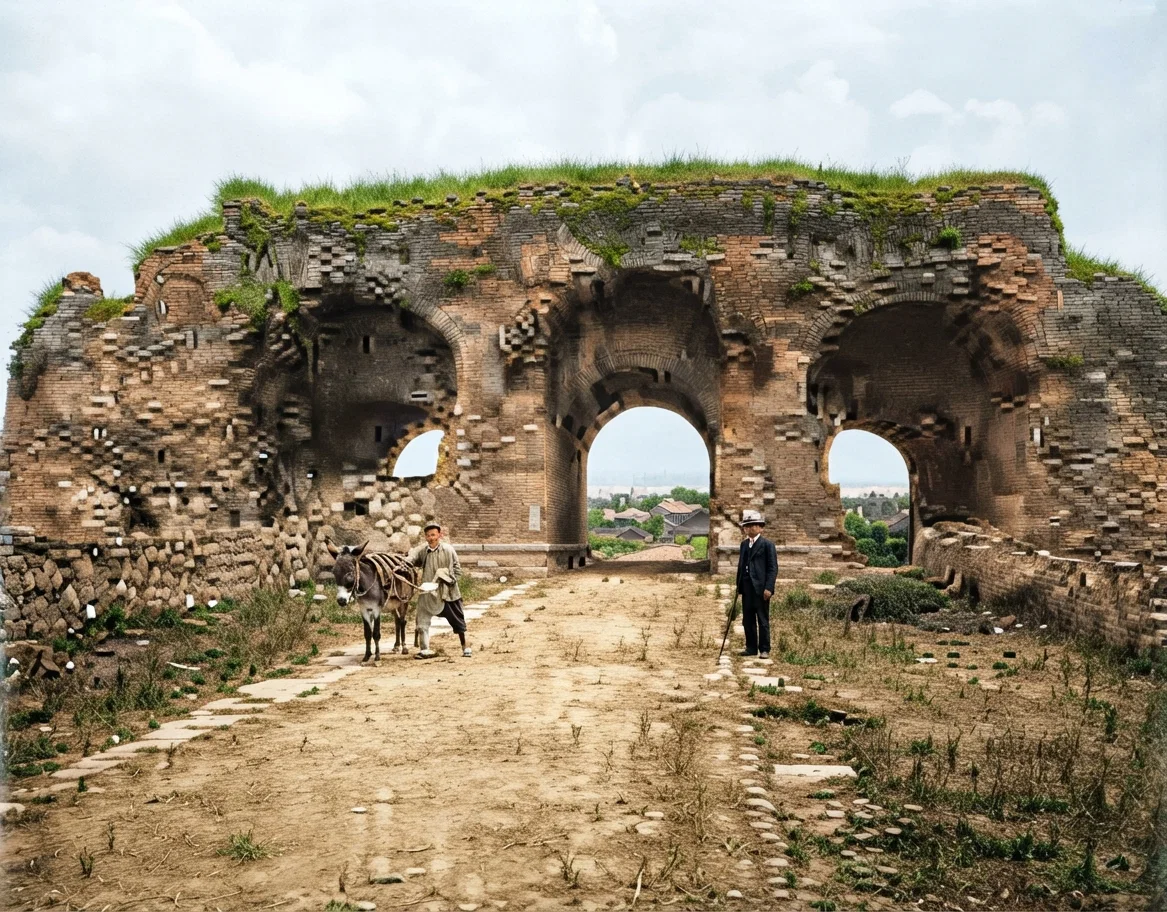
Inside the city are acres and acres of ruins,—old temples, pagodas, arches, and monuments of every description. I call it the relic hunter’s paradise, and would like to spend a month there studying the construction and architecture of these old places, as the size and extent of them clearly indicate the immense amount of labor and material it took to construct them.
One of the old arches in the city of Nanking, very picturesque in its partial decay, with the green grass and moss growing at the top. Brother Allum stands at the right.
However, our time was limited to two or three days, so we went direct to find our mission station, which was only opened a few weeks before.
Here we found that Brother Pilquist and family and Brother F. A. Allum, with their native colporteurs, are doing a splendid work. Indeed, we all feel that it was in the providence of God that the high waters in the rivers kept Brother Allum from going to Szechwan in May as he had planned; for he was then sent to Nanking; and the way he is conducting the work, and the success that is attending their efforts, and the record-breaking sales of literature made, lead us to believe that this summer’s work at Nanking will accomplish more than any previous effort in China for such a short time. Brother Allum is himself an excellent canvasser, having made some record sales in Australia, and having a fine command of the Chinese language, and being of a sunny, genial disposition that the Chinese people love.
The north gate of the city of Nanking, the entrance from Hsia Gwan. The wall is very high and wide at this point. Two men at the left are riding donkey-back.
He has carefully studied the field, and prayerfully, systematically sent his men out, in a way that marked success has attended their every effort.
They have sold, in about three weeks, 2,600 papers, and are just now commencing to sell our Nanking special number, of which they have ordered 10,000, and without doubt will sell them all.
Each paper that goes out is read by at least ten persons, and each paper has an invitation stamped on the front page, inviting the reader to our chapel, where interesting meetings are held every night.
Already the fruit of their efforts is appearing, and every day Brother Allum is called upon to give Bible readings to interested parties who have read the paper and desire more truth.
I might mention one case of a bright young man from Hangchau who asked for a reading on the Sabbath. Brother Allum studied with him, and gave him a Sabbath tract;
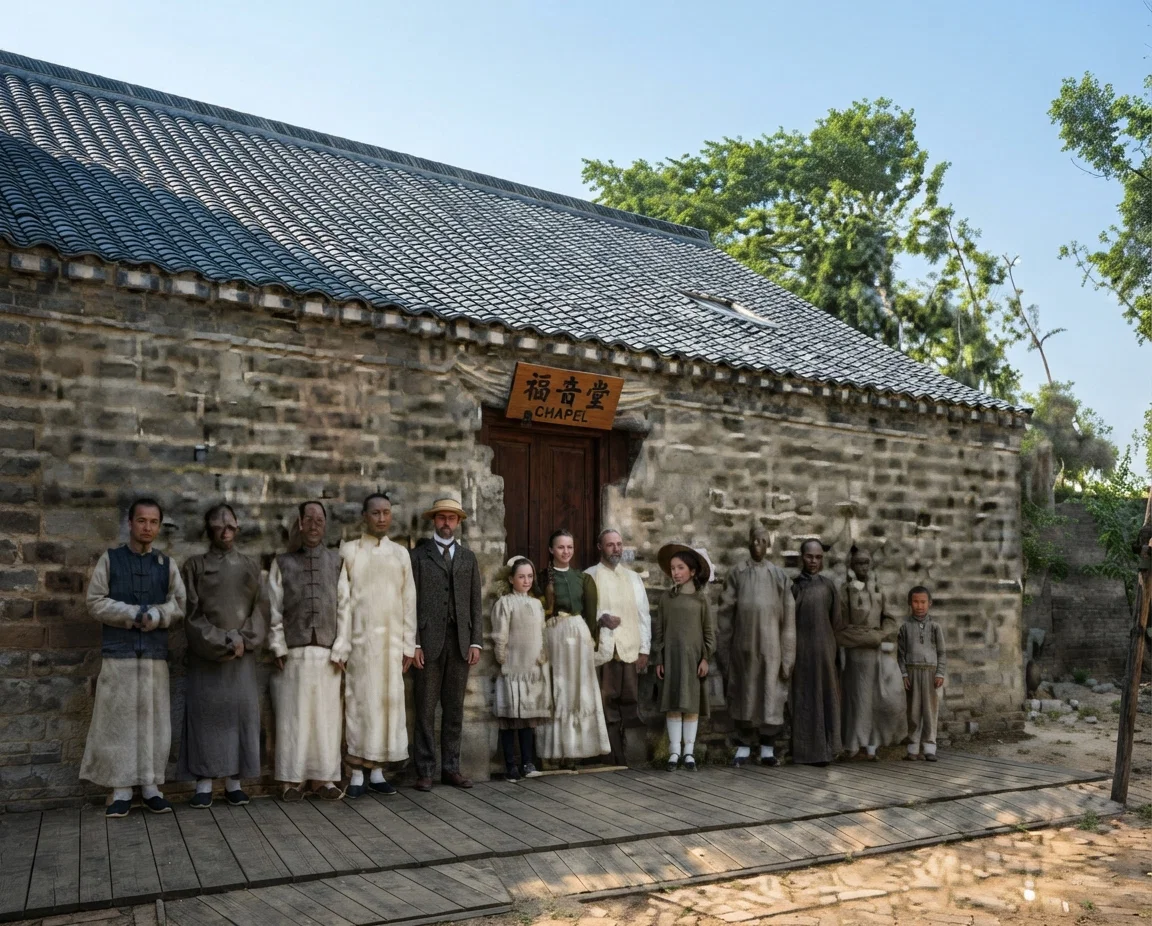
The front of our chapel in Nanking. Brother Pilquist and family in the center, Brother Allum at the left. Others are native colporteurs from Homan for this occasion. They are all hard workers and earnest Christians.
As he was able to read some English, when Brother Allum showed him that it is eight days in the English version, and the same in the original, he was astonished and grieved to think that the Christian translators had actually changed the wording of the Bible in order to bolster up their weak Sunday institution.
He was convinced of the truth, and took away a number of the Sabbath tracts, saying he would go back to Hangchau and tell this to his friends.
Thus is the seed sent to all parts of China, just as we hoped it would be, on account of the attendance at the exposition of the best educated men representing every province in the empire.