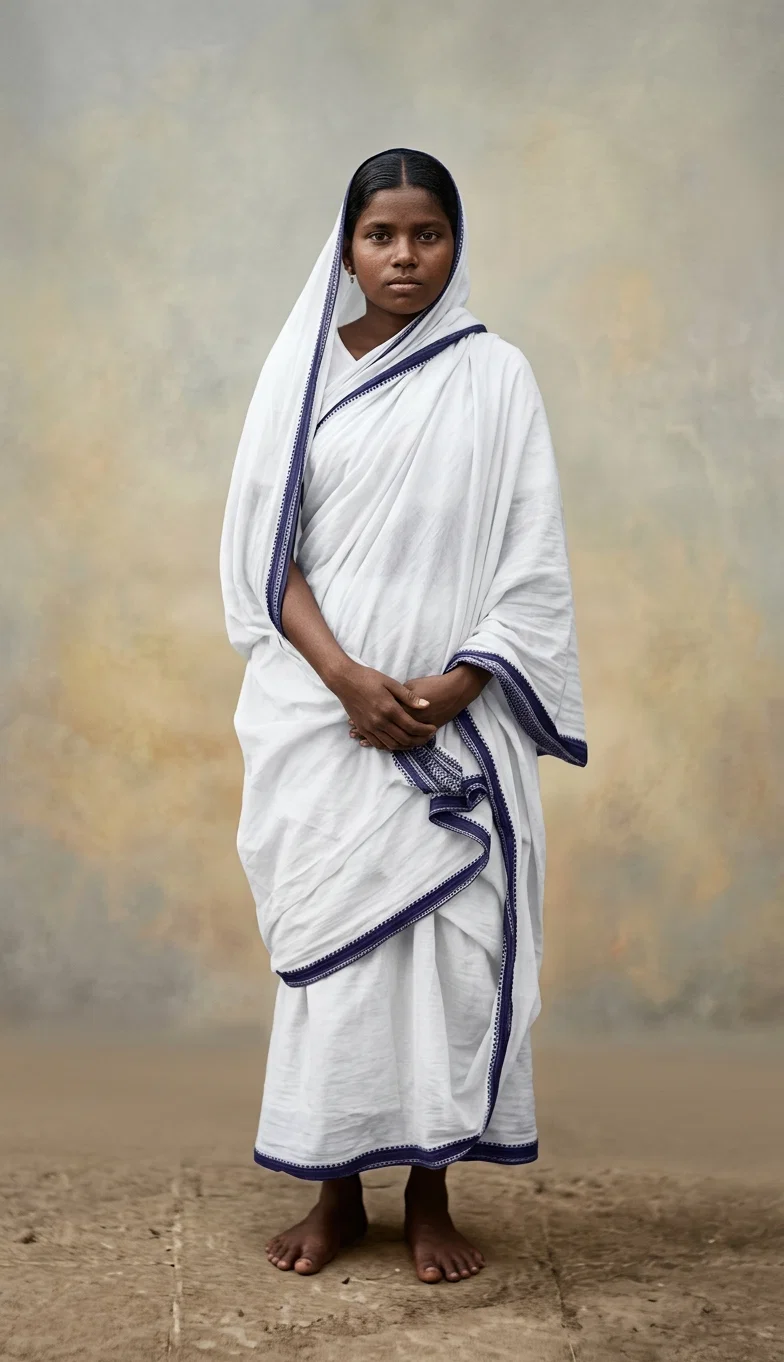
Only a Girl

9%

Review and Herald Publishing Association · Takoma Park Station, Washington, D. C. · May 28, 1914

FromReview and Herald, Vol. 91, No. 22.

Read the full edition

Only a Girl

EDITH BRUCE
“ONLY a girl!” One must live in an Oriental country to grasp fully the meaning of these words. More than that, he must know the people; he must care, really care; he must see in each and every soul one for whom the dear Saviour gave his precious life. Only then can he see and understand the true condition of the lives and needs of the people. It is so easy to drift along, to meet the throngs of people day by day without giving a thought as to how these people live or where they will spend their eternity. But there are some who think, some who care. Some are in the field giving their lives for these precious souls. Some are at home toiling nobly to send means to carry on the work. Would the toiling ones at home like to get a glimpse of the real conditions? O, I know so little of it myself compared to what there is to know!
If you would see something of it, just a glimpse, follow me in your mind as we go into this little mud hut. It has but one door, and that is rather low, so you must stoop in order to enter. In one dark corner of the room lies a woman on the ground (it would be defiling for her to lie on any excuse for a bed). She is sobbing and moaning. There is no one near to comfort her or to minister to her wants. Outside a crowd of neighbors have gathered. A man who we learn is the woman’s husband is saying something to them, and with contempt on their faces they turn away. We can catch only a sentence of what the man is saying. It is this, “Nothing has come; it is only a girl!”
We draw nearer to the sobbing woman. We see a little new life enfolded in her arms. We inquire the cause of her grief, and in broken tones she tells her sad story. She was the mother of two little daughters, but of no son. The husband had threatened that should another daughter be born to them, he would marry another wife; the little one in her arms was the third, and she knew her doom was sealed. Three daughters,—what a calamity! Why should such an affliction come to her? Had she not offered to the gods?—Yes, all these rites had been performed faithfully, but to no avail; and she, poor innocent creature! must now suffer more than tongue can tell; for, after all, human nature is the same the world over. We find the same feelings of love and hate, joy and sorrow. The Eastern mother loves her child as dearly in her way as the Western mother does hers; it is only the cruel custom of an idolatrous nation that has brought the people to this condition.
YOUNG WIDOWHOOD IN INDIA
The census returns for one year revealed that three hundred children were carried off by wolves and jackals from one city, and they all happened (?) to be girls. In 1894, at the sitting of the Opium Commission, Miss Greenfield , superintendent of the mission hospital for women at Ludhiana, said: “Fathers insisted on daughters’ being killed to avoid the expense of weddings.” Miss Carter, another medical missionary, said: “I know of one mother who has destroyed seven daughters.” I remember a case in Grand Rapids, Mich., a few years ago, of a little girl who was cruelly treated by her parents. The newspapers for days were full of the account, arrests were made, and great excitement prevailed. Recently in Manipur, a district of the United Provinces, a little Brahman girl of five years was found tied in a sack and thrown under some shrubs to die. Her little body was hacked and mutilated by a cruel knife, though life was not yet extinct. Her lifeblood had been offered as a sacrifice to the gods of her parents, and by their own hands. Nothing but the blood of a living human creature would satisfy this god and bring the blessing desired by the parents. Their prayer was that they might have a son,—the dearest treasure on earth to the Hindu’s heart,—and so this little daughter was offered a sacrifice upon the altar of superstition.
The police officer who happened to find the mutilated child, took her to a hospital, where she soon died. The parents may or may not receive punishment. The papers mentioned it in one brief paragraph, for after all she was nothing but a little native girl, and there are so many. Yes, there are many! In spite of infanticide, in spite of famine, pestilence, and plague that infest this land, there are thousands and tens of thousands of these little ones who know not the comfort of a home; who are without training, without education, without even proper food, yea, more than that, without love and affection, and above all, without the dear Saviour, who said, “Suffer little children to come unto me.” Our Father has said that not a sparrow falls to the ground without his notice. Does he know? Does he care? We know that he does, and that he wants us, his representatives, to help these people up from this life of sin.
Is the picture too dark? Do you want me to tell something pleasant? How I wish that I might, but I must tell the truth as I see and know it. I can say this, that the happiest time of an Indian woman’s life is her very early childhood, before she is old enough to realize how accursed she is in the sight of her fellow beings. For a few short years she is left to romp and play at her own sweet will. If insult or scorn is heaped upon her, she does not understand, or her young nature rebounds and it is soon forgotten. But suddenly, before she has reached her teens, she finds herself under a yoke of bondage either of wifehood or widowhood, and heavy burdens are placed upon her.
Yes, India is darkened. It needs light. It needs the penetrating light of the gospel. There is a mighty work to be done for the women. Only women can do this work.
Let us suppose we have seventeen women workers in India who can devote all their time to working for India’s women. Each would then have 8,470,588 women for whom to labor. Friends, can you grasp these figures? Do they mean anything to us? It meant something to our Saviour when he left all and died for them.