War Conditions in the Colonies

8%

Review and Herald Publishing Association · Takoma Park Station, Washington, D. C. · Feb 10, 1916

FromReview and Herald, Vol. 93, No. 8.

Read the full edition

War Conditions in the Colonies

J. C. ROGERS
I THINK few of our people can understand readily how severely mission work is affected by the great war. I am hearing of the great growing interest in the message in the territory of the actual warring nations. The reason for this is plain. People want to know its meaning, and turn to God's Word for light.
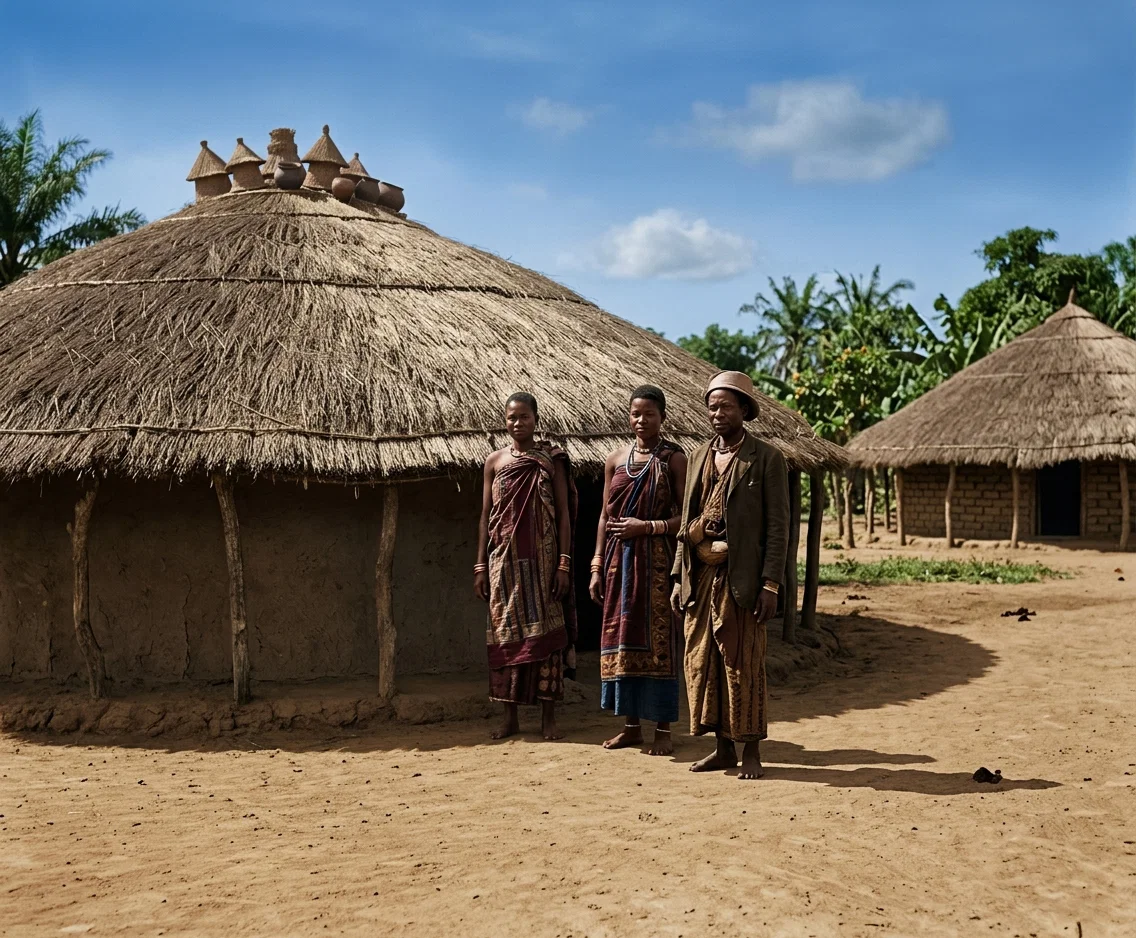
Photo by J. C. Rogers
CHIEF OF VILLAGE, IN BELGIAN KONGO,
AND HIS WIVES
Photo by J. C. Rogers CHIEF OF VILLAGE, IN BELGIAN KONGO, AND HIS WIVES
In the mission field, that is, the heathen field, the situation is reversed, and for various reasons. This is truly a world war, no colony or dependency being safe or at peace. I shall illustrate this fact by my own experiences in one of the most isolated dependencies anywhere to be found.
Northeast Rhodesia, a huge slice or block of Africa, has no railroad or steamboat line anywhere touching its border. It is no less than a month's travel from the nearest railway connections to its northern, central, or southern point. Yet not a corner of it is unaffected by the war. In the extreme north, where I have spent almost eighteen months, along the borders of the Belgian Kongo and of German East Africa, nothing but unrest exists. The attention of government officials is almost wholly given up to military affairs. The native gets attention only as he is required for government service of some kind, or in case he may be powerful enough to be feared politically. All villages must send able-bodied men as carriers for the troops (white and black), but on demand of local officials. For a force of one hundred white troops, no less than seven hundred native carriers are required. Six hundred native troops require about a thousand carriers and workmen, approximately two carriers for one soldier, including all classes of troops. That is, if ten thousand troops are operating in a certain district, it still means that thirty thousand men must be fed, clothed, and doctored as required. Thirty thousand to be provisioned means sixty thousand pounds of native flour daily, besides beans, peas, fish, meat, and salt used as relish to go with the flour which is made into porridge.
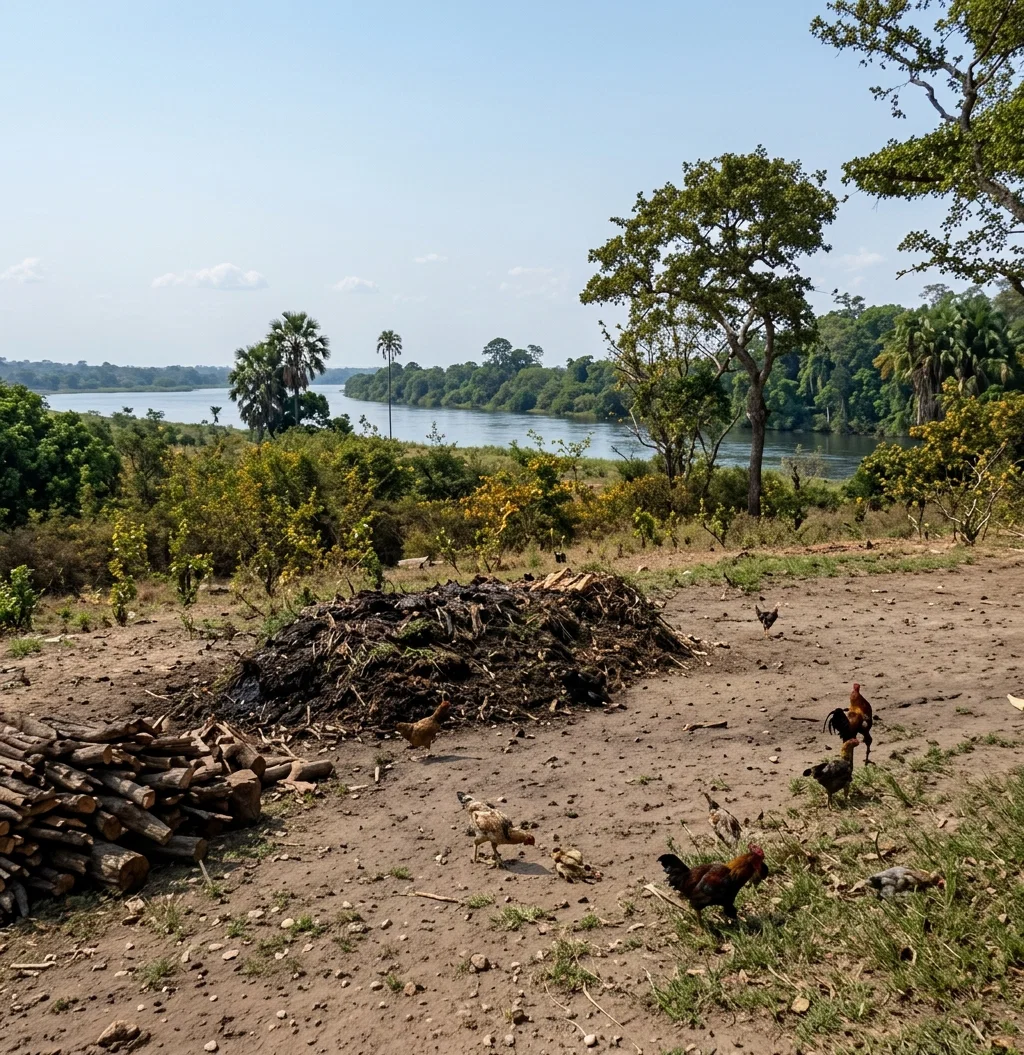
Photo by J. C. Rogers

LUAPULA RIVER (TAKEN FROM HOUSE
OF BELGIAN MANAGER)
Photo by J. C. Rogers LUAPULA RIVER (TAKEN FROM HOUSE OF BELGIAN MANAGER)
Thirty tons more or less to be ground, collected, and carried from one to three hundred miles each day, keeps all officials and nearly all the people, men, women, and children, busy with this provisioning of the troops.
Along the borders where military operations are active, all is agitation and expectation, unrest. This has been the condition along the Belgian border of the Kongo State, the British border of German East Africa, and I think along the borders and in many interior points of all colonies and dependencies in Africa.
Some of our people will be asking, Why have our missionaries not written about these conditions? The answer is, It has seemed best to say little regarding these conditions, as all outgoing matter is carefully censored. As I am now at the Capeand writing regarding conditions of three months ago up in the interior, no doubt the censor will let my report go through.
I have left the border because of military operations, and to accompany my wife to the sanitarium at Cape Town. She has recently been raised up by God's hand after the doctors gave her up. She is still very weak, but improving slowly. She is now able to walk about the building with the help of the nurses. Never having been sick before, it goes hard with her. But she is very patient, and longing to return to Central Africa.
Cape Town, South Africa.