The South American Union Conference

6%

Review and Herald Publishing Association · Takoma Park Station, Washington, D. C. · Jun 23, 1910

FromReview and Herald, Vol. 87, No. 25.

Read the full edition

The South American Union Conference

N. Z. TOWN
The second biennial session of the South American Union Conference was held, according to appointment, in the college at Entre Rios, Argentina, February 25 to March 12. The twenty-two delegates began to arrive several days before the appointed time, and at the opening meeting every field was represented except Ecuador, Elder W. W. Wheeler being detained at home by the serious illness of a lady for whom he and his wife were caring. Besides these there were eight delegates to represent the medical, educational, young people's, publishing, and canvassing departments of the work.
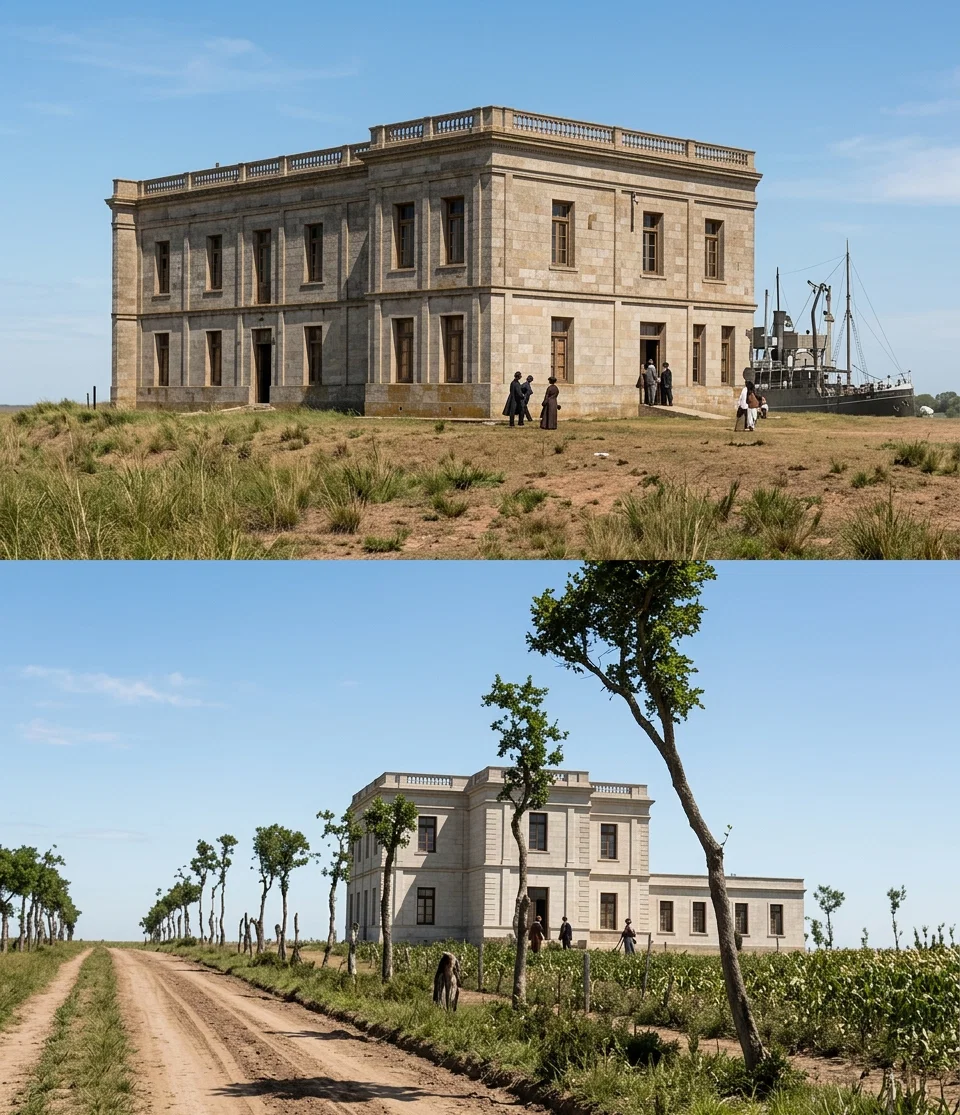
RIO DE LA PLATA SANITARIUM AND COLLEGE, ARGENTINA. THE UPPER BUILDING IS THE SANITARIUM
One of the interesting features at the beginning of the meeting was the visit of Brother F. G. Penzotti, the general agent, for Spanish-speaking South America, of the American Bible Society. He has spent thirty-three years in the Bible colporteur work in Central and South America, and has distributed Bibles in every republic in these two fields. The interesting talks he gave us on the Bible, and on the experiences he has had as Bible colporteur, were inspiring. The persecutions through which he has passed in some of the South American republics, especially in Peru, have done much toward bringing about a greater degree of religious freedom. At one time he was imprisoned eight months in Callao, Peru, for selling Bibles; he was finally released through the influence of the United States minister.
During the year 1909 the agents of the American Bible Society distributed over sixty thousand Bibles, Testaments, and Bible portions in the Spanish republics of South America, an increase of about fifteen thousand copies over the previous year. We thank God for this good work. At the close of the last talk given by Brother Penzotti, the brethren took up a collection for the Bible Society, which amounted to about sixty-four dollars, gold. He was very much surprised to see so large a collection from so few. Another collection was taken later, which raised the total to about one hundred dollars.
Owing to the illness of Brother G. E. Hartman, the union secretary, the president was unable to give as exact statistical reports of the work as he otherwise would; but the reports from the different fields showed that the work is onward in the South American Union. The state of Parana, Brazil, which had been organized into a new conference, was received into the union at this meeting, and Peru was changed from an unorganized to an organized mission field. The states of Rio and Espirito Santo were separated from the North Brazil Mission, to form a separate unorganized mission. The South American Union Conference now has five organized conferences, two organized mission fields, and six unorganized mission fields.
The next step in organization in this field will probably be to divide the union conference itself.
This was one of the five questions at this session of the conference. All the delegates, as well as the union conference president, felt that the time has come when Brazil should be organized into a separate union. With the present growth of the work, and so many different interests to look after, in a territory twice as large as the United States, and with traveling facilities very poor in many parts, it is impossible for one man to oversee all. It was therefore recommended that as soon as it can be arranged, probably next year, Brazil be organized into a union conference, and that the General Conference take into favorable consideration a further division of the remaining portion of the field. The general sentiment of the delegates was in favor of organizing Argentina, Uruguay, Paraguay, and Chile into another union conference, setting off Bolivia, Peru, and Ecuador into a union mission.
When Elder J. W. Westphal first became connected with the work in South America, before he learned the Spanish, I often translated for him from German to Spanish, and I enjoyed the good meetings we held. The second Sabbath of the union meeting I was glad of the privilege of standing beside him once more as translator while he gave a stirring talk on our duty to South America. The hearts of the brethren were touched as they saw the debt they owe to the dark lands south of the equator. At the close of the meeting a collection was taken for the Indian work on the west coast, which amounted to $535, Argentina paper.
One who had been connected with the work in this field almost from its beginningcould not but rejoice to see the progress that has been made. In October, 1899, Brother F. H. Westphal, two or three of the German Russian brethren, and the writer drove up to the spot on the open prairie where the Argentine school now stands, and there knelt down in the grass, asking the Lord to direct us in staking out our school plot, and in planning for the school enterprise. From the small beginning then made, the school has grown until last year the attendance reached 124.
The accompanying views show the new school building and the sanitarium near by. These two institutions now have property worth not less than $35,000 gold. The sanitarium is crowded to its utmost; every few days, for lack of room, people have to be turned away who would like to come for treatment. “The Lord hath done great things for us; whereof we are glad.”
When one of the delegates was taken ill, how glad we were to see stalwart young men, natives in nurses' uniform, come for him, and take him over to the sanitarium, where he could be properly cared for. Such an institution as this means much more to our brethren in South America than in the home land, where capable physicians are easy of access.
The publishing work, and the proper organization of the book work in the union, received careful attention. Several recommendations were passed, which, when carried out, will result in putting the book work in South America upon a solid basis. Brethren Max Trummer and T. H. Davis gave most encouraging reports of the work already done in their respective fields. These two brethren are “field” men in reality. During the week before the conference opened, they went into the city of Rosario, and spent some time canvassing together, in order to get points one from the other. In fifteen hours, working together, they took sixty orders for the Spanish edition of “Patriarchs and Prophets.” They returned to their fields from the conference determined to organize their forces well, and push the work as never before.
Another important action affecting the publishing work was the recommendation that the printing plants in Argentina and Chile be united. After Jan. 1, 1911, all Spanish printing in South America will be done in Argentina. This unites the two Spanish missionary papers. It is planned to bring out a thirty-two-page paper in magazine form. The new Spanish health journal, Salud y Vida, launched at the beginning of this year, is well received. It started off with an edition of 7,000. The editor of one of the leading dailies in Valparaiso has spoken very highly of this journal in his paper.
The last Sabbath of the meeting was a good day. At the close of the afternoon service Brother Luis Rojas, a native of Chile, Julio Ernst of Uruguay, and Ignacio Kalbermatten of Argentina, were ordained to the gospel ministry. Brethren Ernst and Kalbermatten are both of German-Swiss parentage. Brother F. W. Spies offered prayer in German, Brother J. V. Maas in Spanish, Elder J. W. Westphal gave the charge, and the writer the welcome. It was an impressive service. It was good to see these young men, natives of the country, added to the force of ministers in this needy field.
After having been connected with the cause in South America twelve years, and taking an active part in every general meeting during that time, it seemed rather strange to be present at a conference as a visitor. But I was glad to be present, even as such, and my heart was cheered as I listened to the reports of progress. The Lord has gone out before the workers in the South American Union, and the outlook never was brighter than now. The brethren all returned to their fields with renewed courage, and we expect to see good reports from them in the future.
Takoma Park, D. C.