The Alaskan Mission Field

8%

Review and Herald Publishing Association · Takoma Park Station, Washington, D. C. · Jul 21, 1910

FromReview and Herald, Vol. 87, No. 29.

Read the full edition

The Alaskan Mission Field

F. W. TEMPLE
In many ways Alaska is a hard field to work. In area it is about one fifth the size of the United States, with no railroads except a few stub lines that run out a short distance from important mining centers, but are of no real value to transportation in general. The slow inland methods of travel by pack-trains and dog-teams, and the transient population of all nationalities, combine to make conditions unfavorable for the establishment of a foundation for our work; nevertheless the good seed is being sown, and the Lord of the harvest knows what the results will be.
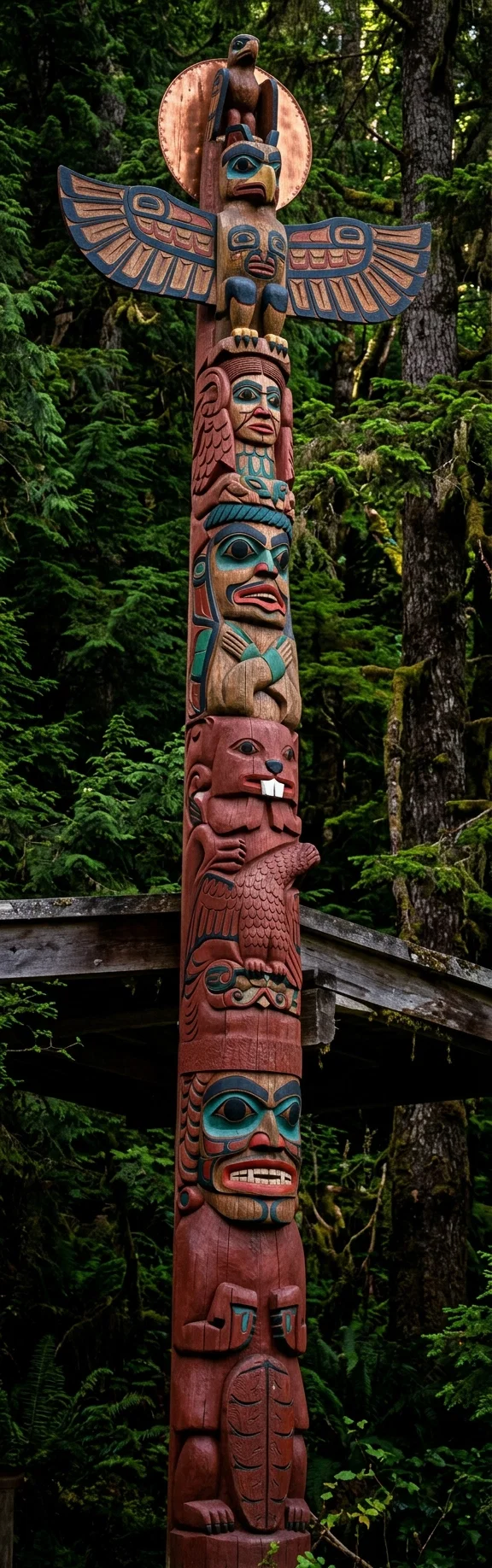
ONE OF ALASKA'S TOTEM-POLES
The chief industries of this territory are fishing and mining. As a rule the men who follow this life are a rough, hardy class; yet cold and indifferent as they often appear, within many a breast there beats a tender, kind heart, which can be warmed by the rays of light of present truth if reached in the right way. We have labored among the fishermen along the shores where they were mending their nets; we have talked with the people in their humble camps; we have shared our provisions with them, and they have in turn shared theirs with us. In the mines we have visited the bunk-houses, and have handed out tracts in the stamp-mills, where the roar of rock-crushers prohibits talking. We have climbed from stope to stope [a horizontal working of a mine, one above another, the face, or opening, of which presents the appearance of a flight of steps], and passed from tunnel to tunnel, down shafts and through cross-cuts, by candle-light, handing out tracts and laboring with the men. At one mine, in order to reach the men working in the upper cuts, I took an aerial flight over two thousand feet up the side of a mountain, in an ore-bucket suspended by a heavy cable several hundred feet above the ground. “Behold, I will send for many fishers, saith the Lord, and they shall fish them; and after will I send for many hunters, and they shall hunt them from every mountain, and from every hill, and out of the holes of the rocks.” Jer. 16:16.
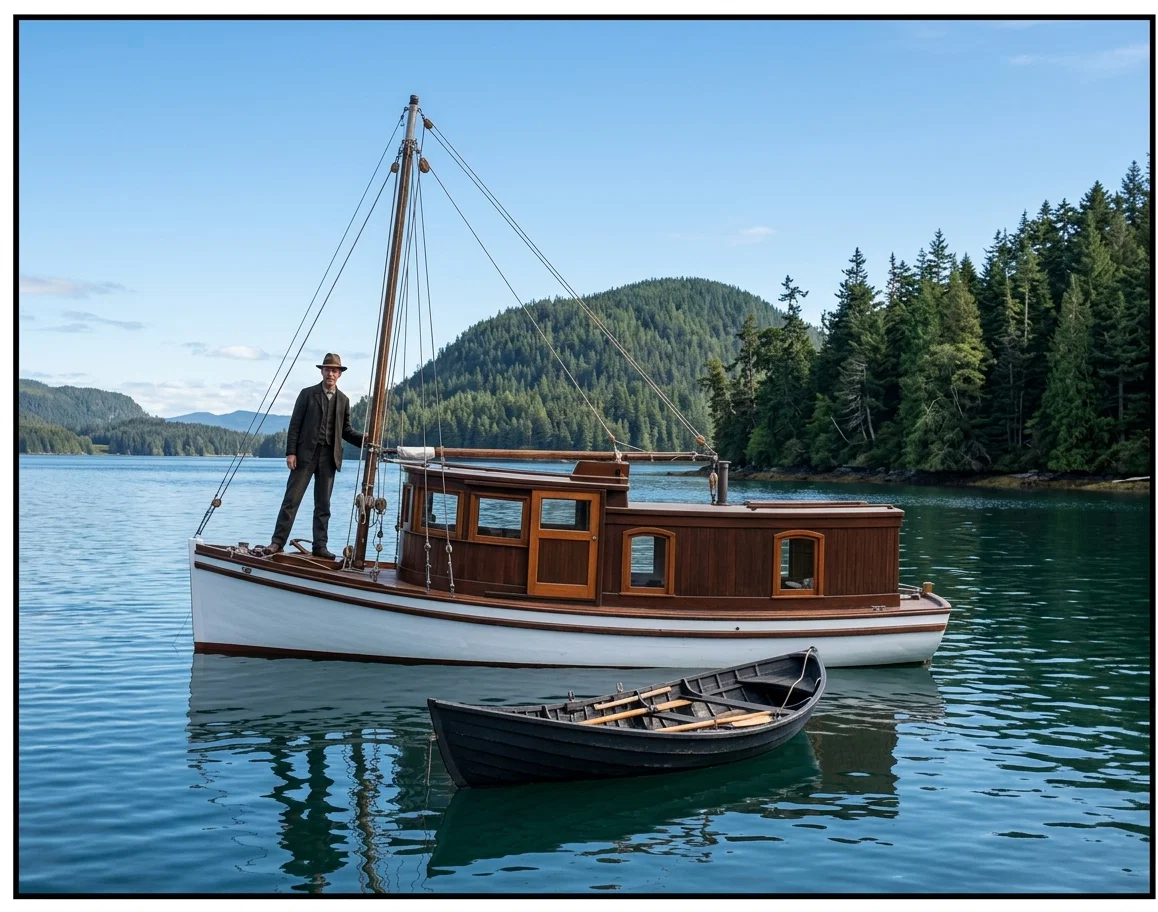
Last May Brother W. F. Furber and myself were asked by the North Pacific Union Conference to come to this field, with the understanding that we were to take up the canvassing and evangelistic missionary work. As all travel must be done by boat, and local transportation is very expensive, we soon saw the need of having a boat of our own, in which we could carry a supply of books, and visit the camps and stations when we chose. With the assistance of a kind brother here at Ketchikan we were able to purchase and equip the little launch “Evangel,” which appears in the picture. This shows us lifting anchor for a long run up Lynn Canal toward Skagway. Our launch is only twenty-four feet long over all, and is equipped with a two-cycle six-horsepower Gray gas engine. Our speed under normal conditions is about seven miles an hour. In this launch we carry two steamer trunks full of books, our typewriter and personal belongings, besides a stove, provisions, and bedding. For three months we slept ashore only two nights, making the boat our home and general headquarters. We suc-ceeded in selling a number of “Great Controversy” and “Daniel and the Revelation,” but the work was all new to us, and we had to learn by practical experience. ‘If the iron be blunt,’ says the wise man, ‘and he do not whet the edge, then must he put to more strength: but wisdom is profitable to direct.’ Eccl. 10:10. So with our work. We had to find in what condition the tools were, and nothing could show this better than the actual test. We had to put to more strength, then begin whetting the edges.
About the first thing we learned was that our boat was not large enough to carry the variety of books and papers needed to meet the demands of the field. We were constantly receiving calls for Bibles, but did not have a single copy to sell. There was a demand for small books for children, also for illustrated Bibles, but we could not fill the orders.
Our summer’s run among the islands of southern Alaska has proved profitable in many ways. While there are many hardships to encounter, I believe I can truly say that the worker is more than doubly repaid. The scenery of Alaska during the summer months is grand beyond description. We passed several glaciers, and traveled among floating icebergs. The glaciers at a distance show varying colors from a deep green to a pure white. These valleys of ice reach for miles back into the mountains, and are belted to their very edge with evergreens. Standing by the side of one of these rivers of ice, one can rest one hand on the glacier, and with the other can easily grasp the twigs of a growing tree. These ice rivers are filled with cracks and yawning crevasses, a fall into which would mean death, so intense is the cold. Tourists seldom attempt to explore one of these great bodies of ice unless tied to one another by a long rope, there being several feet of rope between the members of the party, and a guide in the lead. Several schools of whales were seen spouting water into the air to a height of more than a hundred feet. We gave these sea monsters a wide field, not caring to interrupt their gigantic games, which they apparently enjoy as heartily as minnows darting about in a park pond. There is no danger of their attacking a boat, but their clumsy movements are often fatal to small craft. We saw several whale-boats cruising cautiously among the islands, their harpoons all loaded for their victims. So hard is it to take the life of these giants, that a powerful bomb is attached to the harpoon, which explodes after entering the whale’s body.
During our run in our own boat we were brought into direct connection with the people and their manner of life, and learned the needs of the field. Taking orders and delivering the books later, as is common in the canvassing work in the States, will never prove successful here. The stock must be carried ready for immediate delivery, as the following incident will illustrate: Two orders were taken at Cape Franshaw, on our way up during the summer. When we reached this place on our return trip, two months later, the men were reported as being at Cape Bendel. We crossed the straits to this camp, over twenty miles distant, and arrived one day too late to see our men, who had put out to sea on a fishing-schooner. Thus we made in vain a run of about forty miles to deliver two books.
The nature of the occupation of the people naturally bars them from church services, even should they desire to attend; thus open-air meetings at the camps are an appreciated change from the daily monotony. Reading-matter is at a premium in many camps; old papers and magazines are read and reread, and even the advertisements are known by heart. What a pity that our good papers and magazines, so many of which are lying idle in the homes of our brethren in the States, are not scattered among these mentally starved men. I shall be glad to receive any clean copies of our magazines,—Signs, Instructor, Watchman, Little Friend, etc.—that are sent post-paid, and will take this opportunity to thank any who respond to this call. Alaska is filled with gold hunters, but among them are many who long for something better than the riches of this world,—for gold refined in the smelters of heaven, for treasures incorruptible and insured against burglary.
ALASKA MISSION BOAT "EVANGEL"
Brother Furber is away for a time, but I am expecting some one to join me in the work this spring. Pray for the work in Alaska.
Ketchikan.