Tamil Sabbath-Keepers in Ceylon

9%

Review and Herald Publishing Association · Takoma Park Station, Washington, D. C. · Jul 21, 1910

FromReview and Herald, Vol. 87, No. 29.

Read the full edition

Tamil Sabbath-Keepers in Ceylon

J. S. JAMES
I HAVE just returned from a ten days' visit to Ceylon, in company with two of our native workers. Ever since we gained a knowledge of the sect known as Tamil Sabbath-keepers, we have been told that a number belonging to their religion were living in Ceylon, and were following certain lines of trade. It had been my purpose for a long time to visit these people, and come in closer touch with them. From them in the past has come most of the means which has kept their society alive in these parts, and from them also came a large part of the money which purchased the land we now own.
When I visited these people, I found them stationed at four different points on the railway between Colombo and Point de Galle, but their numbers were much fewer than had been reported. While there, I met and talked with most of the men who had helped us in the past, and held some public meetings where it seemed advisable. I also met those who had identified themselves with us in the separation last fall, giving them counsel, and encouragement, and instruction about our work. A number of men expressed themselves as very much pleased with my visit, and promised future support, and some gave liberal free-will offerings.
It is perplexing to know how to reach these people in Ceylon with any systematic instruction in the truth. They go there only for the purpose of trade, and constantly move about from place to place, selling their goods. A few keep shops and are quite well-to-do, but most of them are coolies, hawking their wares about the streets from house to house.
I had planned to visit a fourth station; but after returning to Colombo, I felt strongly impressed to return at once to India. Twice I tried to shake off this feeling, but it clung to me so strongly that I finally yielded, and took passage the same night for home. Imagine my feelings upon arriving to learn that a severe cholera epidemic had broken out in our village, and many were being taken off by it. Mrs. James had been alone in waiting on the sick, and the anxiety and work in the heat had almost exhausted her. In addition to this my oldest boy had fallen from a tree fifteen feet high, severely spraining his ankle, and barely escaping death. My first work was to visit most of those who were stricken, give them instruction about the boiling of water, the cooking of food, and other sanitary precautions, and assist in treating the sick.
It is terrible to see what ignorance and superstition have done for the human race. Death itself does not seem strong enough to turn them from their foolish ways. As a rule all sanitary measures have no meaning to them. Directions that water be boiled are treated as of little or no importance. When an epidemic breaks out, the people act like frightened animals. Bewildered, dazed, they shut themselves up in their houses so as not to be caught by the death angel, who is supposed to be about at such times, and especially between the hours of seven and nine in the evening. In these native houses, damp, foul-smelling, and void of light and air, they remain, expecting every moment to be seized. I know of several instances where persons have died of sheer fright, without one symptom of cholera.
But in spite of the natural unwillingness of the people to be taught precautionary measures, repeated demonstrations have their effect, and we can see evidences that right ideas are gaining ground. It is in such places as these that we are to be not weary in well-doing, but go over the same thing times without number; for these people learn more from example than from precept.
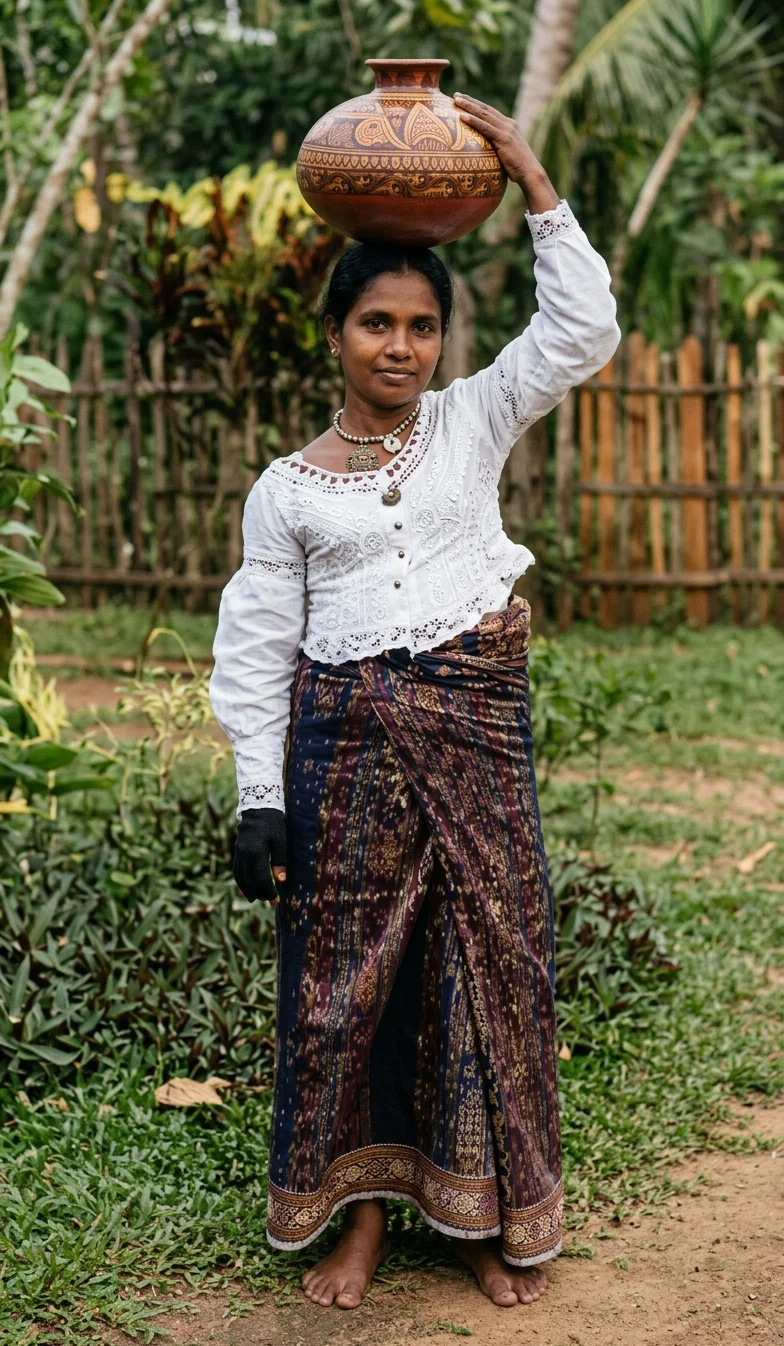
A SINGALESE WOMAN
A SINGALESE WOMAN
My visit to Ceylon has confirmed me in the opinion that all our mission stations should be strongly equipped for medical work. The influence of this work can not be overestimated in a foreign field. It neutralizes religious bitterness, breaks down prejudice, and awakens the strongest sympathies of the human heart. In every place at which I stopped while in Ceylon I met men to whose homes I had been called in times of sickness two years ago. In the city of Point de Galle, in the southern extremity of Ceylon, I came face to face with a man whose wife's life had been saved by our timely aid over a year ago. At that time he was living fourteen miles south of our home in Nazareth. These men and others had talked about our work so much that we were known almost as well there as around our home in India. One of these men, a Roman Catholic, provided us with food and lodging for four days during our visit.
Tinnevelli.