Life Sketch of Elder I. D. Van Horn

5%

Review and Herald Publishing Association · Takoma Park Station, Washington, D. C. · Oct 6, 1910

FromReview and Herald, Vol. 87, No. 40.

Read the full edition

Life Sketch of Elder I. D. Van Horn

IN the midst of the camp-meeting held in Battle Creek, Mich., word came to us that our dear brother and fellow worker, Elder I. D. Van Horn, had passed away. Arrangements were made for the funeral services to be held in the Tabernacle. This gave a large number of his old friends who were at the camp-meeting an opportunity to be present, and to express to Sister Van Horn, and to the sons and other relatives, their great regard for him who had fallen, and their sympathy for those who were called to mourn. The services were conducted by the writer, who was assisted by a number of our late brother's former fellow laborers. The body was laid to rest in the cemetery at Kalamazoo, Mich.
The many friends of Elder Van Horn will be interested in the following sketch of his life, which was given at the funeral service:—
Isaac Doren Van Horn was born in Cato, Cayuga Co., N. Y., March 28, 1834. With his parents he moved to Michigan in September, 1844, and settled in Blackman Township, Jackson County, where he first heard of the soon coming of our Lord. Here and in Jackson, and in Albion College, his youth and schooldays were spent.
When teaching school twenty miles north of his home in the winter of 1859, he attended a series of meetings held in a schoolhouse by Elder Joseph Bates. After hearing two discourses, he decided to keep the Sabbath. Concerning him Elder Bates said in the REVIEW of May 26, 1859, when he with nine others was baptized: 'One of the number is girding up his loins, and lighting his lamp, and shaping his course to reach a station with the watchmen on the walls of Zion,—to join them in sounding the alarm in God's holy mountain,—to all the inhabitants of the land, and close up the final warning with the loud cry of the third angel's message.'
In the fall of 1863 Brother Van Horn began ministerial labor. In the spring of 1864, at a general meeting held in a tent on the site where the Battle Creek Tabernacle now stands, he was ordained to the work of the gospel ministry. Elder J. N. Andrews gave the charge, and Elder James White offered the prayer. After this he was sent into Gratiot County, Michigan, to labor in company with Elder R. J. Lawrence. D. M. Canright joined them as tent-master; and as a result of the effort one hundred persons accepted the truth that season.
In the following year another series of tent-meetings was held, in Tuscola County, where more than one hundred accepted the truth.
In April, 1865, he was united in marriage to Miss Adelia P. Patten. To this union were born three sons, Burt I. and Newman C., who still survive, and Charles Wesley, who is numbered with the blessed dead.
In December, 1873, Elder Van Horn was requested to make the Pacific Coast his field of labor. He remained in the West eight years, laboring in California, Oregon, and Washington. The blessing of God attended his ministry during this time, and two conferences of three hundred members each were organized.
For four years after his return from the West, he engaged with Elder George I. Butler in from twelve to fifteen camp-meetings in the summer season, and spent the winters laboring with churches in different places in Michigan. In 1889 he was chosen president of the Michigan Conference, which position he held for three years.
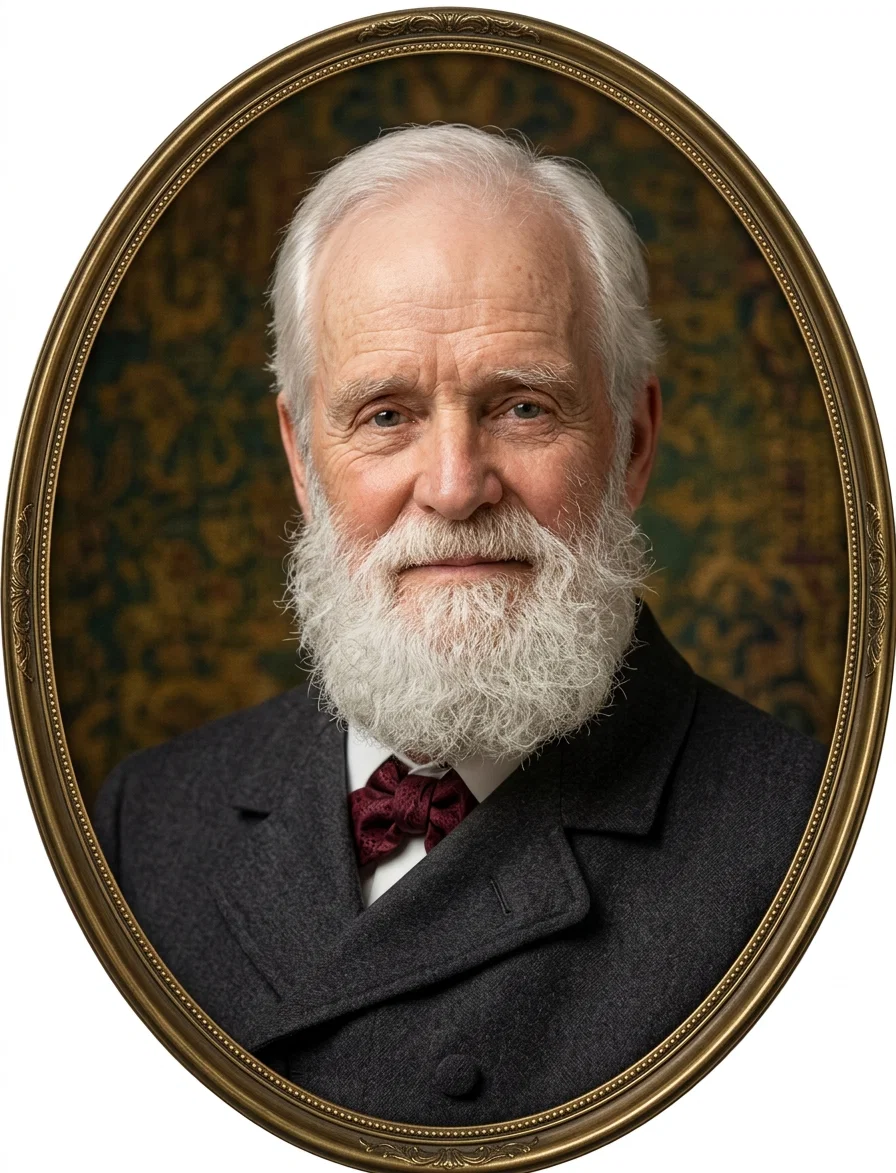
ELDER I. D. VAN HORN
In 1893 he was assigned to General Conference District No. 1, and labored and traveled extensively through eastern Canada and the Atlantic Coast States. His records show that from 1895 to 1898 his labors were bestowed upon forty or more places in Ohio and Indiana.
After closing his labors in Indiana in 1898, he was mostly engaged in church work in Battle Creek, with board meetings of the various institutions and missions, and in committee work, at the same time visiting the churches in Michigan in different places as opportunity afforded.
An attack of pneumonia in the winter of 1903 seemed to lessen his physical strength, but his usual courage and good cheer were manifest in his constant employment. In 1905, as age was coming on, he thought a portion of his time might profitably be spent in the country, and accordingly made the trial, but gave it up the following year.
His health continued to fail, and he could not engage in public labor. Two discourses—one on 'The Two Babylons,' given in the Tabernacle at Battle Creek, April 13, 1907, and the other on 'The Comforter,' given in Kalamazoo on May 19 following—were his last.
A few weeks later, one warm morning, as he was returning from a few hours' garden work, he was overcome by the heat, and fell prostrate on the lawn near his own door. This sad accident occurred on the seventeenth day of June, 1907. The prompt action of a physician, with assistance of friends, revived him when it seemed as if death had forever sealed his lips. The most careful attention was given him, and to the joy of his family and friends his physical strength soon returned; but the grief that seized them when they saw that their dear one was mentally unbalanced from sunstroke can not be described.
As he needed care that it was impossible for his family to give, he was for a time placed in the Michigan State asylum at Kalamazoo. On Oct. 17, 1908, he was taken to our sanitarium at Otter Lake, Lapeer Co., Mich., by the manager, Brother M. N. Dawson. To see him tenderly cared for by Christian friends, who loved him for what he had been and for what he had done, was a comfort to his family and friends in their deep sorrow. Here he lingered for a little more than twenty months.
On Monday, Aug. 22, 1910, at the age of 76 years, 4 months, and 24 days, the shadow of death came over him, and the kind hands that had ministered to his needs robed him for his final rest. We are met here to pay this last tribute of respect, and lay him away till the morning of the resurrection ushers in eternal day.
All who had the privilege of a close acquaintance with our departed brother will ever remember two very prominent characteristics of his life,—his earnest devotion to the cause of his Master, and his tenderness and sympathy for his fellow men. In his extensive travels and labors in this cause he deeply impressed all who came under his influence with these priceless attainments. His faith in the certainty of the triumph of the cause to which he gave his life never seemed to waver; and of him it may most truly be said, 'Blessed are the dead which die in the Lord from henceforth: yea, saith the Spirit, that they may rest from their labors; and their works do follow them.'
A. G. DANIELLS.