East China Mission

8%

Review and Herald Publishing Association · Takoma Park Station, Washington, D. C. · Oct 20, 1910

FromReview and Herald, Vol. 87, No. 42.

Read the full edition

East China Mission

R. F. COTTRELL
It is now a year and a half since the reorganization of the China Mission, and the division of the field into local missions, which unite to form the China Union Mission. The provinces of Anhwei, Kiangsu, and Chekiang, having a total area of one hundred thirty thousand square miles, and a population of sixty millions, were to comprise the East China Mission. At that time a superintendent was chosen; but otherwise the East China Mission was to all practical purposes merely a “geographical expression.”
A few months later, a native evangelist of several years’ experience, who was the leader of a little company at Ying Shang Hsien, Anhwei, became interested in present truth, and sent an earnest invitation to one of our foreign workers to come and teach him more of the message. As Brethren F. A. Allum and H. W. Miller have both written concerning this remarkable opening, we will simply mention the fact that at present there is at Ying Shang Hsien a Seventh-day Adventist church of twenty-one members, six of whom are now devoting their whole time to the advancement of the work.
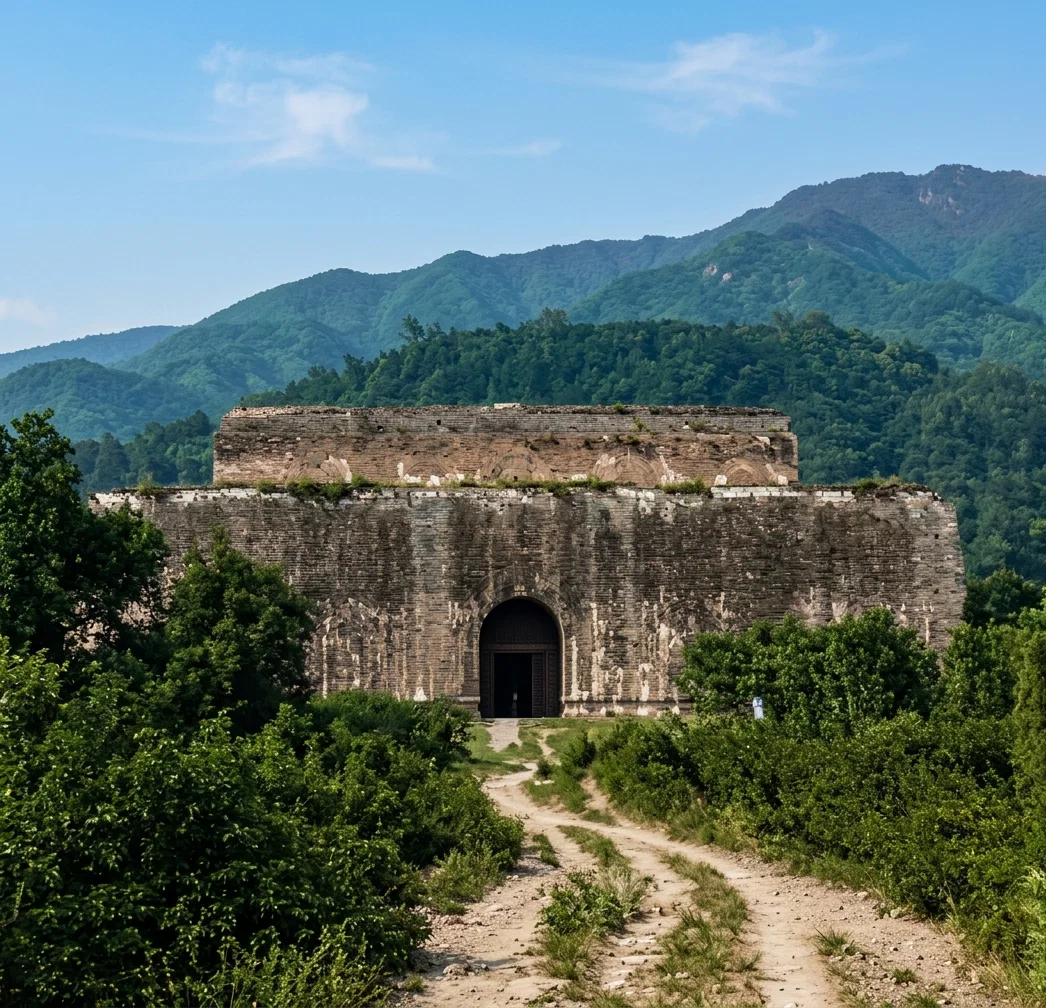
THE MING TOMB, JUST OUTSIDE THE SOUTH GATE, NANKING
Ying Shang Hsien is not a large place, neither is it a central location for the headquarters of our work in the province. The Tientsin Pukow Railway, which is to connect the cities of the Lower Yangtse-kiang with those of north China, will run north and south through a portion of this province. This railroad is now nearing completion, and it will probably be advisable to locate our principal station in Anhwei, on or near this railroad. Brother and Sister Frederick Lee, who came out to China last fall, are located in this province, and are making good progress in their language study. Another family should join them this autumn.
In the northern and western parts of this mission field, the language of the people is Mandarin; but along the coast, in the southeastern portion, we find quite a diversity of tongues, these being known as the “Wu dialects.” One of these is the Shanghai, which is said to be spoken by nearly twenty millions. Two years ago, when Sister B. Miller reached China, she began the study of this dialect. About the first of the present year, Brother and Sister O. J. Fisher, of Southern California, arrived and joined her in its study. In the early spring, a good location was secured in Kashing, a city on the Shanghai and Hanchau Railway, in the northern part of the Chekiang province. Here these three workers are located. They are happy, and confident that the Lord has some honest, responsive hearts in that place.
In the western part of the Kiangsu province, on the southern bank of the Yangtse-kiang, is Nanking, the ancient capital of China. Its wall is perhaps seventy feet high on an average, fifty feet wide, and is twenty-four miles in circumference. Nanking is a great educational center, and because of its location, it is destined to become a great commercial and railway center. In June there was opened in this city the first great Chinese industrial exposition. No one who has ever attended one of the great fairs in America, if placed upon these exposition grounds, would be at a loss to know what was taking place. The plan of the grounds, the spacious greyish-white buildings, the electrical display, and the arrangement of the exhibits, are all clear evidences of its kinship to those of Western lands.
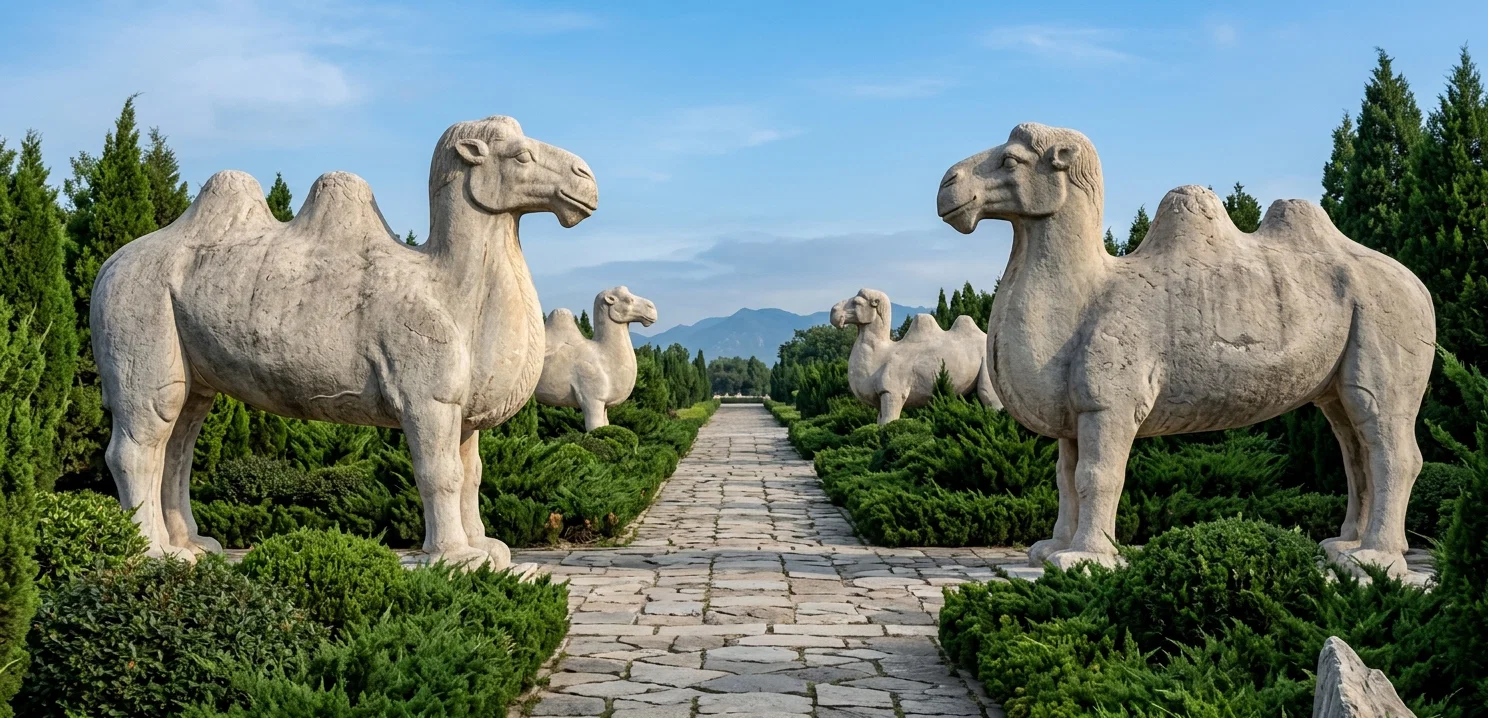
A GLIMPSE OF THE ROADWAY LEADING TO
THE MING TOMB
A GLIMPSE OF THE ROADWAY LEADING TO THE MING TOMB
But this is not all. Nothing that has thus far occurred has given more unmistakable proof of the awakening of China than has this great gathering. For some time we have been planning to start work in Nanking; and it was therefore felt that the present was an opportune time for giving the message to those who, from many parts of the empire, are gathering in this place. Accordingly, a small mission compound has been rented, and seven of our native workers have been called to spend the summer in Nanking. We are printing two special editions of our Chinese paper for the use of these workers; and already they have sold over two thousand copies. Several very bright Chinese are deeply interested, a part of whom have expressed their determination to keep all the commandments of God. This work is in charge of Brethren E. Pilquist and F. A. Allum.
We are most thankful that a beginning has been made in each of these provinces. Still, when we consider the immensity of the work before us, which is truly beyond human strength and comprehension, we can take courage only in the thought that Christ has promised to be with us to the end of the world. And in this we have assurance. He is able to raise up men and means to finish the work. By his Holy Spirit our feeble efforts may be strengthened and multiplied.
Brethren and sisters, we ask you to pray for the work and workers,—pray, knowing that He who has begun the work, will soon finish it triumphantly.
Shanghai.