In German East Africa

10%

Review and Herald Publishing Association · Takoma Park Station, Washington, D. C. · Mar 11, 1909

FromReview and Herald, Vol. 86, No. 10.

Read the full edition

In German East Africa

L. R. CONRADI
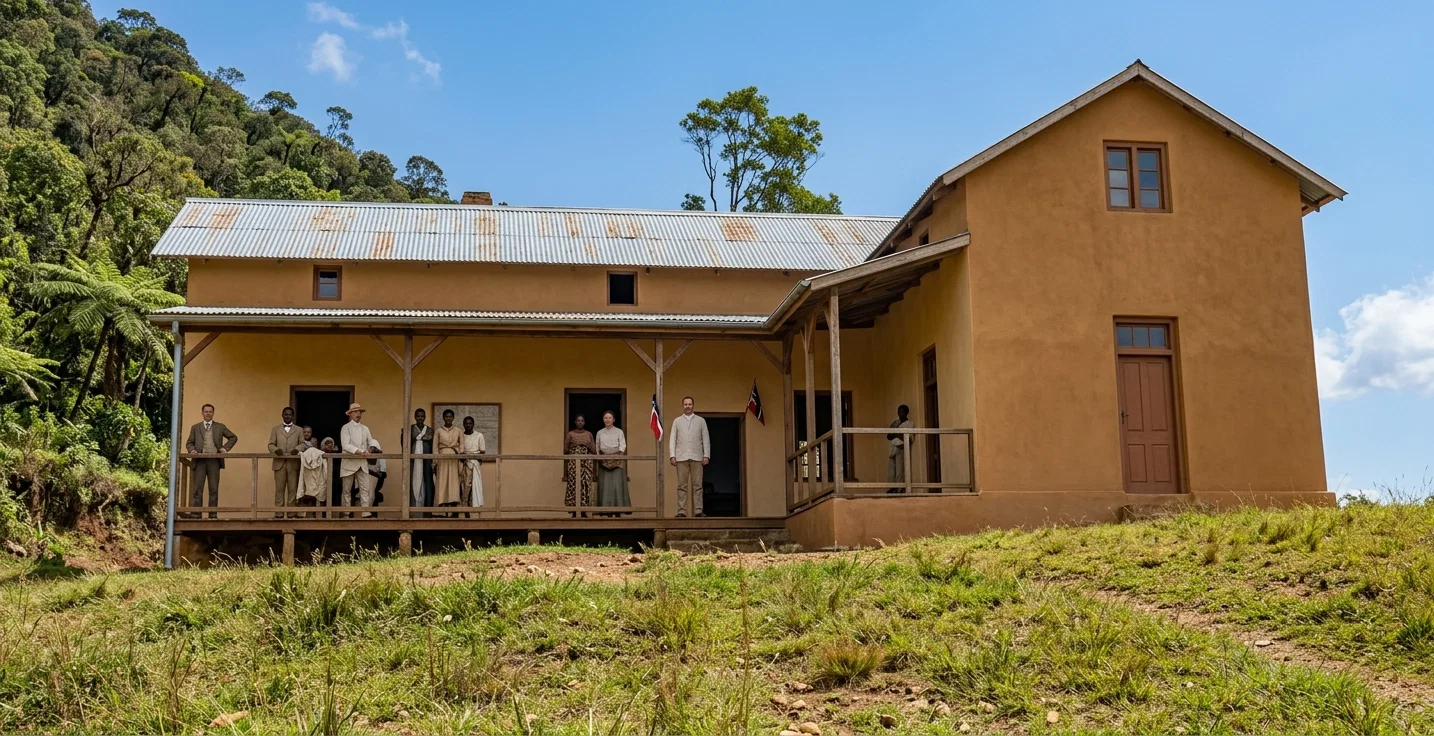
FRONT VIEW OF THE MISSION BUILDING AT VUASU, GERMAN EAST AFRICA
My stay in German East Africa was limited to ten days, and four of these had to be spent in going and coming, so only six days were left me to visit among the stations. At present, we have three main stations in the southern part of the Pare Mountains. Our head station, Kihuiro, lies at an elevation of eighteen hundred feet, at the foot of the mountains. The next station, Friedenstal, lies at an altitude of something like thirty-five hundred feet, and it is three and one-half hours distant from Kihuiro. The third station, Vuasu, requires a ten-hours' march up the mountains, where one has to cross a ridge as high as seven thousand feet, though the station itself lies farther below, at an elevation of about fifty-five hundred feet. In all this territory there are about ten thousand people.
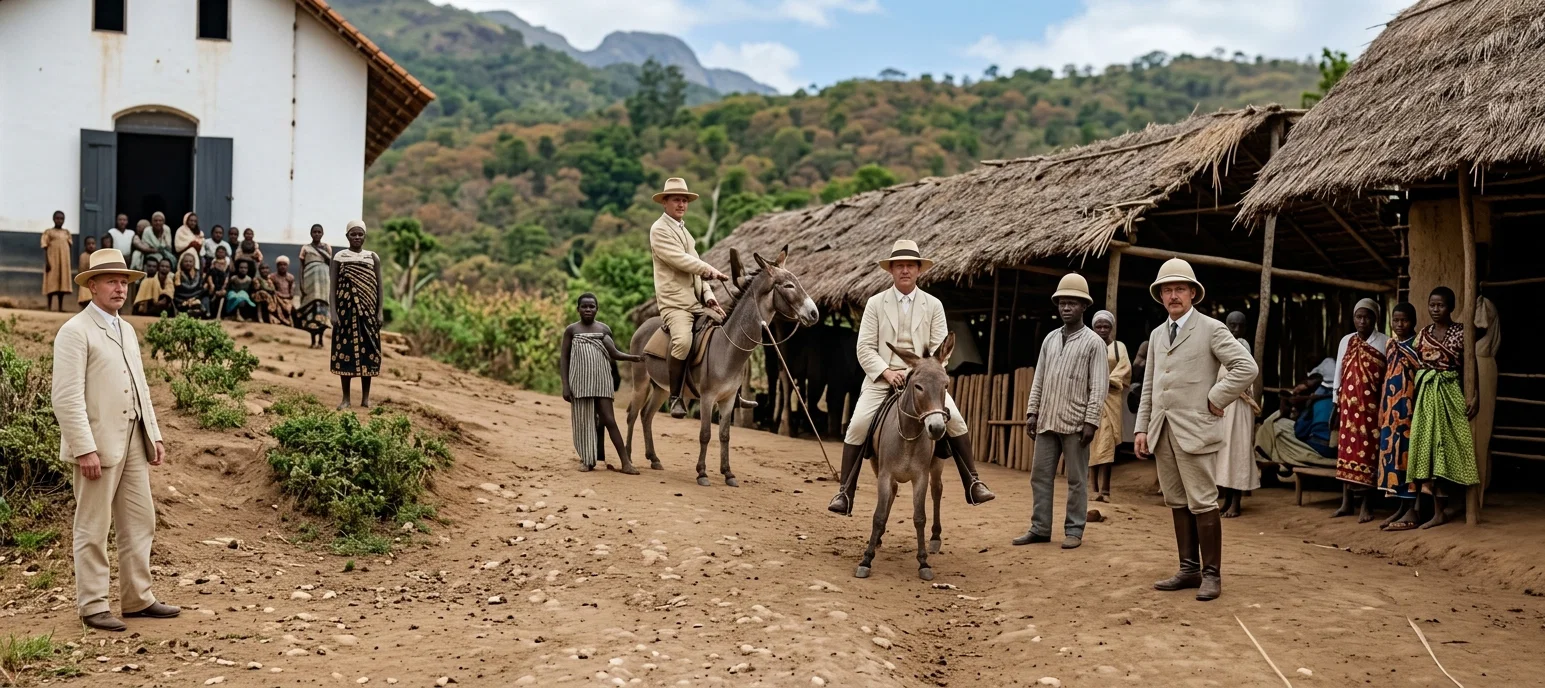
As our brethren had arrived with Brother B. Ohme by Sunday morning, we left that afternoon for Friedenstal. Our missionaries have made a fairly good path up the steep mountainside. The brethren had secured one of their donkeys for me, and going down a steep hill, the saddle girth gave way, and I was landed on some rocks rather hard and unceremoniously. Otherwise, we safely reached the station, where the sister in charge of the mission had prepared a nice reception for us. Brother Ohme, who is a good nurse, did his best in the evening and the following morning to alleviate the pain caused by the bruise on my left side. But still, at first it seemed rather questionable if I could stand the ten-hours' climb up the mountains, most of the way there being only native paths. However, by putting a rope around my body and having the negroes pull me over the steepest places, I was enabled to make the journey. But when we reached Vuasu that evening, I was so completely exhausted that I at once retired. Next morning we looked over the buildings and the school. Our dear Brother G. Sander surely did everything in his power to erect a creditable building. It is composed of stone, and is located on a height overlooking the country for many miles. It is the best building I found at any of our stations. It cost a little more than one thousand dollars. Besides this, we have a smaller school building, and some dwelling-houses houses, carpenter-shops, etc. We found the school building filled with children, some of whom come for miles to attend the school. Brother A. C. Enns, who has charge of the station, instructs them, with the assistance of several bright native teachers. We arranged for a larger and cheap school building. A number of the chiefs from the surrounding country came in, and I talked to them for a while. Pointing them to the grave of Brother Sander, I asked them whether he had not been a noble helper indeed; and they all of one accord expressed their appreciation of the work of our faithful brother, who sleeps here upon this high mountainside.
MISSIONARIES STARTING ON THEIR JOURNEY FROM THE FRIEDENSTAL MISSION STATION, GERMAN EAST AFRICA
In considering the plans for the distribution of laborers, we thought it best to so arrange that a new worker, and an older one having a knowledge of the language, should be associated in their labors at each of the stations. Accordingly, it was decided that Brother M. Poenig should join Brother Enns at this station. He will give his attention to the mastery of the language, and Brother Enns will remain with him until March. Then it is planned that Brother Enns will proceed to Victoria Nyanza, where we hope to open a new station. From our mission station here, one has a wonderful view of the surrounding country. On a clear day one can see the snow-covered peak of Kilimanjaro, the highest mountain of Africa, eighteen thousand feet high. Away below in the plains are a number of villages. We believe that, if we continue to labor hard, we shall soon see fruits of the faithful effort put forth in this station to enlighten the people. Toward noon we started on our return trip. Going down the mountain, we reached Friedenstal about dusk, after an eight-hours' march. Next morning we looked over the buildings and inspected the school. Here we found quite a number of students, many eager to learn. The farm work has not made the progress we would like to see. It was decided that Brother Ohme, with his wife and Brother Koelling, should take charge of this station. We believe that, with the right management, we shall see here also, at this, our oldest station, greater prosperity. Toward noon we proceeded down to Kihuiro. On the way down, my good donkey tried to play me another trick. He had followed the mule ahead of him nicely until we came to a high, overhanging rock, which would leave the donkey room to pass the mule—but not room for the rider to keep his seat. The attempt of the donkey to pass was so sudden, that although the brethren were near by, neither they nor I could prevent him. All I could do for my own safety was to fall off immediately. My escape was so narrow that the overhanging rock tore a hole in the shoulder of my coat. Otherwise we safely reached the main station, thankful to God for hisprotecting care, and that we had been able to make this tedious and long round-trip in so short a time.
We now spent some time at the school in Kihuiro. At that place the students have made the greatest advancement. Some of them can read and write the Chassu language well, and a few of the best students have in addition quite a knowledge of the German. Some of the native songs are of special interest. In one, the inhabitants of the mountains praise the superiority of their mountain homes, while the inhabitants of the plains try to show the advantages of their homes on the plain. We now have a small settlement of converts near our mission house. They till their own piece of ground. We have, in all, about forty acres of land. Part of this we own, while we rent the rest from the natives, for a very nominal rental. Last year our cotton crop was the best in all that neighborhood. All told, we harvested four thousand pounds from ten acres, but on account of the low prices, it has been withheld from sale.
In our three main schools, and in several out-schools, we have about three hundred fifty children, and a number of young people are developing into native teachers. Thursday evening we celebrated the Lord's supper, of which all our missionaries and the native converts partook. Besides these, there were also nine others in attendance who had desired baptism. In our social meeting all took part. All expressed a desire to give themselves fully to the Lord. All the missionaries being fully united, Brother Ohme, the director of the mission field, was ordained to the ministry. The Lord witnessed to the occasion. All felt grateful to God for the privilege we had of studying the Word of the Lord together, and for the additional help received, and for the brighter prospects before us. Some of the Lutheran missionaries from both the Leipsic and Berlin missions, having heard of my coming, invited me to visit them; I was sorry that my time was too short to enable me to visit their stations also, and to see what progress they had made. Surely our laborers have worked faithfully since my last visit. Aside from erecting three large mission houses and a schoolhouse, they have built a number of substantial smaller buildings, and have made a number of miles of road, and have tilled considerable land. Hundreds of children have been gathered into the schools and faithfully instructed, while a number of souls have been led to Christ.
In considering our appropriations for 1909, we found that by a little careful planning we would be able to save nearly enough money to pay the running expenses of the new mission we hope to open. The country has developed considerably since we opened our work here. At that time the railway was only fifty miles long; at the time of my visit it was eighty-five miles; and nearly twenty miles more have since been about completed. The railway is still to be pushed farther on—probably to the Kilimanjaro Mountains, and soon we will have a railway station within eight miles of our mission. This will save us more than twenty-five miles of travel for our mail and freight. We can then easily go by rail to the seaport in one day. In fact, we would not desire the railway station nearer than that. While civilization brings many blessings, it is also accompanied by many dangers for a mission station. I left our missionaries in good spirits. Brother E. Kotz accompanied me to Tanga. The steamer was more than a day late. Had we known this, we might have spent another Sabbath together. We would have been glad to spend more time with our missionaries; and yet, on the other hand, we were grateful that in spite of the comparative shortness of our stay, we had been able to visit all the stations, look into their needs, counsel together, and enjoy the blessing of God with one another. We have every reason to believe that the work in German East Africa will show greater prosperity in the future, and that as we extend the field of our operations, we shall see the sphere of our influence widening out. More men and means will be called for, and must be provided; but the more experience we gain, the better we are fitted to work successfully, even for the dark portions of Africa. May our people everywhere remember these mission fields in their prayers and in their gifts. Hamburg, Germany.