Through British East Africa

8%

Review and Herald Publishing Association · Takoma Park Station, Washington, D. C. · Apr 29, 1909

FromReview and Herald, Vol. 86, No. 17.

Read the full edition

Through British East Africa

L. R. CONRADI
Our steamer, of the German East African line, left Tanga, October 27, about eleven in the morning; by dark we had reached Mombasa, eighty miles to the north of Tanga. Next morning, after securing the necessary money from the Indian bank, at eleven o’clock we departed by train, en route to Victoria Nyanza.
Mombasa itself is an old Portuguese town, which has seen many vicissitudes and changes of masters during the four hundred years of its existence. From being one of the chief slave markets of the world, it has become the chief seaport of British East Africa. The town has a number of fine government offices, a bank, cathedral, hotels, two fine harbors, and a population of twenty-six thousand. Most of the natives are Swahilis.
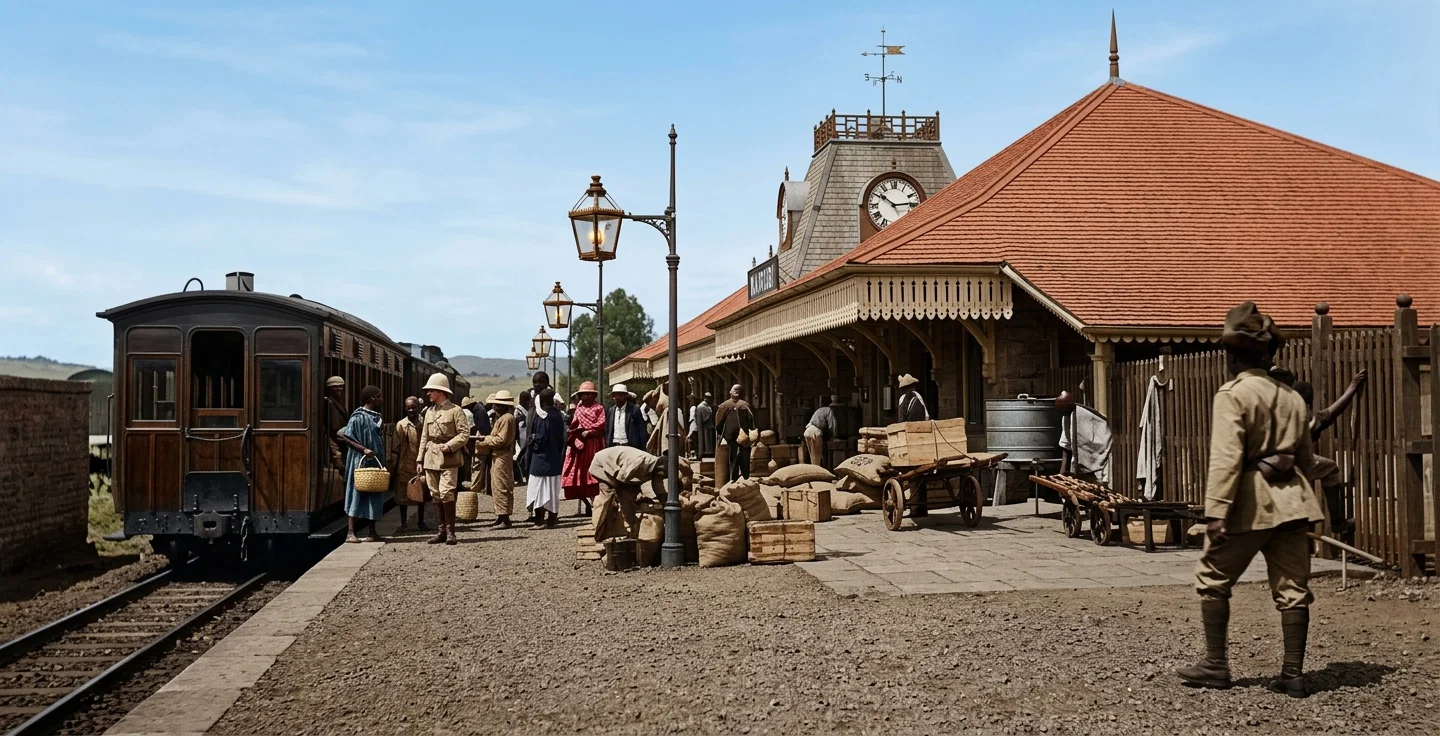
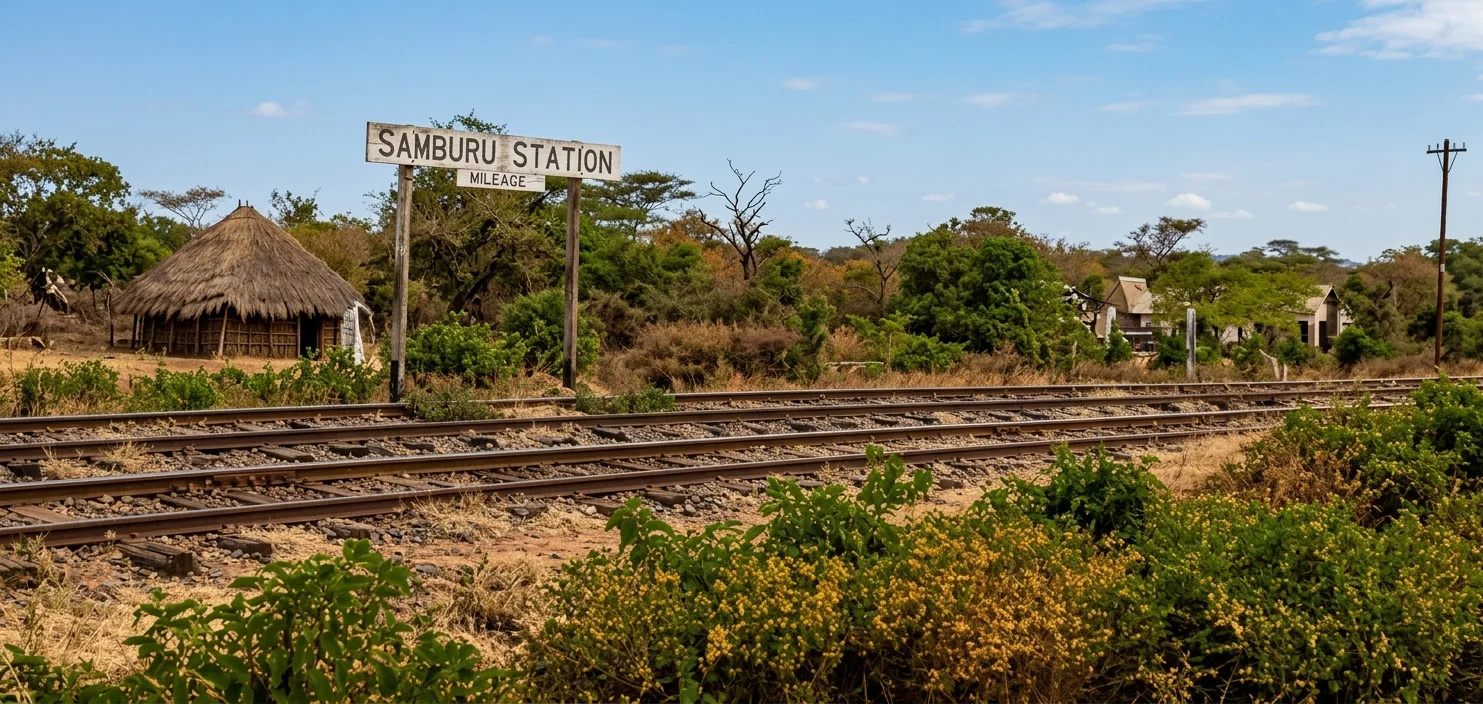
Our railway carriages were very comfortable. They are tourist sleepers. The return trip cost us about thirty dollars. It covered 1,168 miles. While the coast is studded with villages and small towns and good plantations, the scene changes as we go farther into the interior. Before the Uganda railway was finished, in 1902, it took from three to four months to make this trip, and the traveler was in the midst of great dangers at the hands of the natives, and from wild beasts, and because of a scarcity of water. At Voi, one hundred three miles from the coast, a number of passengers left us for the settlements around Mt. Kilimanjaro. This is the highest mountain in Africa. It is nineteen thousand three hundred feet high, and is about five days’ journey from this station; it is located in German territory. All we could see was the high peak, covered with eternal snow, although the mountain is upon the equator. From Voi the railway continually rises for the next hundred miles, when we reach Makindu, at an altitude of three thousand two hundred eighty feet; at this place we are on the borders of the “sportsman’s paradise.” Herds of zebra, hartebeeste, and gnu gallop along by the side of the railway. The plains are dotted with these animals, as well as with many species of graceful antelope, who hardly raise their heads as the train steams by. We also saw a number of ostriches, and some giraffes; now and then even lions and rhinoceroses are seen from the cars. This is one of the most unique sights in the world, and being a special reserve of the government, the herds of game increase rather than decrease. This reserve extends to Nairobi, a distance of over one hundred miles. It is at an altitude of five thousand four hundred thirty feet. Nairobi is now the capital of British East Africa, the headquarters of the railway, and a strong military post. It is situated on the border of the Kikuyu country. As the climate up here resembles our summers in England or in the States, and there are extensive tracts of grazing land, quite a number of large stockfarms have been secured by European settlers. A number of individuals from South Africa have also settled here.
RAILWAY STATION, NAIROBI, BRITISH EAST AFRICA
The tract from Nairobi to Escarpment Station has an elevation of seven thousand three hundred ninety feet, and is thickly settled by the Kikuyus, an agricultural race keeping some sheep and goats, but few cattle. They cultivate their fields with extreme care. They are a healthy people, and they like to work. Formerly they were in great dread of the warlike tribe of the Masais, who are more nomadic in their habits. We met quite a large number of them; the British government is now trying to locate them on reservations. From the edge of this escarpment, a wonderful view can be obtained of the great rift valley below, broken by the volcanic cone of Longonot, and bounded on the west by the Mau Escarpment.
The railway rapidly descends to Lake Naivasha, on which is situated quite a flourishing town of the same name, where our train stopped about five hours during the night, to renew its journey by daybreak. Again we passed two beautiful lakes, and crossed a large, open grazing country, surrounded by high hills and covered with large herds of game to the foot of the Mau Escarpment. Then the train once more climbed a steep ascent, until we reached, at the top of the Mau Escarpment, the highest point of the road, eight thousand three hundred twenty-seven feet. From there we could see, in the far distance, thousands of feet below us, the broad waters of Victoria Nyanza. The train now made its descent through as extensive a forest as may be found in Africa, winding its way down in great loops; and when we finally reached the plain below, we found it covered with small villages of the Kavirondos. In fifty hours the six hundred miles from Mombasa to Port Florence had been traversed, and we found ourselves at the head of the great lake. I arrived there on Friday afternoon, was met by Elder A. A. Carscallen, and taken over to the Indian bungalow to stop overnight. The government has erected bungalows, where the traveler may stop over one night free of charge at all the large stations. Board, at fixed rates, is also provided at the same places.
Port Florence is a growing town, and the portion inhabited by the whites is situated on quite an elevation. Victoria Nyanza is a beautiful, sweet-watersea, three hundred miles long, and during two hundred miles wide. Three fine passenger steamers and one large freight steamer carry on the traffic of this lake. These are owned by the Uganda Railway Co. The “Winifred” and “Cybil” are six-hundred-ton steamers, well fitted up, and lighted by electricity. They make monthly circuits around the lake, one going in one direction, and the other in the opposite. The still larger steamer, “Clement Hill,” runs weekly to Entebbe, headquarters of the English governor of Uganda. The native king resides at Mengo.
As we had been very anxious to reach our station by Sabbath, and Brother Carscallen had been waiting for me for some time, we were happy indeed when we learned that a small steam launch owned by a merchant was going our way next day to secure a load of lime. Our landing place, Kendu, lies twenty miles south of Port Florence, on the Kongo Bay. We made the trip in about four hours. As our mission station is on an elevation of five hundred feet above the lake, we began to see the building when we were half way across. As we drew nearer, we could see that the whole country was dotted with little Kavirondo kraals. The government has lately erected quite a good landing place, and has also built a good road to the headquarters of their commissioner in the Kisi country, about fifty miles inland. Brother Baker and some of the mission boys met us at the wharf, and by Sabbath afternoon we were safely landed at another mission home.
Two weeks previously we made our first visit to our station in German East Africa, visiting the three stations there, and had since gone about seven hundred miles by boat and rail to our next station, in British East Africa. We were then right at the equator.
Hamburg, Germany.
ALONG THE UGANDA RAILROAD