WE are very busy at Kolo Mission nowadays, and our work is accomplishing something, I am glad to say. To our Leader be all the glory. Not only are people becoming interested in the truth, but our literature is being placed in the hands of the reading class. We have some books in the Sesuto language, and it rejoices my heart still more to have hopes of more being translated soon. During the month of February we sold one hundred thirty-one books. Our largest book is “Steps to Christ.” Booklets on “Christ’s Second Coming,” “The Sabbath Restored,” and “Bible Studies” have been written.
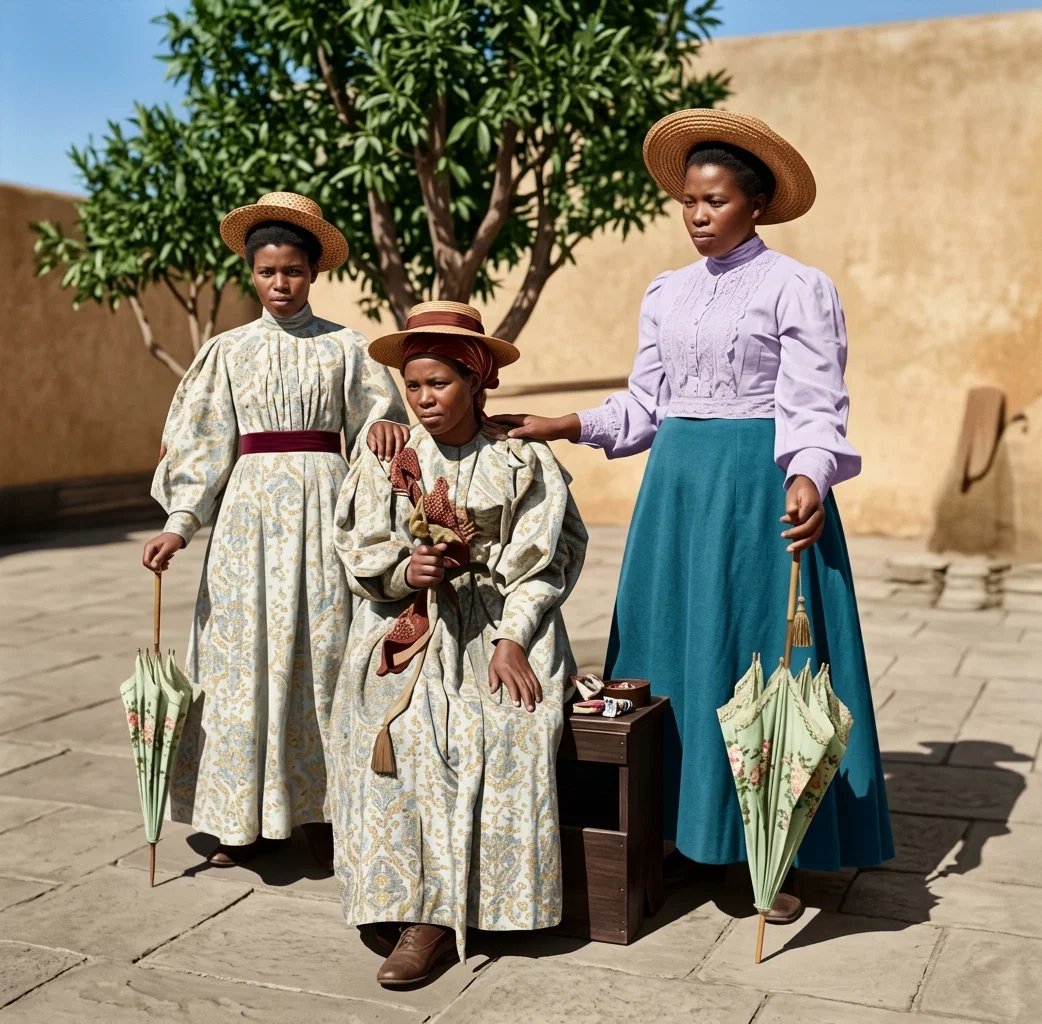
BASUTOLAND GIRLS OF BEST-EDUCATED CLASS
While we canvass, we have opportunity to relieve the sick and suffering. Sometimes we stop our work to make a coffin, and then the privilege is afforded us of speaking words of sympathy, and of telling many of Jesus’ love.
A few days ago, while canvassing a village close by, one native spied the small booklet entitled, “The Sabbath Restored,” and raised the question which day is the Sabbath. The answer, given by another man, was, “The seventh, of course.” “And which day is the seventh?” the first man continued. The second replied quickly, “Any man knows that Sunday is the seventh day of the week.” Then I was asked in regard to the day, and in a short time, by God’s help, was able to show all present that Sunday is not the seventh day, and, therefore, can not be the Sabbath. The result of our talk was that five of our books were sold. And we trust the light of truth found its way to one heart. Before we left, one native said, “What are we going to do?” The one who first raised the Sabbath question answered, “We can not afford to do any other way than to obey the light we have received.”
I could tell of many other interesting incidents like this. Sometimes women are come bringing the last chicken they have, and say, “This is all I have in the world. Please give me a book for this hen.” I am not much given to tears, but many times I find myself wiping moist eyes as I see the efforts put forth to get the books.
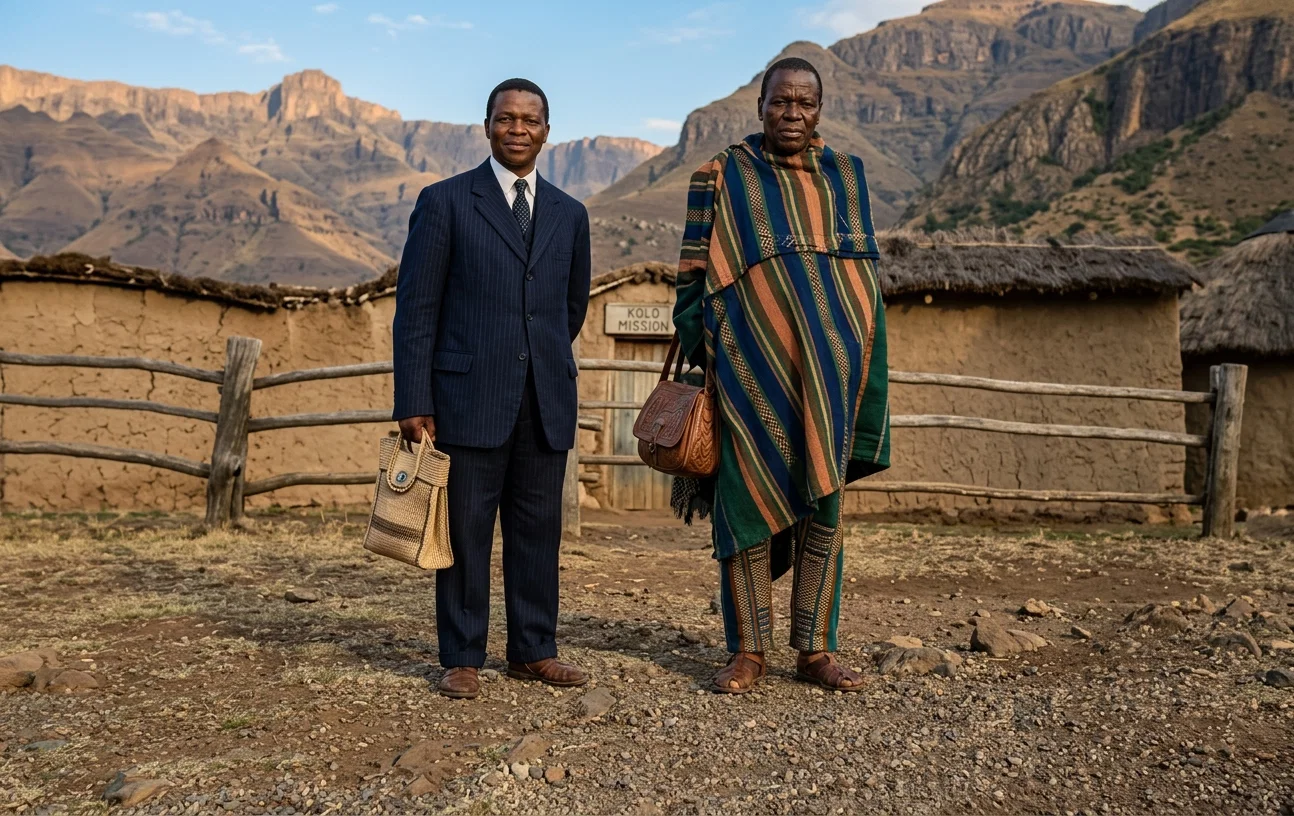
AT LEFT, MURRAY KALAKA, OUR NATIVE PREACHER; AT RIGHT, MOHOLE, CHIEF OF KOLO
The work is taking substantial root in Basutoland. I told my native helper a few weeks ago that in the next two years we must do our best to push our books into all corners of Basutoland, and then they could do as they liked with us, for the work would not stop.14
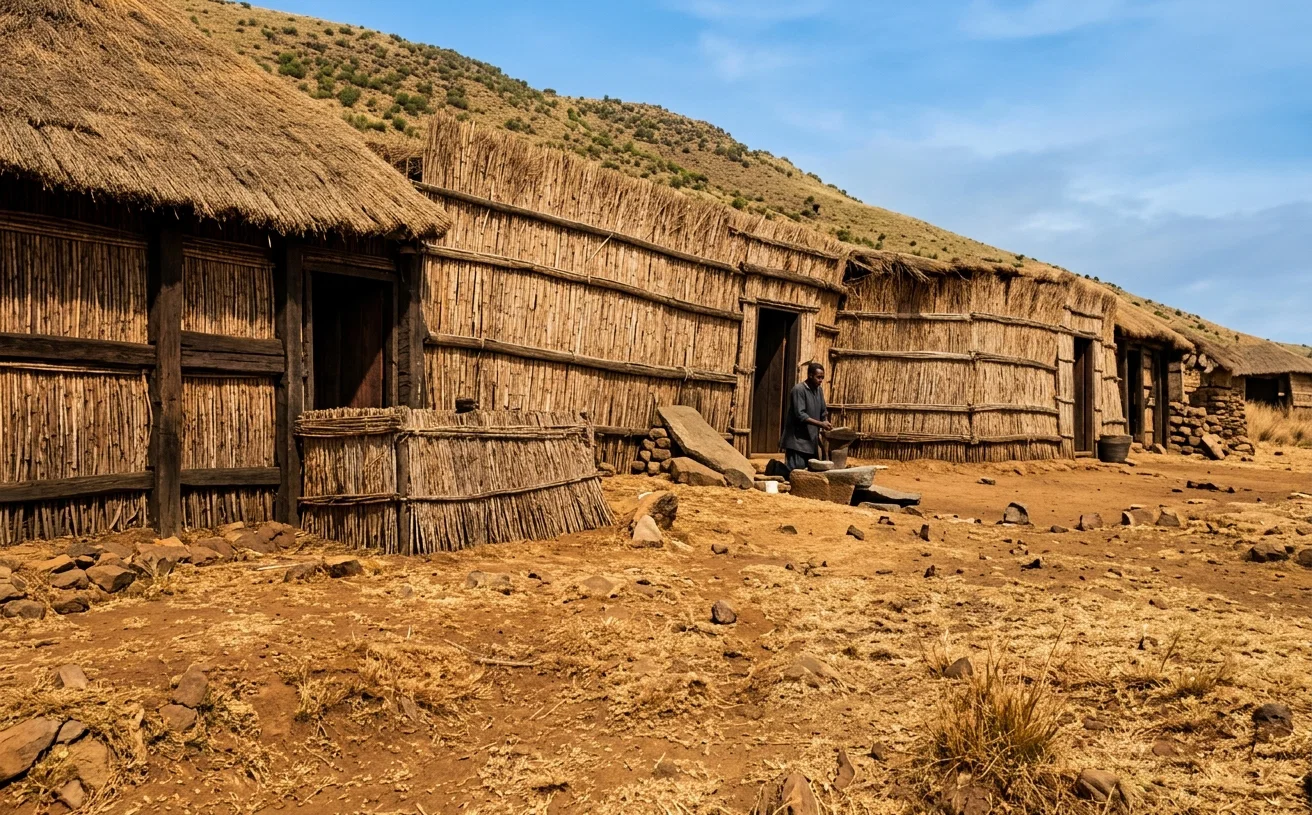
You will be interested in some photos I am sending. That of the three young women was taken near here, and is a fair sample of the educated class of Basutos. The picture of two men, one with a blanket on, and the other dressed like a black American preacher, shows our village chief, and Murray Kalaka, my native helper. Mohole is the chief’s name. While he is not a member of our church, he is a great friend of ours, and we trust he may be one of us before long. The illustration showing the front of a few huts gives a view of Chief Mohole’s place.
FRONT OF CHIEF MOHOLE'S RESIDENCE
Mrs. Emmerson and myself are of good courage, and feel it a privilege to work among a people who are so much in darkness.