Another Year at Malamulo Mission

8%

Review and Herald Publishing Association · Takoma Park Station, Washington, D. C. · Aug 5, 1909

FromReview and Herald, Vol. 86, No. 31.

Read the full edition

Another Year at Malamulo Mission

JOEL C. ROGERS
ALL through the year we have felt encouraged by the good spirit and feeling manifested by nearly everybody on the mission. I trust it may be interesting to some to hear the relation of some of our experiences of the last twelve months in connection with the work here.
I may mention, as the first experience, the joy of seeing the same boys and girls returning in August who were with us the year before. We can not have the incentive of a four-years’ course to bring them back, but we see the majority returning, nevertheless. This gives us the opportunity to become thoroughly acquainted with them, so that we may select those who show ability and consecration to the work of the message. At present our greatest hindrance is the lack of trained teachers and evangelists. We have in training about twenty who have been with us since we first became connected with the work of the school here, and we hope that a majority of these will become efficient workers.
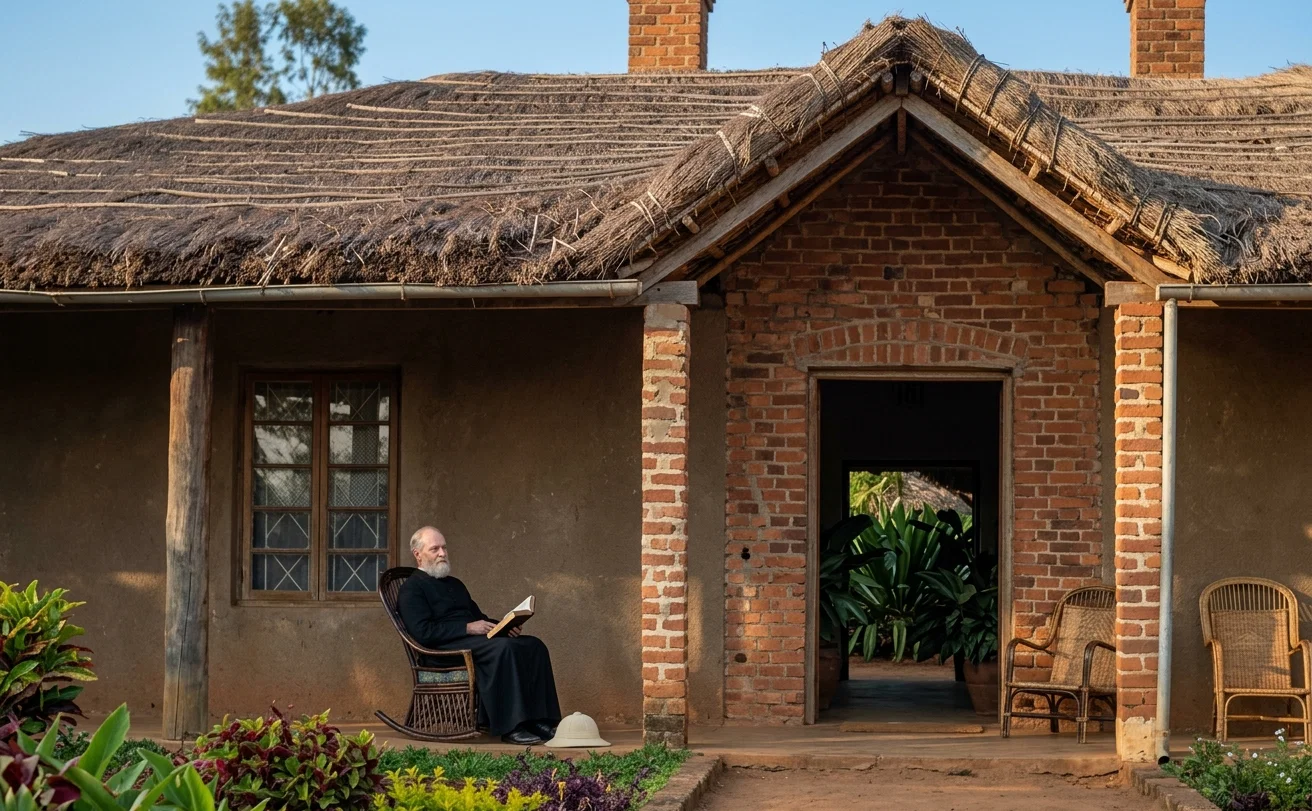
MISSION HOUSE, MALAMULO MISSION, NYASSALAND
Another impressive experience was our baptism services in the early part of the school year. Twenty candidates had been carried over from last year, being members of the regular candidates’ Bible class, which continues through each year. It is rather hard to explain the situation, unless the reader has been in a country like this. The native is strongly inclined to receive every word of the Bible as extremely literal. When he reads or hears read, ‘Repent and be baptized,’ he concludes that he must be baptized in order to be saved, and that the ceremony should not be delayed. But the gospel minister hesitates because the candidate has very little knowledge of gospel requirements. These twenty had been under definite instruction for a full year, and some of them had been hearers of the Word for a much longer time. I was called to attend the conference at Cape Town, requiring three months’ absence. So it was decided to have baptism for some from our out-station at Monekera, seventy-five miles to the north, and also for those best prepared from our class here. On Sabbath, November 14, thirteen from Monekera and five of our class were baptized in our little stream on the mission. Other members of the class, then numbering thirty-five, manifested disappointment that they could not also be baptized, and as we considered the matter, we saw no good reason for keeping them waiting longer. So another baptism was appointed for November 21, when thirteen others were added to our membership, making thirty-one for this school year. One of our most devoted candidates was sick, so he could not receive baptism with the others. My heart was made sad on hearing of his death while at the conference. We earnestly hope to meet him in the great resurrection day.
The prosperity of our out-schools has been marked. In these village schools we come into direct contact with heathenism. Three and four miles from our main station naked savages are found in all their primitive darkness. Almost any night we hear from the mission house the orgies of the heathen dance and drunken carousal. Our teachers, who go to hold schools in these villages, try to counteract heathen customs by teaching the ten commandments and the gospel of purity and salvation. We are glad that six out-schools are already in operation; but we feel that these schools should be multiplied much more rapidly than in the past. The expense of keeping up these schools is very little, and having as yet no native literature on present truth, it is our only means of reaching the people outside of our main mission station.
We are thankful for the practical interest taken in our native teachers by friends at home. The money which some have given to support these teachers is enabling us to put more teachers into the field, thus increasing the number of schools. We know that the prayers of our faithful brethren and sisters accompany their gifts, and this is encouraging to us, for we know that ‘effectual fervent prayer . . . availeth much.’
All our schools were closed the last of April for three months. It seems impossible to hold the native in school more than nine months. Some advantages come from the three months’ vacation. It permits most of our students to spend a few weeks at their village homes, where they have opportunity to teach the truth to their people. As some come from places two or three hundred miles distant, this scattering will soon make the truth known far and near.
Our closing exercises were held on the evening of May 2. Some weeks before, we had decided that the exercises should consist of class drills and music. By class drills is meant such exercises as had been a part of the regular school work. The recitation of Bible portions which had been memorized during the year formed an important part. The intermediate division repeated in concert thirty verses from John’s epistles,—verses on God’s love. Some children from two of our out-schools repeated the beatitudes—in their mother tongue, of course. The advanced division gave an interesting exercise in the book of Genesis, a part of the division repeating over seventy verses bearing on the creation and the history of the world to the call of Abraham, while part responded in the native language. Interspersedwith hymns, which the native dearly loves, the exercises were both pleasant and profitable.
We are now in the holidays, and I am about to start on a trip to our outstations, intending to extend the trip into the interior, where some are calling for instructors to teach the present truth to their people. On July 1, we are to begin our teachers’ institute, to last four weeks, when about twenty teachers will be in training for next year’s school work, beginning August 1.
Cholo, Nyassaland.