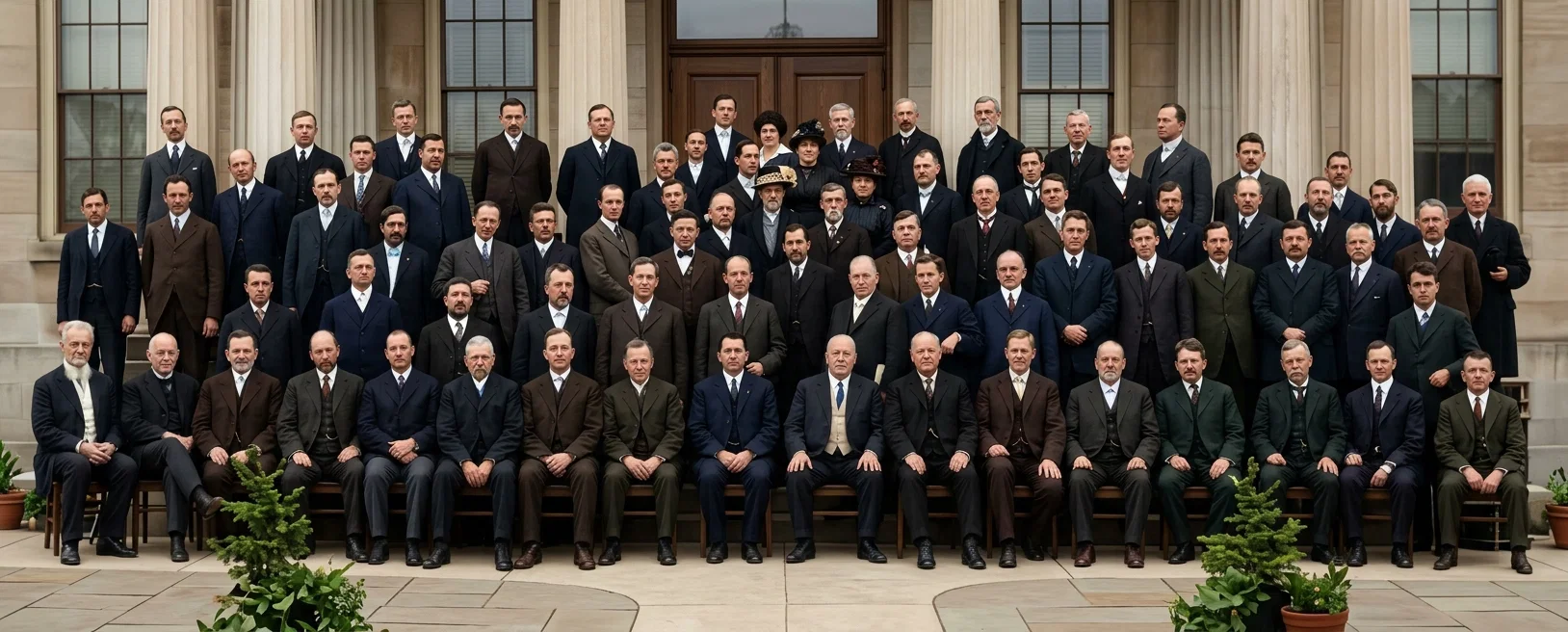
Home Missionary and Publishing Convention in the Review and Herald Territory
By W. W. EASTMAN
THIS, the second of three conventions voted by the fall council to be held in the North American Division during the early part of 1915, convened February 1-10, in the General Conference chapel, at Takoma Park, D. C. The twenty-two conferences forming the three unions of the Review and Herald United States territory were represented by twenty-two tract society secretaries, twenty-two field missionary agents, three general agents, thirteen conference presidents, two union presidents, and twelve workers from the Review and Herald Publishing Association and its branches; two delegates from the Eastern Canadian Union were also present.
DELEGATES TO THE HOME MISSIONARY AND PUBLISHING CONVENTION
The first hour of each day was devoted to a short study of the Scriptures, followed by a devotional meeting. We were favored by having some of our leading brethren present to take charge of these meetings, which served to give a strong spiritual mold to the day's work.
The different phases of our literature work represented in the publishing and home missionary departments were freely discussed from the viewpoints of the different classes of workers present. The program of subjects which had been previously prepared was carefully considered in a series of round-table discussions, in which all present were given opportunity to take part, thus receiving the combined instruction and counsel of the entire delegation. The Holy Spirit was with us day by day, and his presence and help made the daily program both pleasant and profitable.
During the last two days of the convention, the Review and Herald Publishing Association held its annual constituency meetings in the Takoma Park church. These meetings were well attended not only by the convention and the entire Review and Herald force, but by the brethren and sisters of the church. The report rendered by the manager, Brother E. R. Palmer, was indeed inspiring. The institution enjoyed the most prosperous year of its history during 1914. Over half a million dollars' worth of literature was sent out from its presses. This enabled it to make an excellent financial showing; not only could it report a large gain for the year, but its liabilities were reduced to a degree that was very gratifying. Everything was done by the institution that could be consistently done to make the stay of the delegates pleasant and profitable. Board and lodging were provided for them in the homes of our brethren and sisters, and the expenses were met by the Review and Herald.
A number of special meetings were held with the tract society secretaries and circulating and branch managers of the publishing house, giving study and consideration to details of important features of their work.
The consideration of the home missionary work was an interesting and profitable feature of this convention. The counsel and instruction of Elder F. W. Paap and Sister E. M. Graham were appreciated.
The last day of the convention, the entire delegation of over seventy spent five enjoyable hours in visiting the places of interest in the capital.
The closing meeting of the convention was held the night of the tenth, and although it was expected to make it a short meeting it continued for two hours, with unabating interest because of the spirited testimonies borne by nearly all, giving expression to their appreciation for having had the privilege of attending the convention and for the help they believed it would be to them as they returned to their fields of labor. They felt they were returning home more than repaid for the time and expense of coming, as they had received many valuable suggestions and much information that would help them more successfully to carry forward their work in their home conferences. W. W. EASTMAN.