Spirit Worship in Africa

10%

Review and Herald Publishing Association · Takoma Park Station, Washington, D. C. · Dec 9, 1915

FromReview and Herald, Vol. 92, No. 61.

Read the full edition

Spirit Worship in Africa

C. ROBINSON
RAILWAY TRAIN
RAILWAY TRAIN
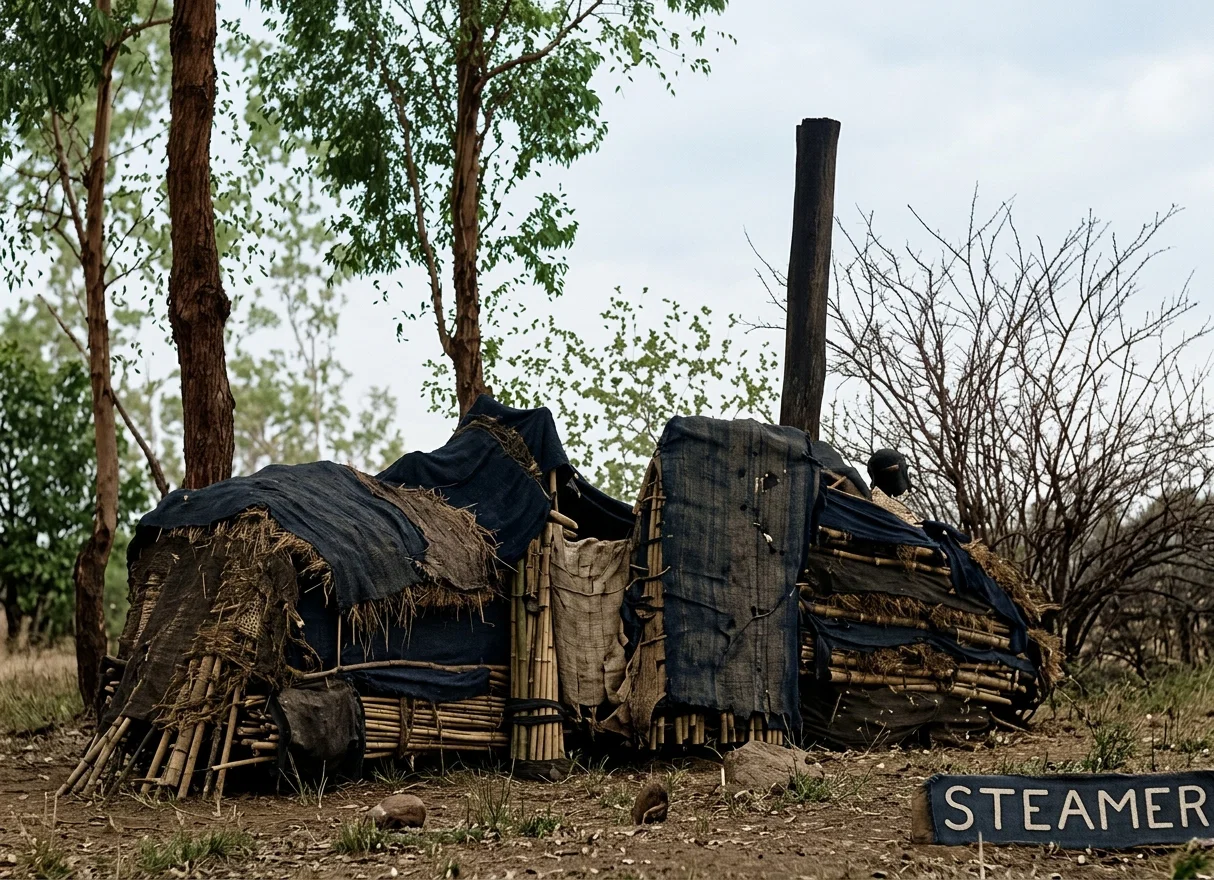
We were recently able to procure some rare photographs of native images, or gods. The natives of Nyasaland, as well as of nearly the whole of Africa, are spirit worshipers. Especially do they believe in ancestral worship. These ancestors are supposed to appear in the villages on special occasions, and they usually take the form of something of which the natives are very much afraid, as the buffalo, lion, zebra, horse, rhinoceros, “fire man,” and, since the advent of the white man, the motor car and railway train.
These apparitions are seen moving swiftly about the villages, and especially about the dance ground; and as they appear only after sundown, and no one but the attendants are allowed to go near them, they are still objects of terror even among some of the native Christians. This doctrine of ancestral worship is so deeply rooted in the minds of all natives that many of them can never thoroughly grasp the real meaning of salvation through Christ. And yet these images are very simple affairs, and of course are all fakes.
They are made of bamboo and grass, with dark cloth thrown over all. Seen in the daytime, they are very crude objects, but at night they seem altogether different. A native gets inside, lifts the image, and runs it up and down through the village, imitating the antics of the animal or whatever the image represents. He does this very cleverly and silently, and no sound of footsteps can be heard. So it seems supernatural and most fearful to the native mind. This is what the witch doctors desire, and they are careful that none but the initiated see the image by daylight.
The “fire man” is made of bamboo with numerous pieces of dry bark string tied on so as to show the outlines of the body when lighted up. When everything is ready for the parade, all these strings are touched with a torch, and they smolder but do not blaze. A native gets inside and carries the “fire man” about, the motion causes the sparks to fly off all around, and nothing can be seen but the fiery outline of the body, there being no visible means of locomotion; so it is not at all strange that the natives believe in the supernatural.
More up-to-date is the railway train, or steamer, as the native calls it. The train whistles somewhere in the darkness, and then a huge, long, shadowy shape is seen coming through the village. The guard’s whistle sounds, and the train stops. The whistle sounds again, followed by the shrill hoot of the engine, and the train moves on. The spirits are enjoying a railway journey.
These photographs were very difficult to get, as the images are always hidden when the white man is about; but I hope you can see what they represent, so that you may have some idea of the village life of the natives of this region. At every period of life these images (zin-yao) are in evidence. At birth, at various times during the life of a boy or girl, at marriage, death, and even after death, these rites and ceremonies have to be performed in order to worship or appease these spirits.
Surely it is time to do more for the people of Africa; and if our people at home could realize that this is truly the Dark Continent, they would go or give until it could truly be said that the people which sat in darkness have seen great light, “the light of the knowledge of the glory of God in the face of Jesus Christ.”