On the Isthmus of Tehuantepec

5%

Review and Herald Publishing Association · Takoma Park Station, Washington, D. C. · Jul 10, 1913

FromReview and Herald, Vol. 90, No. 28.

Read the full edition

On the Isthmus of Tehuantepec

G. W. CAVINESS
About five or six years ago a young Spaniard in Salina Cruz received the truth through reading. He was a brick-and stone-mason, and while supporting himself at his trade he presented the truth to others, and soon had a company of twenty believers. After a year or so we took him into the employ of the mission, and he has been working there ever since.
Some of the brethren moved from Salina Cruz to other parts, carrying the truth with them and creating an interest in new places. Another brother, in Ixtaltepec, received literature, and after much correspondence and answering of questions he and several of his family accepted the truth, and the work has extended until now we have four companies in that part of Mexico.
Photo by C. L. Butterfield
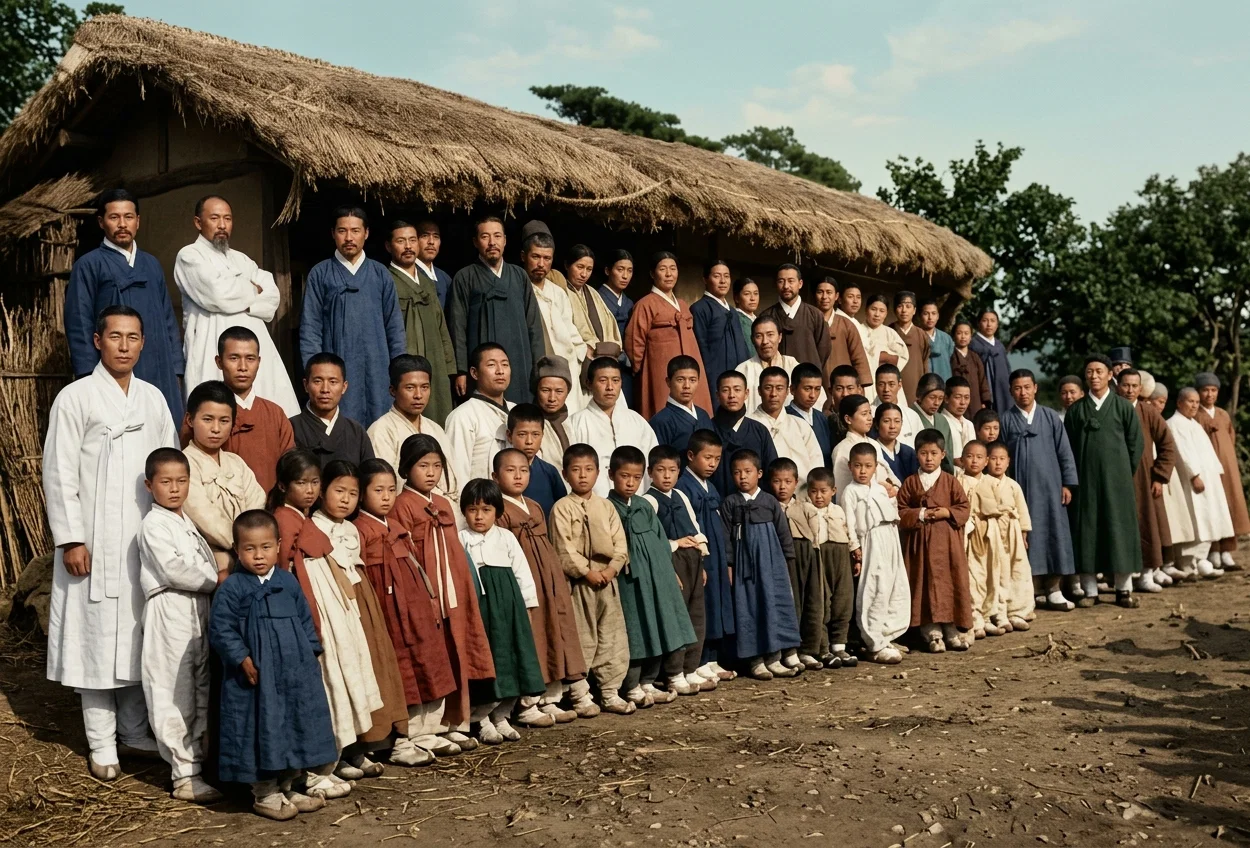
BELIEVERS ATTENDING THE GENERAL MEETING AT SA KWARA, KOREA
Photo by C. L. Butterfield BELIEVERS ATTENDING THE GENERAL MEETING AT SA KWARA, KOREA
In Salina Cruz there still remain a few faithful souls. It was my privilege to baptize one good brother in that place. The baptism took place in a little bay of the Pacific.
From Salina Cruz our worker, Antonio Sanchez, and I, took boat to Puerto Angel, a distance of about ninety miles. The boats load and unload during the day, and sail at night, so we were one night on the water. The next forenoon we arrived at the little port, where a brother met us with horses and took us to Pochutla, a small village about ten miles inland. This place is in a quaint little valley among the hills. The houses are generally made with mud walls and thatched roofs. The distinguishing feature of the village is the great number of chickens, and the chief amusement is cock-fighting. One thing that I never noticed in any other part of the world is that the roosters begin crowing at eight or nine in the evening, and crow every hour or half-hour till about three o'clock in the morning, from which time it is a continuous crow, commencing at one end of the town and passing to the other.
The houses are not fenced in with high walls as in many other places, and the chickens roost in the trees, and at night it seems as if every tree for a mile in each direction is full of the music of chanticleer.
The people in this part of the country seem to be an honest, serious class. As the boats do not pass very often, we were compelled to remain over three weeks. We had meetings every night and on Sabbath. The last Sabbath we were there we had the pleasure of baptizing ten, including Brother Sanchez, who desired rebaptism. He had been baptized in another denomination, but after seeing more of the truth he felt it would be a privilege to be baptized into the Seventh-day Adventist Church. The scene was one long to be remembered.
We went out into the country about three miles to a beautiful stream so clear one could see the bottom in any part of it. While examining the candidates, many of them broke down, and with tears begged forgiveness of their brethren and also of the Lord.
One man, the father of quite a number of those baptized, had heard something of the truth, and had attended a few of the meetings, but had given no sign of a desire to join us. While administering the rite, I glanced at him as he stood on the bank, and saw that he was deeply affected, even weeping. The next day he assured us that he had not understood the matter before, but he believes he does now, and it is his intention to be baptized later when his wife and another son can be present and be baptized also.
Two brethren in this place are in the employ of the government, and it is possible that they will lose their positions, but we believe the Lord will take care of them, and that other employment will be found where they will be able to keep the Sabbath of the Lord. Surely God is working by his Spirit on the hearts of these people. They are beginning to paytithe, and this little company at this time paid more than fifty pesos.
From Pochutla we returned to Salina Cruz, and by rail went to Ixtaltepec. This is only about two miles distant from Espinal, so we held meetings part of the time in one place and part of the time in the other. These are little Indian villages. The land both in the villages and in the surrounding country is held in common. Each family chooses a spot in the village for its home, and then goes out in the country a short distance and chooses a spot for farming; this is cleared up and used as long as the family wishes, but without any title to the land.
In this part and all through the isthmus live the Zapotecan Indians, said to number about one hundred thousand. The great reform president, Juarez, was a full-blooded Zapotecan Indian, and Porfirio Díaz also came from the state of Oaxaca, and is of the same race on his mother's side.
These people are serious and religiously inclined, and could there be more effort put forth, we should certainly see a goodly number brought into the truth. It was my privilege to baptize eight, three from Espinal and five from Ixtaltepec.
We went on to Puerto, Mexico, the northern terminal of the Tehuantepec Railway, where we found a few interested ones. Brother Sanchez expects to move to this place soon to see if we cannot raise up a company at this end of the isthmian line. The four companies we have in this part of the field are now paying tithe, and for some months past this has been sufficient to pay the salary of the one worker there.
Although it is very warm in the summer, yet many live there the year round. Many foreigners are found, especially in the two ports at either end of the railway line. Six months of the year the weather is very agreeable, and we believe that a good worker from abroad could spend half the year there and the other half farther up in the mountains on the table-land. The city of Oaxaca has about the same altitude as Guadalajara, and there is no reason why a worker from abroad might not have his home in Oaxaca, and labor in that part of the country during the hot months and in the lowlands the rest of the year. We earnestly hope that a suitable laborer may be found for this part of the republic. Here also we might soon organize a state conference.
While we were in Pochutla, the uprising took place in Mexico City. As there was no boat, it was impossible for me to leave. I might say it is a matter of seven days for mail to reach Pochutla from Mexico City. As soon as we arrived where we could get mail, we learned that nothing had happened to our people in Tacubaya, for which we were thankful. On reaching Mexico City we found a new government, and business going on as usual. The houses injured in the battle are being repaired rapidly. Many think the new government will be able to bring about peace. We do not know what is in the future, but we do know that so far the Lord has protected his work and workers, and also our brethren; not one suffered personal injury in the recent disturbance here in the city.
In spite of difficulties the work is onward. During the last six months I have baptized eighty persons,—three were rebaptized, the others were all new ones. I have visited all the companies except at Guadalajara and Santa Barbara. The former is asking that I go there to baptize four who are ready. From the first places which I visited in the north come requests that I go as soon as possible to baptize more who have taken their stand for the truth. Surely God is good!
There is great need of help for this distracted country. We need those who will be like Gideon's three hundred, and Gideon's proclamation will have to be the message given to those who think of coming to this field: ‘Whosoever is fearful and afraid, let him return and depart early.’