Giving the Message to People of Other Tongues in the United States
By A. BOETTCHER
WHEN the light of the everlasting gospel for the last generation began to enlighten the world, God drew the races of the earth to one country, in order to reach them with the last glorious message. At about the beginning of the “time of the end,” or the beginning of the last century, people began to flock into the United States. At the time when God gave his special message in 1844, the first wave of immigration really began. It continued till, in 1854, it reached the high mark of four hundred one thousand a year, a number equal to the total of all who had landed on our shores prior to 1830.
When God has a special plan in view, he creates circumstances to bring about the fulfilment of the same. This was seen at the deliverance of Israel from the bondage of Egypt. It was thus at the time of the restoration of the city of Jerusalem, and the rebuilding of the temple after the captivity of Babylon. God not only aroused the minds of his own people to feel the necessity of this work, but moved upon the hearts of the kings of Persia, and especially of Cyrus, to fulfil his will at the right time. The third angel’s message was to go to “every nation, and kindred, and tongue, and people;” and God not only showed his chosen ones the necessity of missionary effort in the regions beyond, but also drew many from those lands to these shores, where they would have an opportunity to learn the message, and take it back to their fellow countrymen.
In the beginning of the last century, in Europe and elsewhere, attention was called to the United States. On account of oppression, and for other causes, numbers were, through unseen forces, driven to immigrate hither. The years 1840 to 1844 mark an especial era in the flow of immigration to the United States. The tide began to rise steadier and higher, and it has continued so to rise until the present day. God had begun to fulfil the great plan of the age—to bring the last message to the nations of the earth. Various conditions and circumstances combined to induce immigration to the New World. In some places religious persecution was the cause of driving many to the land of liberty.
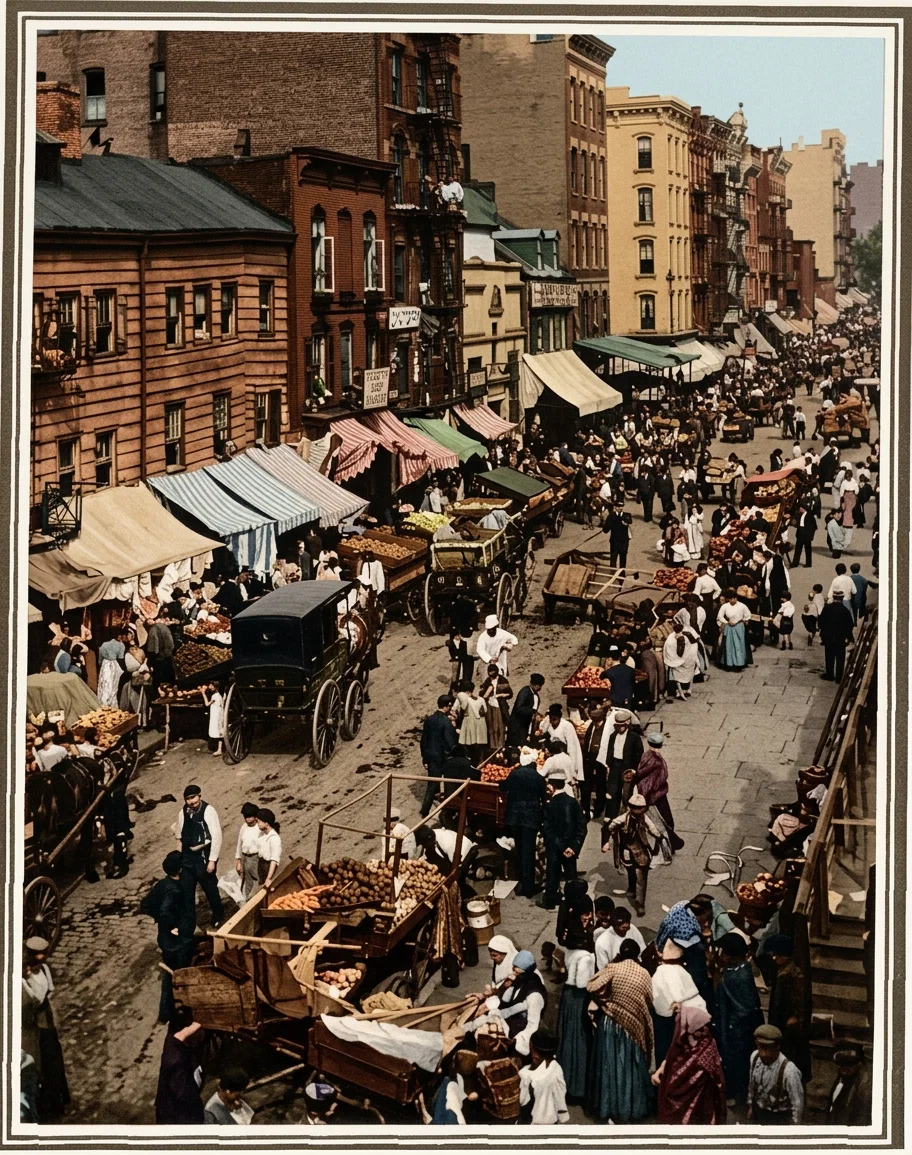
Copyright, Detroit Photographic Co.
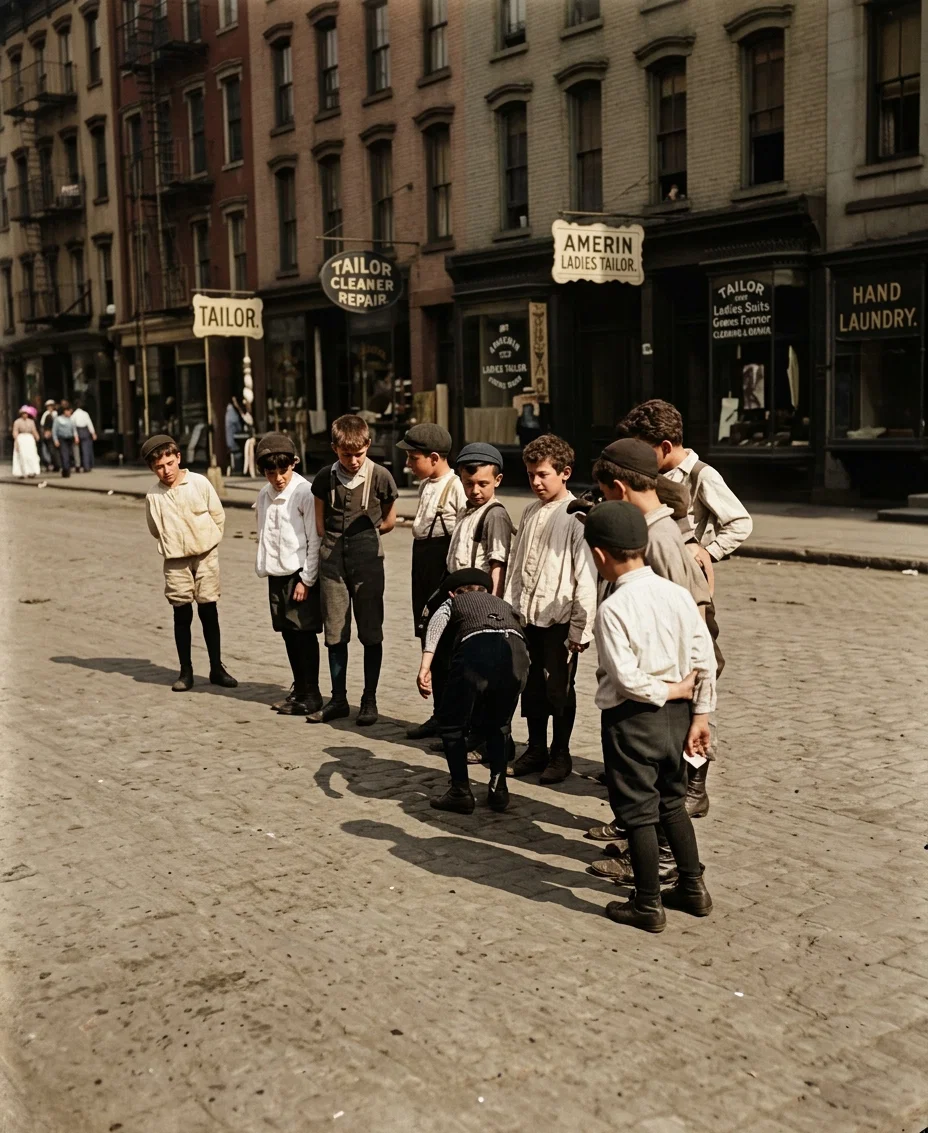
Copyright, 1907, Underwood & Underwood, N. Y.
When the host of the enemy surrounded the city of Dothan, and the servant of the prophet could not see the hand of God which was with them, Elisha prayed, “Lord, I pray thee, open his eyes, that he may see. And the Lord opened the eyes of the young man; and he saw.” 2 Kings 6:17. Even so we need a clear vision to understand what this immigration to the United States means to us. Elisha’s prayer is well applicable to our time, because we should realize the divine hand in this marvelous movement,—a movement never seen in the past,—and the great blessings we may bring through the gospel to this vast army coming to our land.
Surely the fields are ripe for harvest, and many are ready to hear the gospel. When the immigrant arrives in our country, the old religious ties have been weakened by the voyage, sometimes broken altogether. The bulk of the new immigration, which began in 1880, is Roman or Greek Catholic. And while, in their respective countries, these are the state religions, yet the ties are not very strong after the individual leaves his home country. “We are tired of our church and our priests,” is an answer we often meet in our labor with this class. The same is experienced by others who have come in contact with them. Mr. Groose says: “Thousands of these nominal church-members drift into open infidelity or schools of atheism, or else into nothingism. Their former church does not keep them, and Protestantism does not get them.”
Perhaps the condition prevailing in many large cities will show this more clearly. In one city in Massachusetts, where there are one thousand seven hundred Italians, it is said that only fifty or sixty attend the Roman Catholic Church; and in another of six thousand, only about three hundred attend the religious services of their church. They are tired of the Roman Catholic Church, and have lost faith in its priests.
The tide of immigration is rising higher and higher. In the past we have not been able to do much for the foreigners already here—and still they continue to come at the rate of a million a year. Shall we be able, in the future, to care for these incoming millions? God has provided us with some means to carry the message to them. There is literature in our publishing houses in nearly thirty different languages. Will you help to distribute this literature among your foreign neighbors?