With Our INDUSTRIAL MISSIONS in AFRICA

9%

Review and Herald Publishing Association · Takoma Park Station, Washington, D. C. · Nov 3, 1910

FromReview and Herald, Vol. 87, No. 44.

Read the full edition

With Our INDUSTRIAL MISSIONS in AFRICA

Planting the Ntanda School
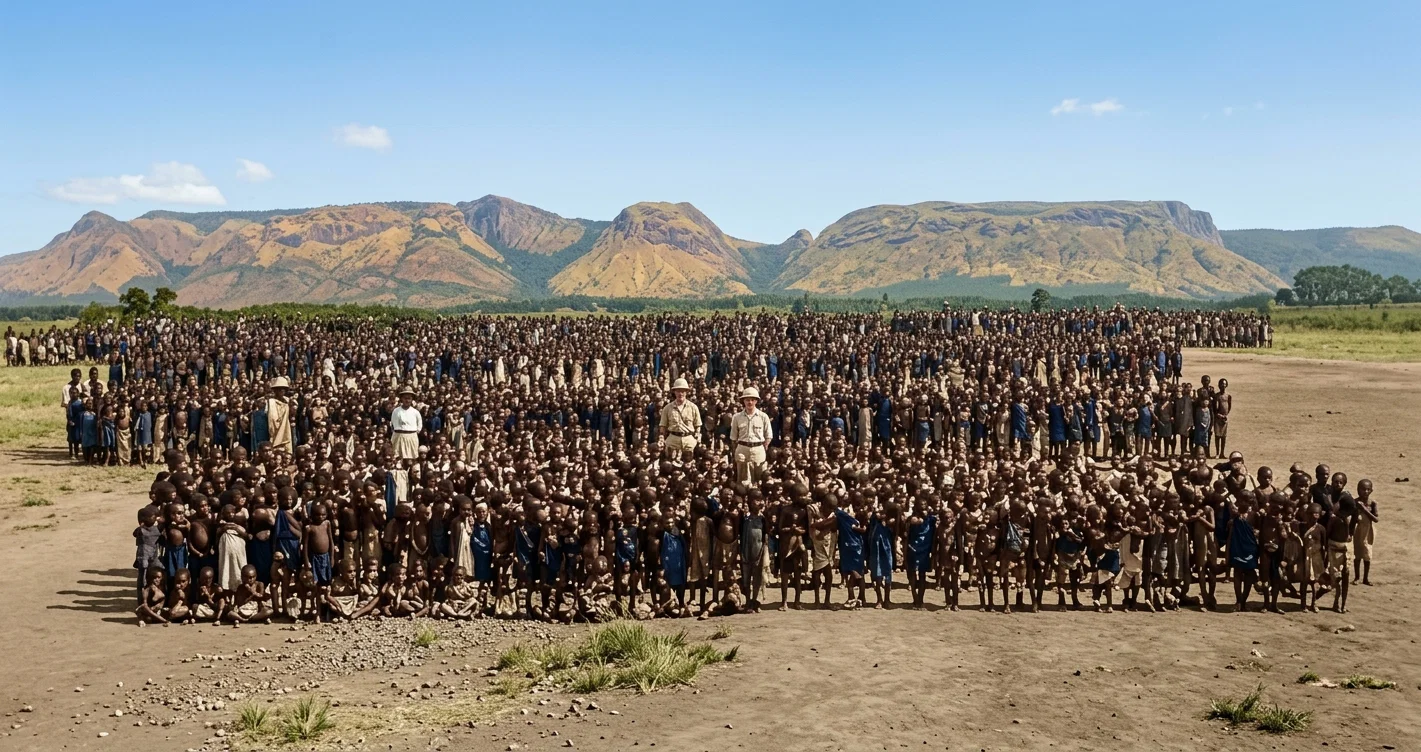
FIVE hours’ journey from our Vuasu station, in the Pare Mountains, up-hill and down, through stream and tangle, brought us to Ntanda, where the chief lived. He welcomed us, and we asked him to call in his chiefs in the neighboring districts to talk about a school.
THE SIX HUNDRED NATIVE CHILDREN WHO ASKED ADMITTANCE TO ONE OF OUR MISSION SCHOOLS IN EAST AFRICA, BUT FOR LACK OF ROOM WERE DENIED
We then pitched our tent, a little distance from the village. Early in the morning we were awakened by the biting of ants. They were the detested visiting ants, thousands of which were running about the tent. We had to hasten away with our clothes into the open, and our boys made a border of hot ashes around the tent. Said one of the boys: “The ants have been brought here through the witchcraft of the people, to prevent the erection of a school in this neighborhood.” But I strengthened his faith with the words: “If God be for us, who can be against us?”
As the sun rose, those who had been invited from the neighboring mountains came marching in. After we had greeted them, and they had formed a circle around me, I began to tell them of the creation of the world, and how sin had come. I spoke of the plan of salvation, and of the second coming of Christ, who would judge the world. They listened quietly, interrupting now and then when something seemed impossible to them. Many also laughed.
As I told them that God had a warning message for all the world, and had sent us to help them and to instruct their children, and to teach them how they should pray to the great God, they were not at once in harmony with this plan; for, they said, they needed their children now during the famine to protect their corn from the wild hogs and from the monkeys. I told them how God allows famine, that we may think of him who gives the rain and the sun and the harvests in their season; for the Wapare worship their ancestors, whose spirits they greatly fear. They also pray to the exhumed skulls for the gift of cattle and goats, for the blessing of children, for rain, for health—yea, even for everlasting life itself.
As I now urged these people assembled before me to worship the living God, who can not die, who created them, and who made the skulls which they adored; and as I asked that they send their children to school, only two hours each day, after which they might work in the fields as heretofore, there arose among the people a peaceful murmur which showed that they were satisfied with the suggestion. We then chose the place upon which we had pitched the tent as a building site for the school, and they were ready to help in the erection of the schoolhouse.
Year by year we are seeing the words fulfilled: “And the Gentiles shall come to thy light, and kings to the brightness of thy rising.” God is teaching us how we are to take up the work of educating the children of the Pare people. Dur ing the year, we were enabled to open six new schools, with three hundred fifty pupils, who are daily instructed by baptized missionary helpers.
B. OHME.
German East Africa.