The East German Conference

8%

Review and Herald Publishing Association · Takoma Park Station, Washington, D. C. · Mar 19, 1908

FromReview and Herald, Vol. 85, No. 12.

Read the full edition

The East German Conference

GUY DAIL
THE seventh session of the East German Conference was held in Berlin, January 22-26. The business meetings were in our Central Berlin chapel, while well-attended lectures for the public were conducted in four other parts of the city—in North Berlin, in South Berlin, in Schoeneberg, and in Charlottenburg. Of all the European fields, none seems to promise more for our work than the land of the Reformation; and of the German territory, none appears more easily accessible than Berlin, with its nearly three million inhabitants. I was astonished to hear how some of our laborers in this city operate: If a Bible worker at the time of his first visit, sees that there is little interest in the subject presented, he does not call on this person again to try to awaken an interest; he has so many addresses of others who really desire to hear, that he takes only such as wish to learn of the message.
The territory of the East German Conference is made up of the provinces of Brandenburg (with the city of Berlin included) and Pomerania. The kingdom of Saxony is to be severed from the East German Conference, and will date its organization into a separate conference from Jan. 1, 1908, and thus the population of the East German Conference, which was 11,765,000 heretofore, will be cut down to about 7,256,000.
As to finance, the East German field has done well. Although it lost Silesia, with more than 375 members, a year ago, yet in 1907 its tithe was 66,148.83 marks, or only 2,409.32 marks less than when Silesia was still a part of its territory. The gifts for 1907 amounted to 11,274.68 marks, against 12,559.73 marks—Sabbath-school, First-day, and annual offerings—in 1906. After Silesia was organized into a separate conference, there remained in the East German field 1,032 members; during 1907, 275 were added by baptism and vote, and there was a net gain of 214, so that its present membership is 1,246. We are much pleased with the development of the canvassing work here. In 1905, there were twenty-eight to thirty colporteurs, with sales amounting to 30,398.70 marks; in 1906, thirty to thirty-two canvassers sold 33,365.85 marks’ worth of publications; and last year, there were thirty-eight to forty agents, whose output was 59,316.96 marks.
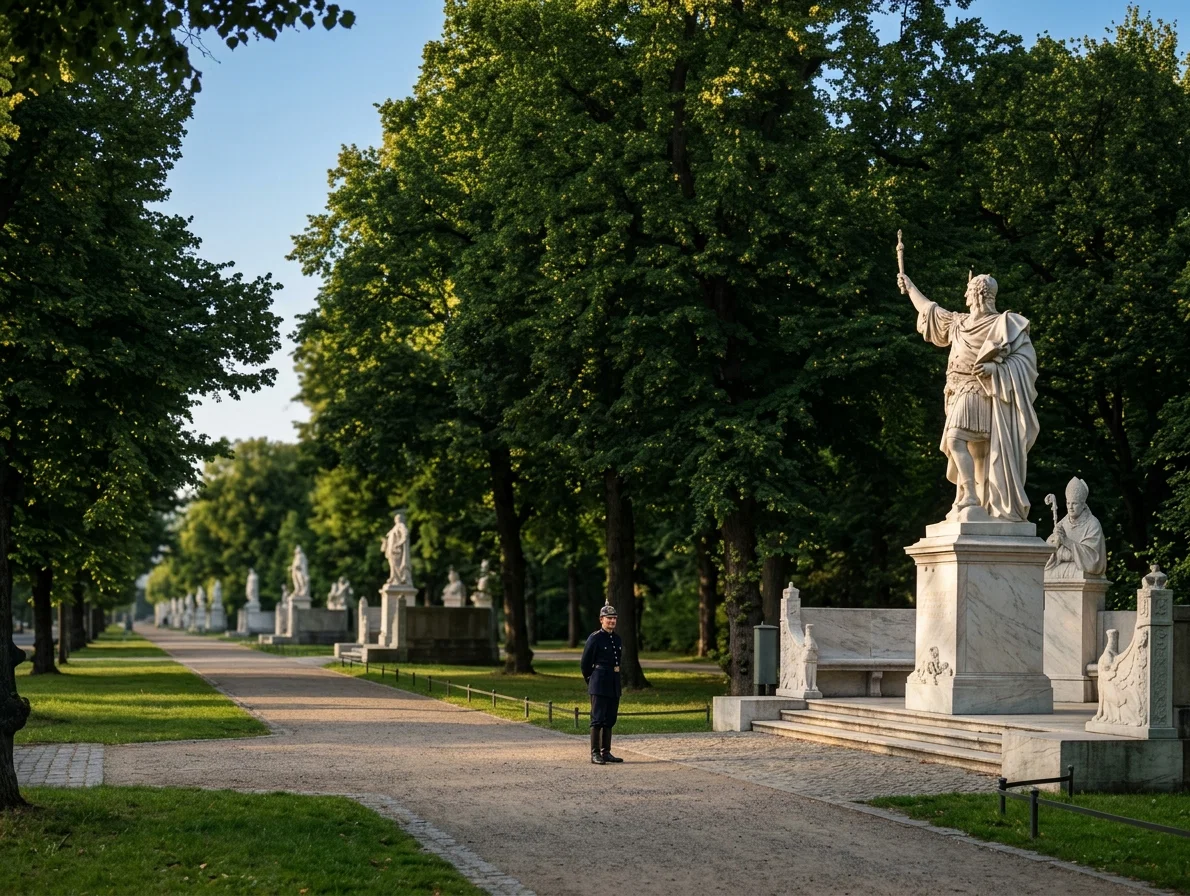
AVENUE OF VICTORY, BERLIN
About one hundred delegates were at the conference. On Sabbath, six hundred were in attendance, to witness the ordination of Brethren O. Schwenecke, R. Cunitz, and M. H. Wentland, who were set apart to the gospel ministry by prayer and the laying on of hands. Several were baptized, and the day was a good one for all who were able to be present. Brethren L. R. Conradi, H. F. Schuberth, E. Frauchiger, and Dr. Petersohn were glad to assist during the conference.
The business passed off harmoniously. It was voted to give 1,000 marks of the surplus tithe toward the support of the work in the Austrian Mission. This is one of the practical ways in which the delegates expressed their gratitude to God for the rich blessings of the year.
One recommendation suggested that our brethren, when lending money for business enterprises, should require a written agreement about the matter, and the proper security for the payment of the loan.
Another of the encouraging features of this session of the East German Conference was the reception of six new churches and companies. Two churches were cut off from the original Central Berlin church, and were organized into separate congregations; they, too, asked for admission—thus eight, in all, were received.
Last summer the East German tent efforts gave encouraging results; and it is now planned to continue the gospel tent work, and over four hundred marks were raised in cash and pledges toward the tent fund. The conference poor fund was also strengthened by a good collection, and the Sabbath-school donation was liberal.
Brother G. W. Schubert was unanimously chosen president, and he will be assisted in this field by three ordained ministers, two licentiates, sixteen Bible workers, one missionary nurse, and thirty-two canvassers. That God may continue his blessing here is our earnest prayer. We believe our friends everywhere will remember the East German field during the current year.
Hamburg, Germany.