Helps in Reading

5%

Review and Herald Publishing Association · Takoma Park Station, Washington, D. C. · Apr 2, 1908

FromReview and Herald, Vol. 85, No. 14.

Read the full edition

Helps in Reading

(Concluded)

The Phonogram Drill

THE phonogram drill is conducted in exactly the same way as is the sight-word drill, described in the previous article, the phonograms used being discovered from known words the same as the words are discovered from known sentences.
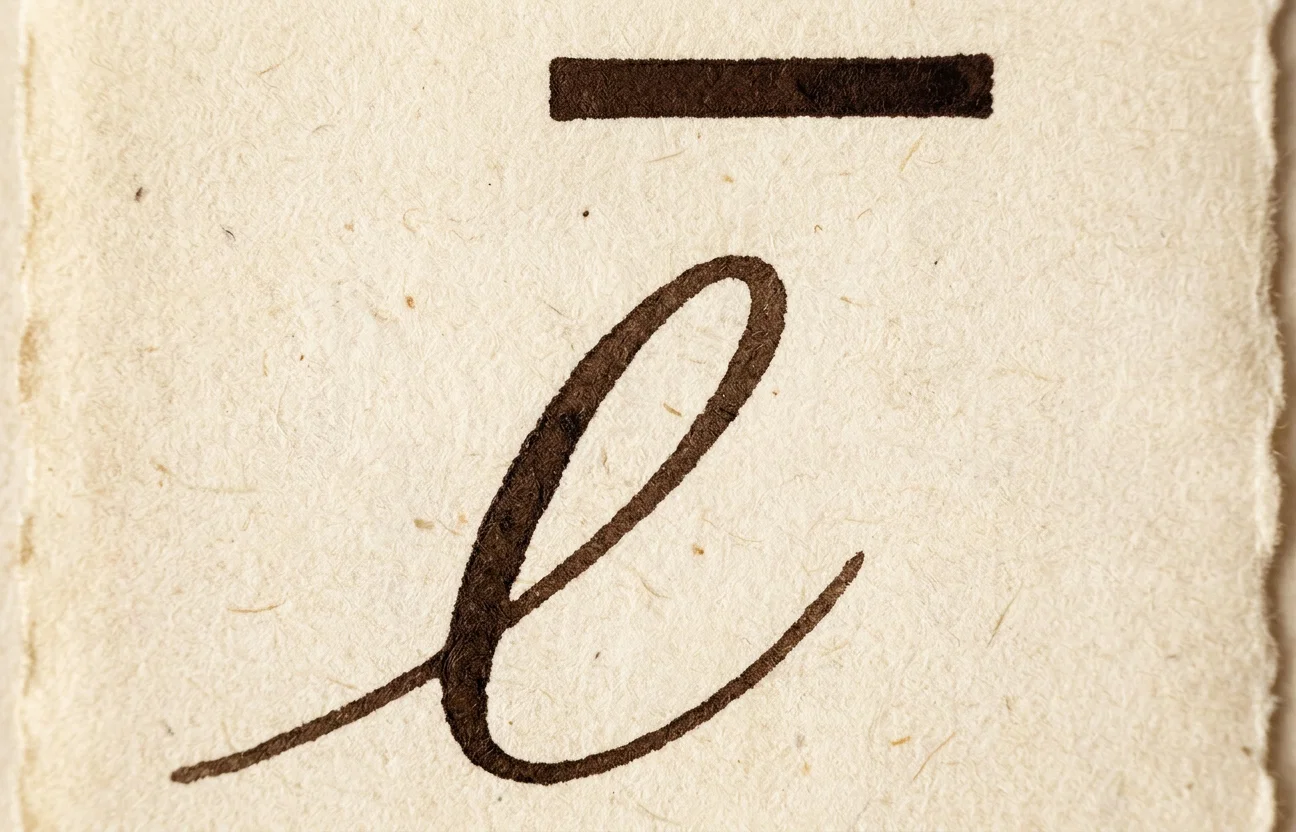
The cards prepared for this drill are preferable to the Word Phonetic drill cards, inasmuch as the script used is the Spencerian (the same as that used in the readers), instead of the nameless and out-of-date vertical. This avoids the confusion resulting from the presentation before beginners of two styles of script. On the other side of each card the same phonogram appears in bold print.
New phonograms should be introduced no faster than those already in the drill list are thoroughly mastered by the entire class. If in the drill a pupil fails of recognizing a phonogram, do not tell him, or at least make this a last resort. Endeavor first to lead him to discover it for himself, by writing on the board a familiar word in which this phonogram occurs, underlining the phonogram. Several attempts of this kind will generally prove successful.
Skill in instant recognition of phonograms is absolutely essential to the acquirement of the power of independent word getting. If this drill is faithfully persevered in, no pupil ever need be told a new blend word, that is, a new word in which occurs only known word elements or phonograms. For instance, suppose the child has already learned the sight word each and the phonograms p, r, pr, t, b, es, er, ers, ing. From a knowledge of these word elements he can discover for himself the words peach, reach, preach, teach, beach, peaches, reaches, preaches, teaches, preacher, teacher, preachers, teachers, reaching, preaching, teaching. Morethan this, he is thus coming into possession of a conscious power that is encouraging him to dig the thing out for himself—a power that he will need many times later in his school and life-work.

The Blend Drill, or Drill in Word Getting

This drill does not require cards, but is conducted from the blackboard, after the phonograms given in the lesson have been mastered (understand this word literally). The list of words from which the drill is given consists of new words as well as some that are known, but those which contain only known word elements. The words copied onto the blackboard for this drill should be (1) the words given at the head of the reading lesson for blend drill, or if such a list is not given, (2) words selected from the reading lesson, containing more than four phonograms, with their phonograms diacritically marked; (3) about twelve shorter phonetic words, with marks; (4) some words that are only partially marked, and (5) some words that are unmarked.
In conducting the drill, never tell a pupil a new word. Allow him the delight of discovering it for himself from its elementary phonograms.
The time of the recitation should not be used for copying the lists onto the blackboard; this work should be all done beforehand. If there is not sufficient blackboard room to allow of this, an ordinary piece of holland window-shade or blackboard cloth, fixed at the top of the blackboard on regular curtain spring rollers, is even better than the blackboard, for the work may then be rolled out of sight when not needed.

The Drill in Sentence Building

This is an exercise for busy work. Each pupil is supplied with a box of small word cards like these:—
On some of these cards the word begins with a capital letter. Other cards give the simple punctuation marks—period, exclamation point, question mark, and comma. With these cards the pupil builds sentences corresponding to sentences written by the teacher on the blackboard.
After skill has been acquired in this imitative work, the pupil may be encouraged to construct original sentences from given lists of nouns or verbs, and finally sentences that are wholly original. In this exercise he is not only profitably occupied, but he is learning the elements of correct composition in the expression of thought, and the use of capital letters and simple punctuation marks.
SARAH E. PECK.
NOTE.—Arrangements are now being made to provide sets of word cards, phonogram cards, and sentence-building cards specially prepared to accompany the “True Educator Readers.” The Word Phonetic drill cards cost $1.10 for a complete set of one hundred cards. The cost of the sets above described will depend upon the number of sets printed, and for this reason it is desired to know approximately how many teachers desire them. It is hoped that many will avail themselves of this opportunity; for if this is done, we are assured that the various sets of drill cards can be provided at probably not more than $1 a set. All who are likely to need the cards either this year or next should address The Normal Department, Union College, College View, Neb.