Korea

10%

Review and Herald Publishing Association · Takoma Park Station, Washington, D.C. · May 14, 1908

FromReview and Herald, Vol. 85, No. 20.

Read the full edition

Korea

SOONAN.— Our school opened December 9. Our girls' school is small, but we enjoy much of God's blessing while studying together. I have six students at present. For a while there were eight; but the husband of one, and the mother-in-law of another, would not permit them to continue to attend.
Children are married between the ages of twelve and fifteen. It is said that one can not find a girl fifteen years old who is not married. After she is married, she has to live in the house of her mother-in-law, and is nothing more than a slave.
One meets with many interesting experiences each day. From the first I tried to impress upon the students that all should be modestly dressed, washed, with hair combed, before entering the schoolroom. One morning, however, when I was speaking to the smaller girls, one of my oldest students (aged twenty-nine) said that I should not require the younger girls to be washed, and have the hair combed every day; for that was difficult to do. She also said: “Since I attend school, I comb my hair every day; but I do it in the evening, and wash my face in the morning.” A few days later she came, and said: “Teacher, please excuse me. I had no time to wash my face this morning.”
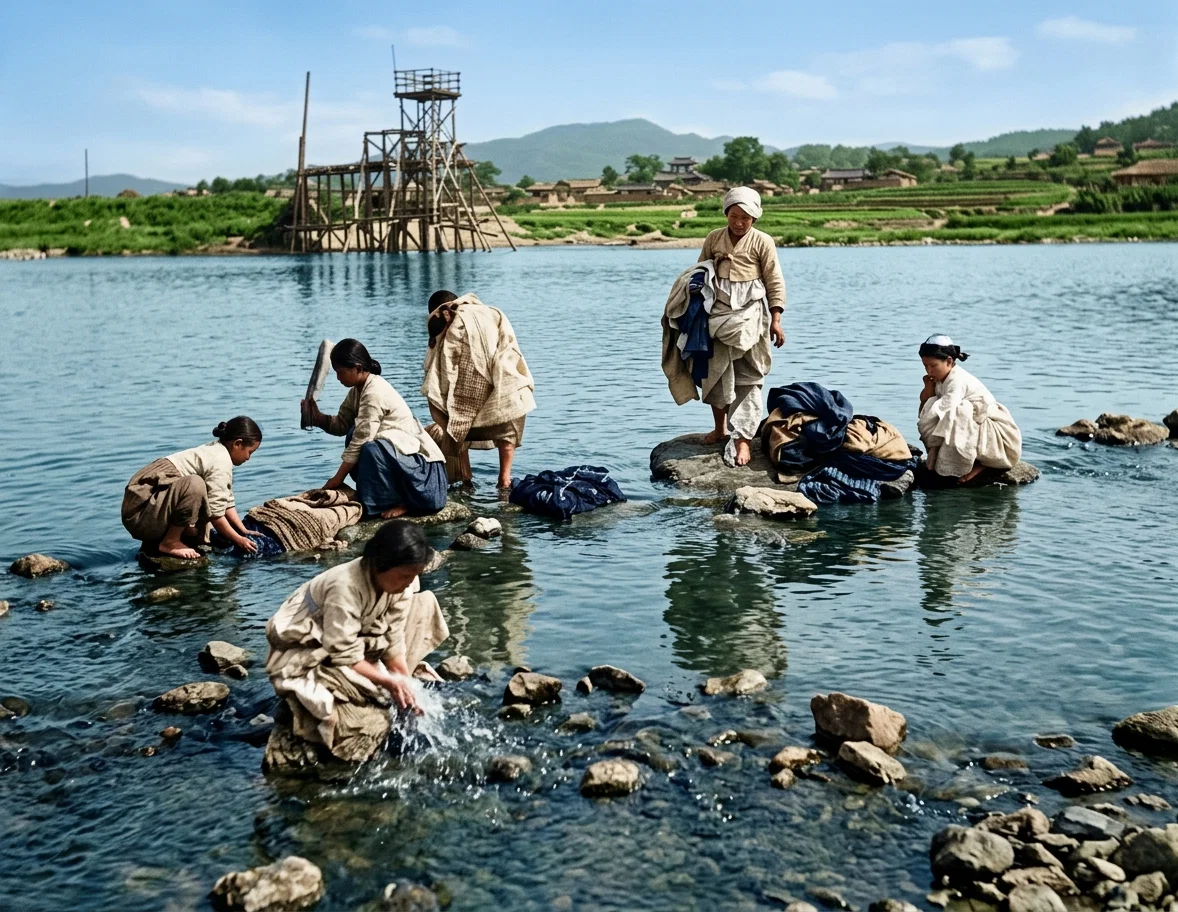
NATIVE LAUNDRY, KOREA
I teach Bible, arithmetic, physiology, and geography. My language teacher also gives the girls lessons in reading and writing. We find few women who can read, and many are not allowed to learn, even if they wish to do so. It depends often upon the mothers-in-law, whether or not they will be allowed to learn. Their husbands, also, will tell them that their work is to cook and sew, etc. According to the custom here, it is a shame for a man to work. The women have to labor in the fields, usually with their babies tied on their backs. They must also do all their own spinning and weaving for the clothing they need.
But these dear sisters feel very thankful when they hear how our Saviour came to die for them. Even in homes where the men are professedly Christians, the women seem to be kept under the impression that they can not be saved, if they have families to take care of. I have come in contact with quite a number who told me that they had always been taught that they could not be saved. With tears in their eyes, they began to thank me for telling them that Jesus came to die for them, and that they can receive help in all their trials each day, by going to him in their need.
It is surprising how quickly they learn. If we give them an opportunity, I believe they will put to shame many of us who have been in favorable surroundings all our lives.
I hope that very soon an experienced teacher for the girls will be able to come. I had had no experience in school work before coming here, and I have to learn each day along with the students. The three oldest have come with the intention of preparing for service. They are very promising young women. I love these people, and only hope that soon more workers will come to this field, to help give the last warning message to them. I am well, and of good courage, and trusting for help in Him who has promised to be with us always.
MIMI SCHARFFENBERG.