Our Return to China

6%

Review and Herald Publishing Association · Takoma Park Station, Washington, D. C. · Jun 11, 1908

FromReview and Herald, Vol. 85, No. 24.

Read the full edition

Our Return to China

H. W. MILLER, M. D.
WE are contented, and are very glad to be safe on China's shores once more. China seems different to me from any other mission field I have ever been in. It is more like home to me than my native country.
A new railway line has been put through from Shanghai, our new headquarters, to Nanking, a distance of about two hundred miles, with as fine passenger coaches as are to be seen on any railroad. The fare in American currency is four dollars for first-class. Second-class is one cent a mile. Third-class, which is good enough for any one for the day coach, is only one-half cent a mile, or one dollar for the distance, which requires about six hours.
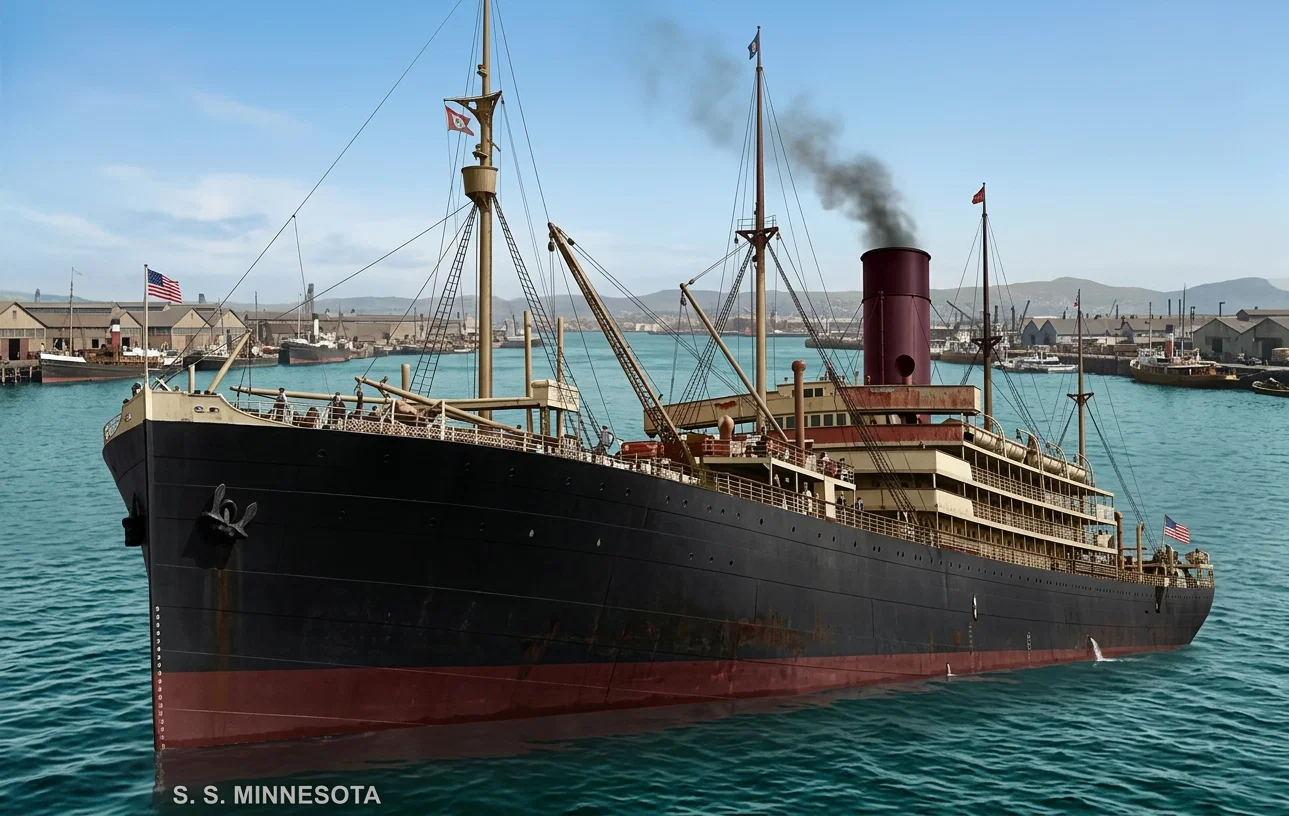
On our voyage across the Pacific, we had smooth seas most of the way, and during the roughest our boat glided along so smoothly that none of our party were afflicted with that uncontrollable affliction, which yields to no remedy yet known,—sea-sickness. The “Minnesota” is perhaps as steady a boat as sails on the seas to-day. Walking around her deck, one covers the distance of about a quarter of a mile. She is capable of carrying thirty thousand tons of freight, and draws thirty-five feet of water. About half the second-class cabins were filled with our own missionaries. The American ambassador to China, Hon. W. W. Rockhill, was also a passenger on this boat. With but few exceptions, we held Bible studies each day, to which we invited the other missionaries. Thus they had the message placed before them. Some became very bitter, while others are studying.
We were a little unfortunate in having an epidemic of the mumps, in which some of our party also participated, but we were able to pass the quarantine at Tokyo. Smallpox is raging in Japan, and there was some doubt as to whether we would be allowed to land. We were anchored five miles out of the harbor, and the Japanese launch came out with three doctors on board. They first lined up the cabin boys, and looked at their eyes, and felt their pulse, one by one. After this came the deck hands, and then the ship’s crew, the steerage passengers, the second-class and the first-class passengers. Then we were permitted to go into the harbor and anchor.
In the distance could be seen an active volcano, with the smoke and fumes pouring forth from its crater. This tended to make one feel rather unsafe.
Our missionaries at the capital gave us a hearty welcome. Three days in this harbor gave us opportunity of seeing the land of the rising sun. Upon landing, we were greeted by a company of men drawing jinrikishas, who were able to speak a few words of English. They promised to take us around the city for twenty sen, assuring us they knew all about the city and the points of interest. But when they land you at the place you desire, instead of ten cents, they will want one or two yen, or fifty cents or a dollar. And if you do not have the correct change, it is no easy matter to pay them the price bargained for.
Japanese civilization seems to have made but little headway in the Christianization of the empire, so far as any exterior appearance presents itself to the visitor.
After another day’s travel along the coasts of Japan, we arrived at Kobe, and there spent another three days.
THE STEAMSHIP "MINNESOTA"
During our stay we took a trip up to Kyoto, the old capital of the empire. It is claimed that one of the old temples there contains three hundred thirty-three thousand three hundred thirty-three idols. We also visited a new museum, which the government has just built for the collection of old relics, and for storing some of the trophies of the Russo-Japanese war and the late war with China. We were particularly interested in the industries of Japan. While it is true that the Japanese are turning out nearly everything, still they are doing it in small houses, and with very crude equipments. We visited a firm that makes printing-presses. Instead of a factory constructed of brick in the foreign style, we found a one-story native house, the castings out on the street, and the workmen out there with their files and chisels, making the parts as fast as orders were received for them. One could not but marvel, after visiting the crude-looking factories, to see how well the presses look when finished. The Japanese have, however, a few modern buildings, which are large and well-equipped.
Our sanitarium at Kobe was filled with patients when we were there. One of our party, Miss Dehn, stopped there to take up her work. From this place we continued our journey through the Inland Sea of Japan, which is one of the most interesting parts of the whole trip, land being in view on both sides nearly all the way.
It was Thursday morning when our boat was carried into the harbor of Nagasaki by the rising tide. Here nearly all the trans-Pacific vessels coal, and this process is a very interesting sight. There were about twelve hundred men, women, and children standing on the scaffolding outside the boat, lifting little baskets of coal from little junks into the port-holes of the coal-bins. During that day about three thousand tons of coal were loaded. At all these ports the boat is filled with Japanese selling their wares, curios, and post-cards. One man had two little metal cups, with nice engravings outside, and asked me five yen, or about two and a half dollars, for them. To get rid of him, I offered him what I considered a small price. He hung around a little while, trying to get more, but finally took the one yen. From this you can see it is almost unsafe to offer them one tenth of their price, or one fifth at the most.
After leaving this last port of Japan, we steamed out into the China Sea, and when within one hundred fifty miles of land, the water became yellow, owing to the deposits from the Yangtse-Kiang River. We arrived at Woosung harbor Saturday evening, and it was about eleven o’clock when the tender landed us in front of the custom house on the bund of Shanghai. Since part of our company were to locate at Shanghai at once, we began to look about for suitable living quarters, and within a week’s time were located. We have since rented temporary quarters for our printing-press, and already have the press removed from the interior, and have received two of our shipments, including two printing-presses, paper-cutter, and other articles. Chinese teachers have been employed, and our workers are busy studying the language.
Elder and Mrs. R. F. Cottrell and Miss Schilberg continued their journey inland, accompanied by Brethren Anderson, Selmon, and Hankins, so that all were quickly located, and the query that arose was, “Who are to come to fill the many other calls that are being made?” I was very glad to report that we have some at the Washington Seminary and the Sanitarium, and that also in our other institutions are many who are interested and planning for work in thisfield, and who will, we hope, in a short time take a journey similar to the one I have described.
As I landed again on Chinese soil, China appealed to me as never before, and I felt that we must press into these fields where just now opportunities are presenting themselves, and the calls are so urgent. May God’s richest blessings attend those who are now in preparation. And may we who have gone out be remembered in your petitions to the throne of grace.
Shanghai.