The South American Union Conference

6%

Review and Herald Publishing Association · Takoma Park Station, Washington, D. C. · Jun 11, 1908

FromReview and Herald, Vol. 85, No. 24.

Read the full edition

The South American Union Conference

J. W. WESTPHAL
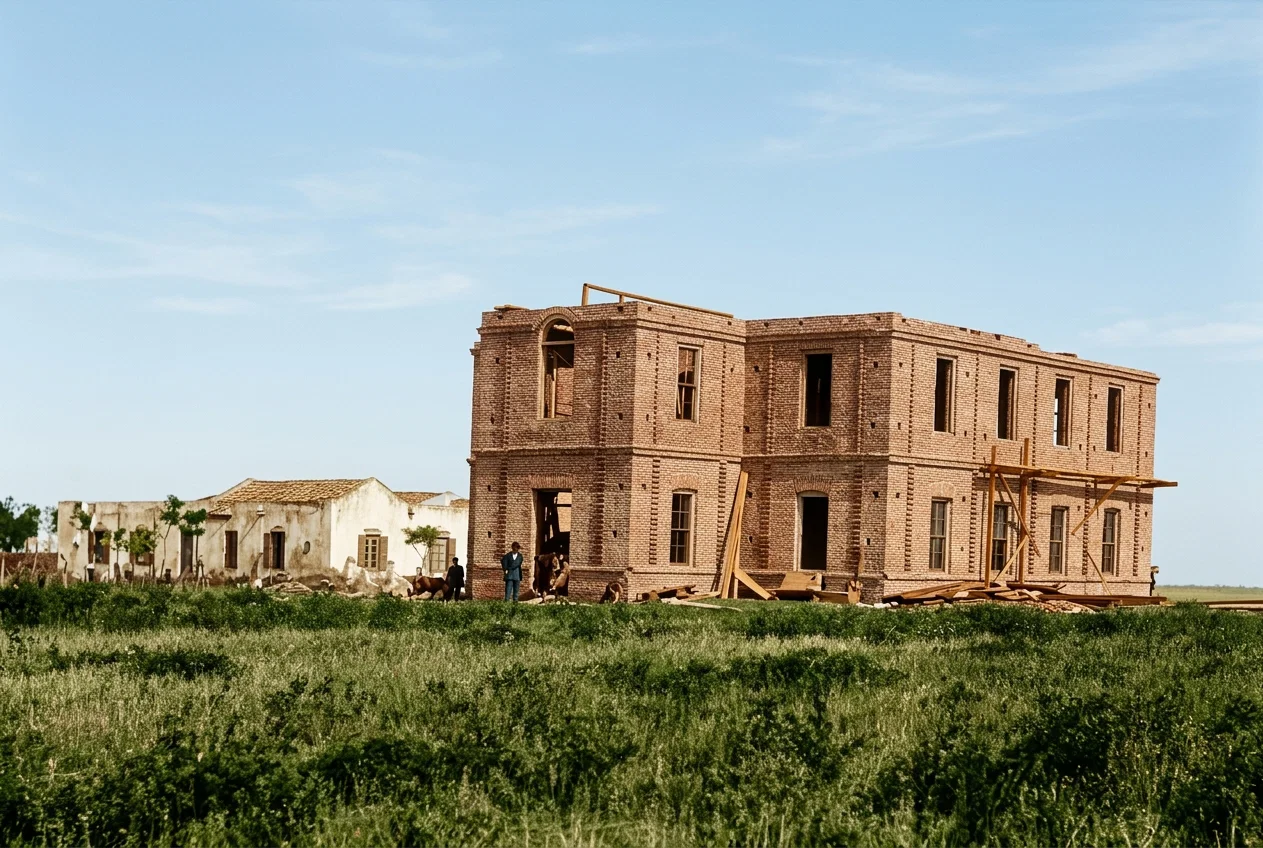
The South American Union Conference meeting was held at our River Plate school, near Diamante in the province of Entre Rios, Argentina, March 7-21. Although the new school building was not yet completed, it could be used for meeting purposes. A forty-by-sixty-foot tent was also pitched, with ten small tents. Room was thus supplied for those in attendance.
Twenty-eight delegates, representing all the fields of the South American Union Conference, were present. North Brazil, Ecuador, Peru, Bolivia, and Alta Parana were each represented by one delegate. From the rest of Brazil there were seven; from Chile, four; from Uruguay, four. The remainder were from Argentina. Our work in South America had never before seen such a representative gathering.
Over the platform in the school building was the motto, "The Gospel to the World in This Generation," and this was the spirit that controlled in the work of the conference. The object ever in view was to enlighten South America with the glory of the great threefold message.
Two years had passed since the organization of the union conference. Rapidly the field had been subdivided from two conferences and one mission field, as they existed before the organization of the union conference, to four organized conferences and seven mission fields. The reports from the different fields showed the wisdom of the arrangement. It has put the leaders in the several fields in closer touch with the people, and placed responsibilities on more men. The tithes and donations have materially increased, and four fields — Argentina, Uruguay, Rio Grande do Sul, and Santa Catharina-Parana — have become wholly self-supporting. As a result, more work has been done. Owing to a cleaning-up of the church records, the increase was apparently not what we had hoped. But the reports showed that a goodly number had been baptized who are firmly established in the truth.
Owing to the former division of South America into three fields, as many separate special interests grew up. After the further division of these fields, it was recognized that these interests should not belong to the local conference or mission in which they might be located, but that they should be general interests of the several conferences and mission fields.
This was held to be true of the publishing and tract society work of Brazil, the publishing, tract, and school work in Argentina, and the publishing work in Chile. This was definitely recognized by the union conference, so that these institutional interests belong to the Brazil, River Plate, and West Coast fields, respectively. They are under the direction of committees composed of the presidents and superintendents of the several fields in each of these grand divisions, the president of the union conference, and three other persons named by the union conference, until such time as the further organization or division of the South American field shall make a change in this arrangement necessary or desirable.
On account of the magnitude of our field, a resolution was adopted, to the effect that a vice-president of the South American Union Conference be elected, located in Brazil, who, together with the other Brazil members of the union conference committee, and in the absence of the president, be authorized to control matters pertaining to the Brazilian fields in harmony with the general plans of the union conference.
From every quarter came appeals for more help. Each field feels its destitution of laborers. Brother Octavio Navarettu, a canvasser of Chile, was recommended to go to Ecuador to labor in the same capacity. Brother Walter Thomann, also a canvasser of Chile, was recommended to go to Bolivia, to assist his brother. Brother T. H. Davis, of Ecuador, was invited to take charge of the canvassing work on the West Coast. Elder George Casebeer, superintendent of the Ecuador mission, was recommended to take charge of the Chile school; and Brother William Steele, of the Chile Tract Society office, was asked to take Brother Casebeer's place in Ecuador. Brother Carlos Krieghoff, who had had charge of the Chile school, was asked to take the place made vacant by the removal of Brother Steele. Brother Ignacio Kalbermatten, of Argentina, was asked to return to the Alta Parana mission to labor. It was recommended that Brother John Gaede, on reaching Brazil from the States, go to the Santa Catharina-Parana Conference to labor.
A resolution was adopted asking for two men of experience to take general charge of the canvassing work in the Brazil and River Plate fields.
The millions of Indians of Peru, Bolivia, and Ecuador enlisted the interest of the conference. A resolution was adopted to open a fund for the purpose of beginning mission work among them, and that the donations of our young people in South America be directed toward this fund. For this purpose one hundred twenty-five dollars was at once subscribed.
THE SCHOOL BUILDING IN ENTRE RIOS, ARGENTINA
Steps were taken to get out more literature in both the Portuguese and Spanish languages as quickly as possible. The first steps were taken to procure a new printing-press for Brazil, a thing that is greatly needed there.
The conference closed with a good feeling of unity, and of hope for the future of the work. The writer was chosen president; Elder F. W. Spies vice-president; and Arthur Fulton, secretary and treasurer.
Buenos Aires, Argentina.