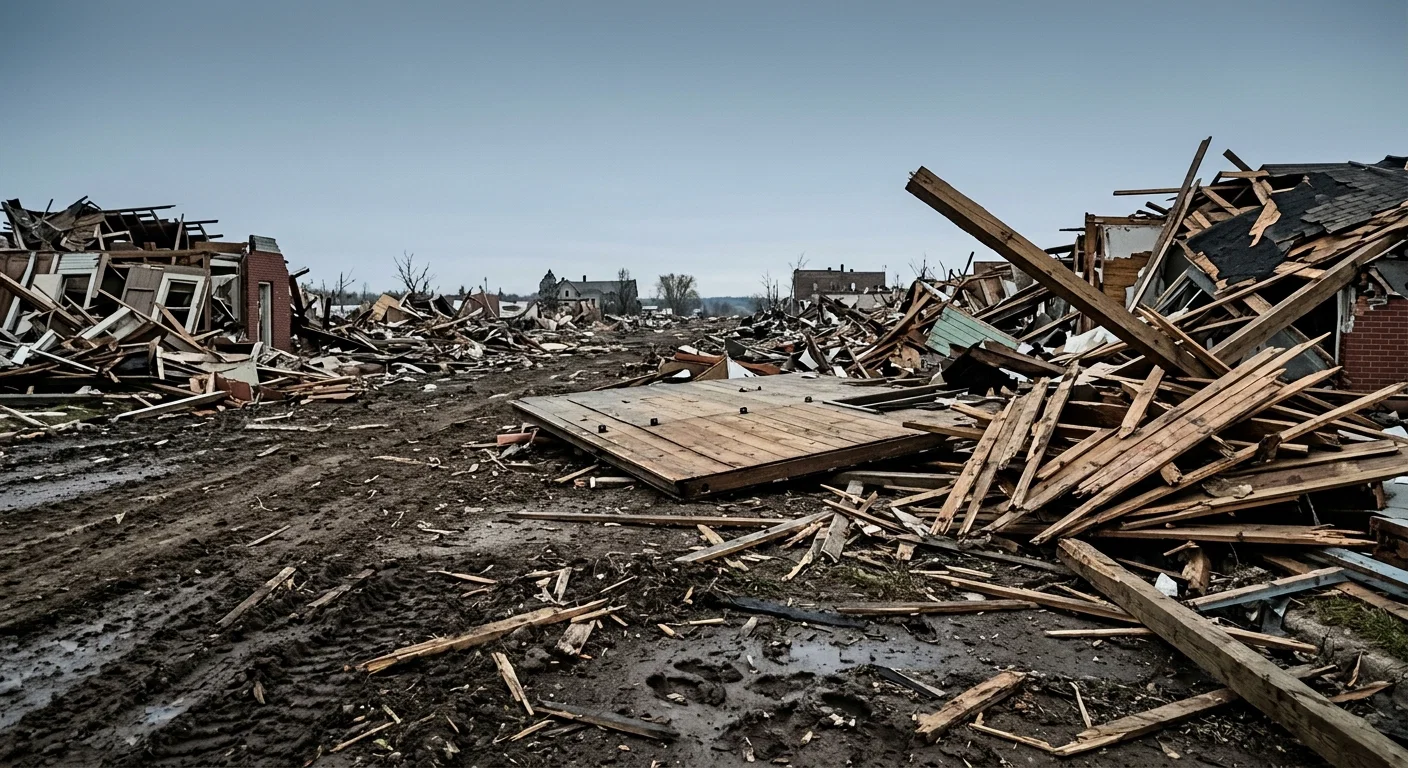
UNDOUBTEDLY, the cyclone and tornado both combined which passed over the Northwest the evening of June 12, and destroyed the city of New Richmond, was one of the most destructive that has ever visited this country. As the writer had the privilege of visiting the fated city a few hours after the cyclone had done its awful work, these words of the Saviour as He wept over Jerusalem before its destruction, came to mind: “Behold your house is left unto you desolate. . . . There shall not be left here one stone upon another, that shall not be thrown down. . . . And there shall be famines, and pestilences, and earthquakes, in divers places. All these are the beginning of sorrows.”
As we stepped from the train about midnight, we were met by a national guard armed with gun and bayonet, and escorted to the next guard, who passed us on to the next, till we reached the end of the picket line, and when we asked where we could find lodging he directed us to the Congregational church as the only possible place where we might find lodging.
New Richmond, Wis., at 6 P. M. June 12, was a prosperous town of 2,300 inhabitants. In less than one minute, between 6 and 6:30, the city was a mass of ruins; from 150 to 200 killed,—the exact number will never be known,—and nearly 1,000 injured. The above is from a photograph of the main business street after the tornado did its half-minute work.
Arriving there, we found that the church, being in the edge of the path of the storm, was partially torn down, but it furnished a shelter for the living as well as the dead. It had been turned into a morgue and hospital, and sheltered that night seventeen of those who had perished without a moment’s warning. Tired surgeons were there lying on the floor after a hard day’s work of caring for the dead and dying. After a few hours’ sleep on the floor of the church, we went out to view the devastated city. Such a scene of desolation and destruction our eyes had never beheld before. As we walked over those ruins we could only think that the four winds of heaven had been let loose, for that was literally true.
The weather observer had discovered before the storm that the wind had been blowing from every quarter towards the storm center, which was at this fated city. How an unseen force could twist and turn and break and pile up and tear down iron and wood and stone as it did there, is more than human mind can comprehend. I could only imagine that some giant fiend had stalked into that beautiful city, bent on destruction, and literally torn every building in its path from its foundation, and not satisfied with simply destroying the buildings, had passed them through a huge threshing-machine, after which the wood and stone and iron and all household effects, torn into fragments, had been scattered in shapeless piles or sown broadcast over the land. Horses and cows and chickens were lying dead, with lumber and brick and stone piled on them, or lying alone on the prairie.
Up to the present time over one hundred human bodies have been discovered, and it is supposed many more are yet undiscovered, and many more than this number have been wounded. One little sketch will serve to illustrate how nearly whole families were destroyed. Among the wounded was S. W. Hawkins, suffering from severe internal injuries and a broken leg. A newspaper man leaned over the ambulance and asked his name. The man was suffering greatly, but replied with cheerfulness, evidently forced:—
“Hawkins, sir, but it don’t make much difference; my wife, my two daughters, and my son, were all killed in the same place. They are all gone.”
Volumes might be written telling of similar pitiful stories, but such things are becoming so common they receive but a passing notice.
Skeptics read of strange and wonderful experiences in the Bible, and call them fables and falsehoods, while stranger and more unexplainable things are happening all around them, and still they go on doubting and finding fault with God. But God is ever merciful, and goes on warning the world and speaking to hearts that we are living in perilous times, yet the warning is unheeded. Men’s hearts are failing them for fear, and for looking after those things that are coming upon the earth, and there is only one place that is safe, where men and women can flee, and that is to Christ, the only City of Refuge where the storms of life can not enter to destroy or make sad hearts weep. He is the only sure foundation on which to build our hopes and anchor our lives. All other hopes and aspirations may fail, but God’s Word and promises never.