South Africa

9%

Review and Herald Publishing Association · Takoma Park Station, Washington, D. C. · Jul 9, 1908

FromReview and Herald, Vol. 85, No. 28.

Read the full edition

South Africa

AFTER arriving in Africa, it was decided that we should labor in the towns and cities instead of going to one of the missions; so in company with Elder I. J. Hankins and wife, we came to Kroonstad, Orange River Colony, and began meetings in a tent. Although we have had a great deal of opposition, the interest has been fairly good, and a few have begun keeping the Sabbath. Many others are convinced of the truth, and feel that they ought to obey it; but a number of these are railroad men, and they know that to obey means to lose their employment,—a serious matter just now in South Africa.
Thousands are out of work; other thousands who could do so, have left for England, Australia, and other places. Many more would go if they had money to get away. Hence our work in the towns is very hard.
Many of the farmers have become interested through reading the reports of our meetings in the papers, and other reading-matter. We have been doing some work out at the farms also, but we are at a great disadvantage in this respect, since most of the farmers are Dutch, and can understand very little English. We are studying the Dutch language, however, and hope to be able to do more for these people after a time. This field is in great need of Dutch workers.
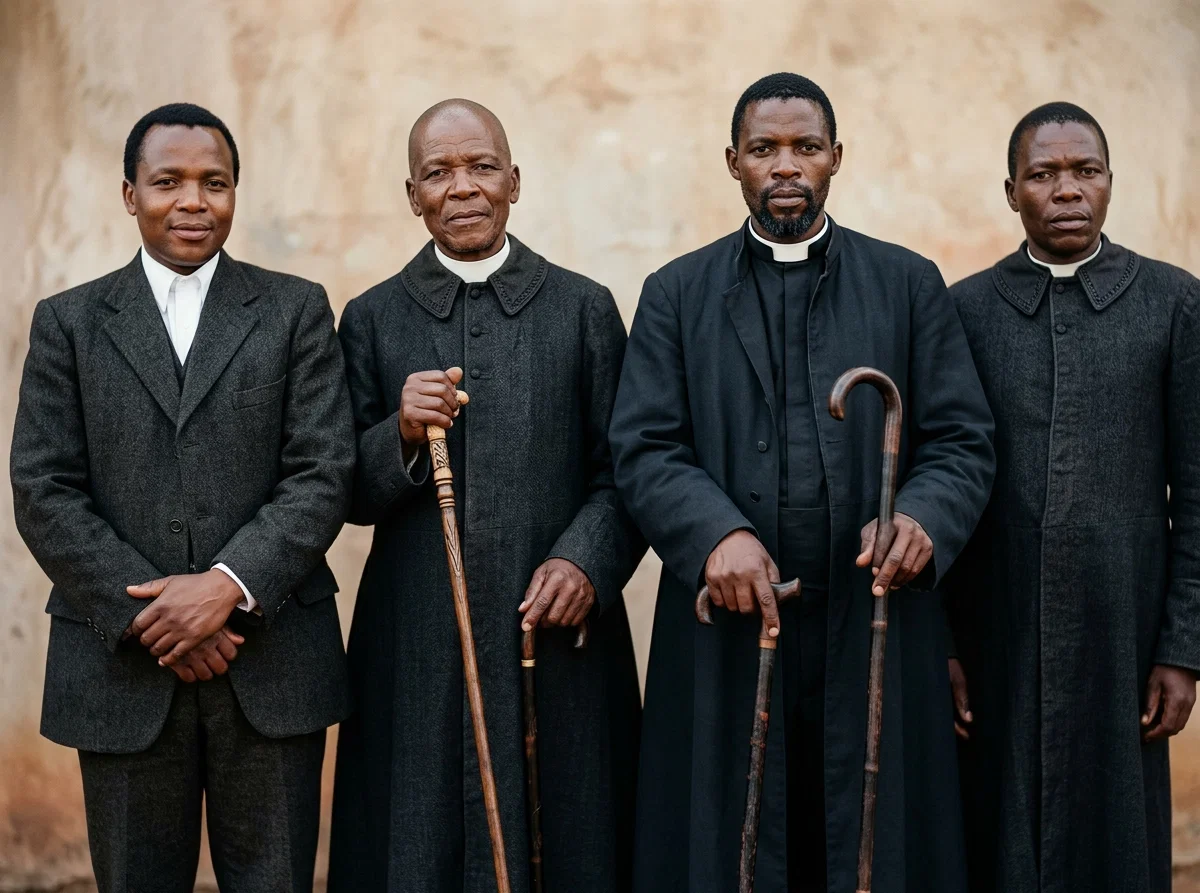
Besides its two or three thousand white people, Kroonstad has three or four thousand natives. These natives are in two little villages called “locations.” One of these is at the outskirts of Kroonstad, and the other is about half a mile from town. We have been doing some work among the natives also. Most of these meetings at the locations have been held in the open air, and we have had from two to six hundred present. We have found the stereopticon very useful in teaching the truth to these people. I secured the services of a young native minister, Gabriel Mabeni, to interpret for me. He interprets in both the Dutch and Sesuto, and also speaks two or three native dialects. He has under his care some five hundred people, and has become much interested in the truth.
The president of the division of the Methodist Church to which Mabeni belongs, Solomon Molotsi by name, was at this place visiting last week. There was also another minister with him from Bloemfontein, and I had a number of Bible studies with them. At the last meeting we had, Molotsi said, 'I have known something of the Sabbath before, and from what you have said to me I am convinced that it is the truth of God. I and my people do not want to depart from God, and we should be very glad to return to God's Sabbath.'
MABENI MOLOTSI MATLI MTIMKOLO
He then told me of some of the hardships they would have to meet if they should begin to keep the Sabbath. I will speak of these later. He bought a number of our books, and regretted that he could not stay longer to talk about these things. He gave me a very cordial invitation to come to Bloemfontein and work among his people. He has charge of about three thousand people, and we feel that God is opening the way for a great work to be done among them.
Around all these cities and towns, and also in the country, there are thousands of natives. Here is a great mission field, practically untouched as yet. Among them are many intelligent natives, with a fairly good education, and I believe we shall yet see many of these carrying this message to their own people in the interior.
Mtimkolo, one of our native workers, has been here with us for a few days, and is doing a good work. I am sending a picture of these people. We trust our brethren will remember this work in their prayers.
E. R. WILLIAMS.