The Philippine Islands

9%

Review and Herald Publishing Association · Takoma Park Station, Washington, D. C. · Jul 16, 1908

FromReview and Herald, Vol. 85, No. 29.

Read the full edition

The Philippine Islands

J. L. MCELHANEY
These islands were under the control of Spain up to nine years ago, and had been under her control for several centuries. Until that time it was a dangerous thing to think or act contrary to the mandates of the Catholic Church. Many cases can be cited of people who were put to death on false charges, when their only crime was thinking for themselves or speaking against the church.
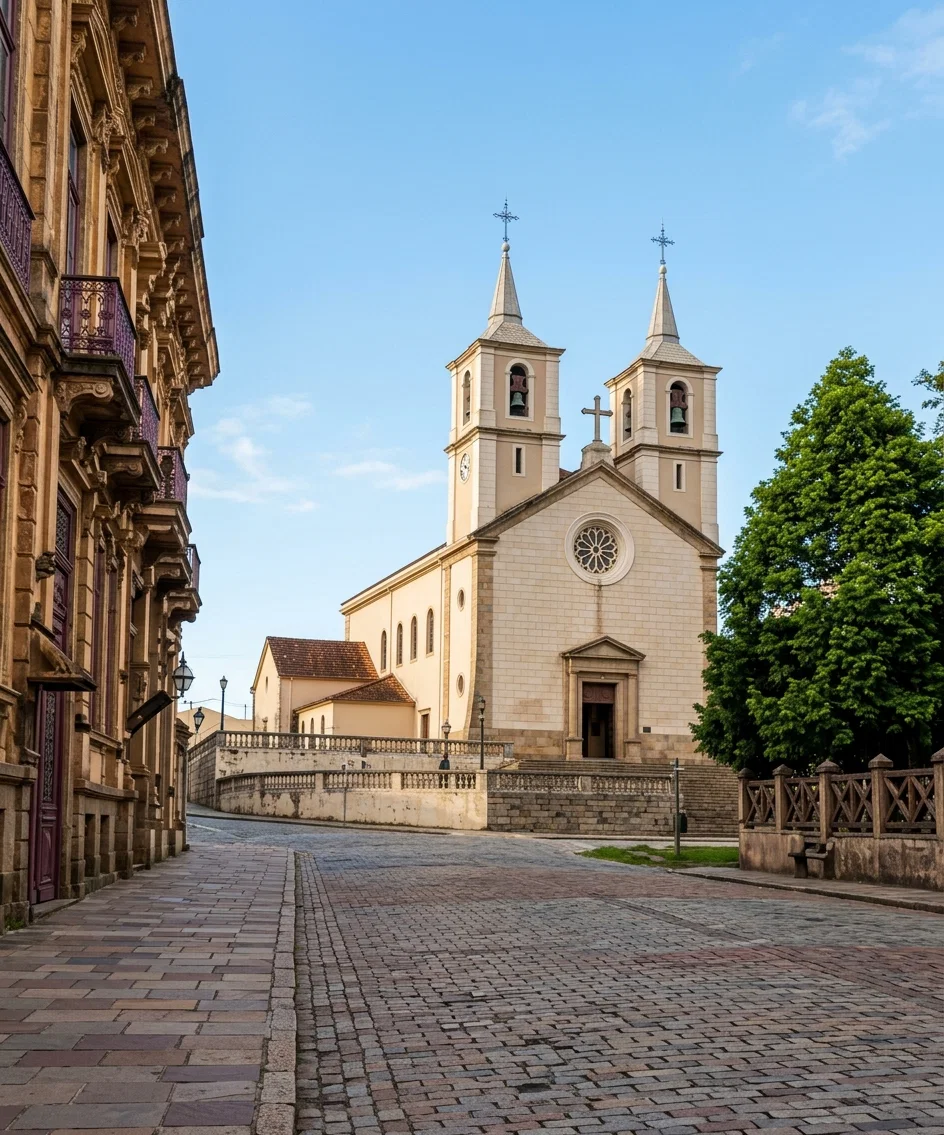
CATHEDRAL IN FLORIANOPOLIS
Dr. Jose Rizal was shot on the Luneta, just a short distance from where we live. By the Filipinos he is looked upon as their greatest patriot. He wrote a book in which he exposed the wickedness of the friars, and opposed them in other ways. We just read in a local paper an account of how the friars set up the type and printed a revolutionary document, and the nephew of the archbishop placed it in Rizal’s effects; and when he was searched, these papers were found, and he was shot in the back while hundreds of friars smoked their cigars and looked on with delight. Another man was banished to the island of Chafarina, in the Mediterranean, for owning and reading a Bible. These things give some idea of the condition of the people who were forcibly converted from heathenism to Catholicism several centuries ago. Ignorance and darkness have been the heritage of the Filipino people these many years.
The Filipinos are divided into many tribes and languages. They are not, as some suppose, a united people, with a common language. It is very difficult to ascertain the number of languages spoken in the group, but estimates place the number all the way from forty to eighty. These languages are very difficult to acquire. Very few of the people know anything of Spanish. Since American occupation, all the public schools have instructed in English. The language question is the most serious problem in missionary work among these people.
When we came to Manila, we began sending literature to the American school-teachers scattered among all the islands. We were able to do this only because many sent us literature of various kinds, and we heartily thank those who have helped us in this way. There are about eight hundred American school-teachers here at the present time. You can readily see that to reach such a number of people it would require a large supply of literature. We felt very anxious to make a systematic effort in setting the truth before these people, and we prayed earnestly that some way might be opened whereby this could be done.
We know you will rejoice with us when I tell you that we received a letter from Elder E. W. Farnsworth telling us that he had laid our need before the General Conference, and as a result five hundred copies weekly of the Special Series of the Signs of the Times are coming to us for use among these teachers. We had never told Elder Farnsworth anything about our needs, but the Lord impressed his mind to do this. This was a direct answer to our prayers. A few of these papers we are sending to Filipino teachers, and other kind friends are sending us clubs of American and Australasian Signs, and these we are using among Filipino teachers. There are a great many Filipino teachers; and as they are familiar with English, we are anxious to carry on a systematic work among them. These teachers belong to the different tribes, and so speak their native languages in addition to English. Does this not seem to you to be a wonderful opportunity to reach with the truth many speaking these languages? We believe that it is, and if we can reach some of these teachers through English literature, they, in turn, will become channels of light to their own people.
We feel deeply in earnest over these matters, they mean so much to the work here. We write these things to enlist your help and sympathy. We mail a letter to every person to whom we have sent literature, calling their attention to the papers and asking them to give them a careful reading. We have received a number of letters in reply expressing appreciation. These have been received from both American and Filipino teachers. One Filipino writes that he had translated some of the articles in the papers into his native language for the benefit of his family, and that they were very pleased at hearing such good articles. Praise the Lord for that! The Lord can carry the truth to those to whom we can not speak. This man wanted more literature, and we have sent it to him.
We are holding studies here in Manila with a young man, a Filipino, who is secretary to Archbishop Aglipay, the head of the Filipino Independent Church. This young man is an Ilocano, from the north of Luzon. He speaks two native languages, Spanish and English. We have a study almost every day, and he is becoming greatly interested in the truth. The teachings of his church are mostly from evolution and higher criticism, and very little from the Bible. As we have studied the truth, he can see that their teaching is error, and he told me that he could no longer teach their doctrines. We believe this young man will take his stand for the truth. It will mean much for him to cut loose from his present church connection, especially in a country like this. We want you to unite with us in special prayer for this young man. His name is Santiago Fonacier. He has already helped us in preparing a translation into Tagalog of matter on “The Second Coming of Christ.” He has started to translate the same into Ilocano. He wants us to take his sister into our home and train her. We would gladly do this if we had room for her. Rent is very high here, and we have only a small place; but I believe it will be necessary for us to have a place large enough to take young people into our home, and train them how to live physically as well as spiritually, and they in turn will become workers for their own people. We ask you to remember this field in prayer.
Manila.