The British Union Conference

6%

Review and Herald Publishing Association · Tacoma Park Station, Washington, D. C. · Sep 3, 1908

FromReview and Herald, Vol. 85, No. 36.

Read the full edition

The British Union Conference

AFTER attending three of our good camp-meetings in the Columbia Union Conference, which have already been reported through the REVIEW, I left New York, August 9, on the steamship “Baltic” of the White Star Line for England. July 17 we landed in Liverpool, and at once proceeded to Watford, the headquarters of our work in this field. From this time to the beginning of the union conference, which convened in Watford, Friday, July 31, I spent visiting through the field, and generally assisting in the work, also making preparation for permanently leaving England.was adopted by the Watford church and the publishing house.
Sabbath, July 25, in company with Elder W. H. Meredith, the president of the South England Conference, was spent at Bristol, where we organized a church of twenty-one members. This church consists very largely of new members, who have embraced the truth through the labors of Elder G. A. Nickels, Brother and Sister Brooks, and Sister Brewer during the last year. Others are awaiting baptism, and following this ordinance will unite with the church.
The camp-meeting was held on a beautiful field in the suburbs of Watford, on the opposite side of the town from the Stanborough Park estate, where our institutions are located.
The attendance of our own people was somewhat larger than at any previous meeting, there being about five hundred present. These were comfortably lodged among the people of the town, while meals were provided on the grounds in a large dining-tent.
The interest from the outside was quite good from the first. A somewhat novel feature in the way of advertisingwas adopted by the Watford church and the publishing house. Three editions of nine thousand each of a sixteen-page paper, called The Gospel Tent, were printed and circulated, one of each number being placed in each house in the town. The first number contained an announcement of the meetings, especially dwelling upon its novel features. The two following numbers were devoted to the reporting of sermons and various other meetings. This appeared to be a real success. The expense of printing the paper, I understand, was met by the advertising matter it contained. The first Sabbath was a most blessed occasion.
At the close of the morning discourse, based on Rev. 7:13-17, fully one hundred persons responded to the invitation to those who were conscious of unpreparedness for the end, and would now seek forgiveness and cleansing in the precious blood of the Lamb. The Spirit of God brooded over the congregation, and all hearts were melted to tenderness. Victory came to many hearts in the inquiry meeting which followed. The results of this meeting were due in part to the splendid meeting on Friday evening, conducted by Elder W. J. Fitzgerald. He first spoke of this great movement as a fulfilment of prophecy, then of the need of the Holy Spirit in order to finish the work. In the afternoon Elder W. D. MacLay led out in a service where the sweet strains of praise from all hearts blended harmoniously. Thus the meeting was started in such a way as to place all the business of the conference under the direction of the Holy Spirit. This same attitude was maintained as long as I remained. Monday Elder L. R. Conradi and Brother Guy Dail arrived from Holland, and remained to the close of the meeting.
Elder Fitzgerald was unanimously elected president of the Union Conference, and Elder S. G. Haughey vice-president. On account of the precarious condition of Sister MacLay’s health, making it necessary that they should seek a drier climate, Elder MacLay presented his resignation of the presidency of the North England Conference, where he has successfully served two and one-half years, to the delegates present, which was regretfully accepted. On the recommendation of the British Union Conference, Elder S. G. Haughey of Scotland was elected president of the North England Conference, and Elder M. A. Altman, of Ireland, was invited to take the place in Scotland made vacant by Elder Haughey’s removal. Elder J. J. Gillatt, of North England, was invited to take the superintendency of the Irish mission, made vacant by Elder Altman’s removal.
It was voted to divide the Scotland mission field along the line of the Grampian Mountains, following the southern boundary of Inverness, Aberdeen, and Kincardine, and to place the northern division immediately under the direction of the union conference; also to organize the southern division, consisting of all of Scotland south of the above-mentioned line, into a conference to be known as the Scottish Conference, these changes to take place Jan. 1, 1909.
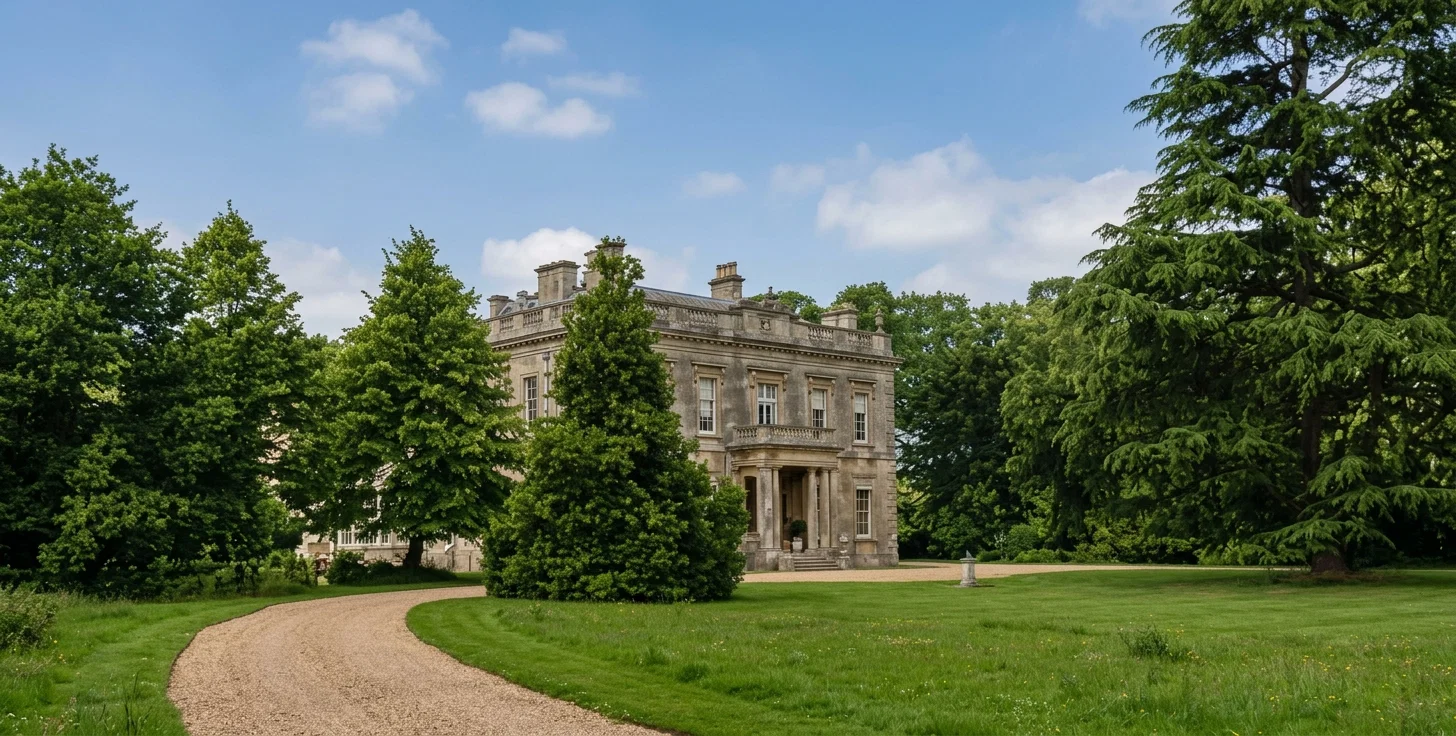
A VIEW ON THE ESTATE AT WATFORD, ENGLAND
It was also voted to organize the Welsh mission field into a conference, this to take effect at the date given above. The organization of these fields is to take place within a few weeks, at meetings of their constituency, to be held in their territory. I regard this as a great step in advance. We have long looked forward to this move, and though I am deprived of the privilege of continuing my labors in that field, it was a source of great pleasure to me that I could assist in making these plans, and see them so heartily adopted by the union conference.
Friday afternoon the writer had the privilege of baptizing nine candidates in a temporary baptistery erected on our estate. Following the evening discourse, an ordination service was conducted. Brother W. A. Shafer, who came over from America some six years ago with a company of canvassers, and Brother Chas. E. Penrose, formerly a Baptist minister in Wales, but who about two years ago embraced the truth, and brought with him a number of his congregation, and has since been laboring successfully in this cause, were set apart by prayer and the laying on of hands to the sacred work of the ministry.
A very pleasing feature of these meetings, which I feel deserves mention, was the service of song very successfully conducted by Brother Glen Wakeham. He and those assisting him had put forth much effort previous to the meeting in training for the occasion, and the music produced greatly added to the effectiveness of the services. I am convinced that vocal music, and especially choir and congregational singing, should be given a much larger place in our colleges than they have ordinarily received.
The work in this union conference never appeared to be so prosperous throughout the field as now. The Lord has greatly blessed in the efforts which have been put forth to build up our institutional work. Plans were laid at this meeting for the erection of a college building and dormitories to accommodate about one hundred fifty students, at a cost not to exceed six thousand pounds. Over five hundred pounds was raised in cash and pledges on the grounds.
After Elder MacLay had become so well acquainted with the field, it seemed sad that it should be necessary for him to leave; but this had been anticipated for more than a year. Long before I had any thought of having to leave so soon, plans were laid for their departure; but they continued to labor on as long as it seemed at all wise. They will be greatly missed in that field.
Before the meeting closed, August 8, my son Celian and I had to leave for Liverpool. From there we sailed on the R. M. S. “Lucania,” of the Cunard Line, for New York.
During a little more than nine years of labor in Great Britain we had all become greatly attached to the people and the work; but however much we have enjoyed our labors there, and regret the necessity of a change, we are content to labor on where God directs, awaiting the glad morning of our reunion, which we are more than ever persuaded is very near at hand.
E. E. ANDROSS.