Among the Tamils—South India

6%

Review and Herald Publishing Association · Takoma Park Station, Washington, D. C. · Oct 15, 1908

FromReview and Herald, Vol. 85, No. 42.

Read the full edition

Among the Tamils—South India

J. S. JAMES
OVER four months have passed since we settled among the Tamils of South India. These months have been crowded with hard work and not a few rich experiences, for which we praise the Lord.
The hot season had already set in before we got settled, and this is a very trying time of the year to begin such work as we had before us; but it seemed that God had led us step by step, and we could not think of drawing back because of the difficulties that lay ahead.
MONEKERA OUT-STATION
The first question that had to be settled after we located was, How shall we begin our work so as to gain a foothold among the people, and win their confidence? We knew that the surrounding heathen were not especially interested in our coming. We knew that the professed Christian element among the natives was opposed to our advent, and that their opposition was only augmented by the ill-will of the local church societies. All sorts of absurd stories had been put in circulation about us, much to our discredit; and many of those who professed to be our friends were secretly working to hinder our plans. We did not know the language well enough to make our way alone, and we knew not where to look for friends among the disinterested ones.
But there is one language that appeals to human hearts the world over, and which is able to soften, melt, and subdue the hardest heart, and win the confidence and unfeigned love of the bitterest enemy.
That is the language of ministry to human suffering. This language we could speak, and we resolved to use it at once. All about us were multitudes of sick and suffering,—babes in arms and small children covered with sores and dirt of every description. Sore eyes, mouths, ears, scalp diseases, ulcers, abscesses, skin diseases, and fevers were most in evidence. To these must be added the chronic ailments of the adult and the never-ending complaints of the aged and infirm. We felt that here was a most needy field that should be cultivated without delay.
The people would not come to us at first, not knowing that we were able to help them. We began by treating a few sores. These did so well that others came, and shortly the news spread all over the village and to the villages beyond. We improvised a dispensary on the back veranda of our bungalow, and set aside two hours in the morning, and an hour and a half in the evening, for treating the people. Often these hours stretched out through the whole day. Mrs. James gave most of her time to the women and girls, and I looked after the men and boys. We made no distinction in the caste, position, or influence of the people who came. All were treated alike, and in their turn. To those whom we could not help we always gave a few encouraging words to cheer their hearts, and to send them away feeling that we had some real sympathy for their sufferings. Our work grew rapidly, and we soon found ourselves unable to care for all who came. One morning I counted fifty-four men, women, and children waiting outside our bungalow for medical attention. June was our busiest month. Our record for that month shows the following cases treated: Sore eyes, 325; skin diseases, 102; sore ears, 73; scalp diseases and wounds, 11; sore mouths, 9; ulcers, 123; abscesses, 36; dysentery, 9; cholera, 28; fever, 8. During the month we applied 218 dressings with bandages, and made forty-eight visits to the homes of the people, at which time we gave many water treatments, and offered prayer for the sick.
It did not require much of this kind of work to convince the people that we had come among them for their good. A decided change soon took place in the social atmosphere. Members of other churches began to come to us for help, and invite us to their homes. One evening a deputation consisting of the leaders of the local churches, the head men of all the surrounding villages (some of them heathen), and the munsiffs of three villages (the office of munsiff is about equal to that of mayor), with a large number of representative men, waited on me and delivered short addresses, in which they thanked us most heartily for what we were doing for them, and expressed their desire to see us locate a permanent mission among them. At present we have the utmost freedom of the place, and the majority of the people respect us highly.
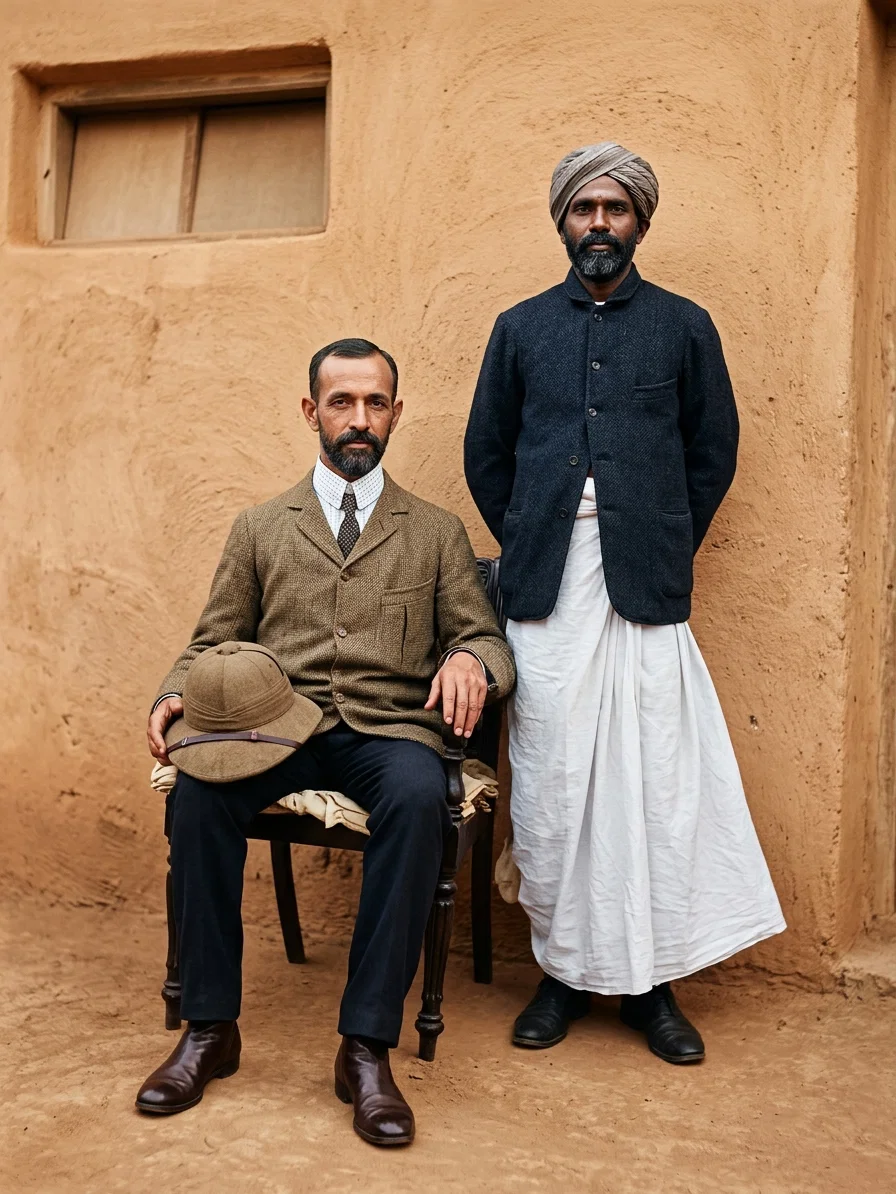
J. S. JAMES AND HIS TAMIL LANGUAGE TEACHER
About the middle of June an epidemic of cholera broke out in this and surrounding villages. People came to our bungalow day and night, imploring us to come and help or send medicine. I continued my visits to many of the homes of these stricken ones, going at times to other villages, treating many with my own hands, and instructing the people as best I could how to care for themselves. By God's help some were saved, and are with us to-day; but many more have fallen victims of this terrible disease, some of them from among the Sabbath-keepers whose picture appeared in the REVIEW some months ago. Some whole families were taken away in less than twenty-four hours. The funeral pyre was kept burning for several days, and grave-diggers were in demand. All night long the wailing and crying of widows and orphan children could be heard. These were anxious days for us, but God's hand was over us through it all, and kept us from all harm.
We are at this writing taking a little rest from the heat of the plains in one of the hill-stations of South India. The excessive heat, which sometimes runs the thermometer up to one hundred twelve degrees in the shade, the hard work and anxiety, together with poor food and water, were telling on our strength very fast. We felt it to be the part of wisdom to relax for a while, and secure a fresh grip on life.
Just before I came away, the Sabbath-keepers finished a sale-deed to our mission of two acres of valuable land near the village as a free gift. One and one-quarter acres of this is admirably adapted for building purposes, while the remaining portion is under good irrigation, and can be turned into a splendid fruit and vegetable garden.
We are greatly in need of help. A doctor and his wife who would like to learn a language and preach the gospel both in word and in deed, would add much strength to our work. The educational question among these people is a serious one, and should receive our earnest attention at an early date.
Our courage in the work is good, and although we are up in the hills some seven thousand feet above sea-level, our hearts and thoughts are with those dear people on the plains. Our prayers ascend daily that God will lead them out of their heathen darkness, and make them to shine as bright stars in his kingdom. Pray for us, and send us help.
Tinnevelli, South India.