The Ancient Empire and Its Conquest

5%

Review and Herald Publishing Association · Takoma Park Station, Washington, D. C. · Oct 29, 1908

FromReview and Herald, Vol. 85, No. 44.

Read the full edition

The Ancient Empire and Its Conquest

A Plea for the Inca Indians of Peru—No. 1

The Ancient Empire and Its Conquest
ED. F. FORGA
THE grandeur of the glorious past of this race stands in remarkable contrast to their later history written in tears and blood, and to their present pitiful condition. Of their former civilization, their ingenuity, their industry, and their intelligence, there are left many evidences. There are traces of well-constructed roads hundreds of miles inlength.
In the mountains are many large terraces used anciently for agricultural purposes, and irrigated by a marvelous system of canals and aqueducts. Along the valleys, in places which to-day are depopulated and barren, the traveler can see traces of former cultivation, made possible only by an ingenious system of irrigation. All these, with many other relics, indicate how flourishing must have been the condition of the people that once inhabited these regions.
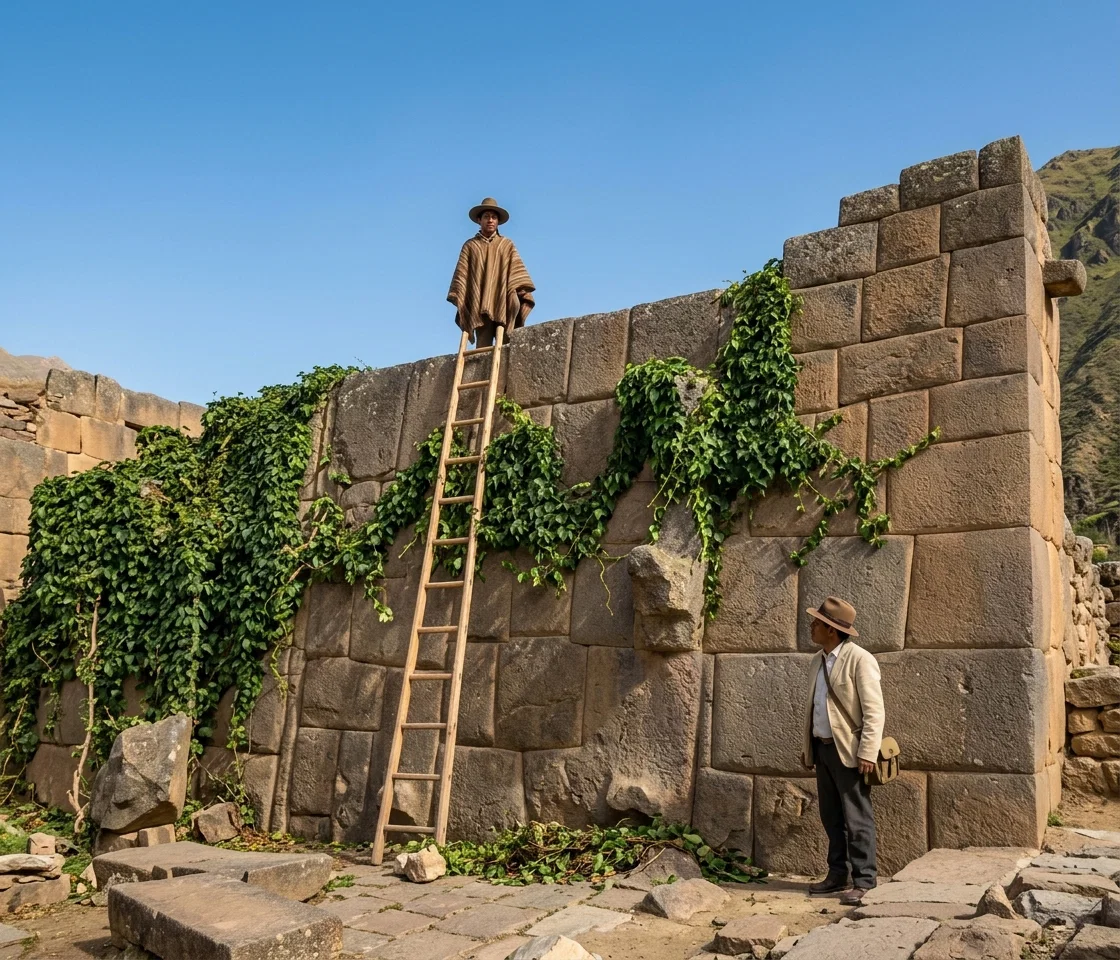
OLLANTAITAMBO (PERU)
Ruins of the walls of the palace of Ollanta, an Inca emperor
OLLANTAITAMBO (PERU) Ruins of the walls of the palace of Ollanta, an Inca emperor
Scattered through the country in the principal centers and at strategic points, we find ruins of temples and of fortresses the construction of which is a marvel to modern civil engineers. These forts are constructed with blocks of stones sometimes as high as sixteen feet or more, carried—no one knows how—for many miles, and fitted together, without mortar, with such exactness that a knife-blade can not be inserted between two stones.
The social organization of this people was scarcely less wonderful, as they realized in fact that which is the dream of modern socialism—communism of property.
In scientific knowledge the ancient Incas were doubtless not excelled by any other contemporary race or nation. They knew of the zodiac, and were acquainted with the use of solar and astronomical instruments. In writing they used the quipus. This was a cord, from which were suspended many smaller strings full of knots, the arrangement and color of which expressed thought.
As workers in metals and as potters, they displayed an infinite variety of designs. They were very skilful in the home industries. Their clothing was of wool, woven and beautifully colored. Some of their clothes were especially artistic in fineness of texture, in weave, and in beauty and harmony of color.
Referring to that time the Inca Indians can sing:— > “We were born free, and free would we remain. > > Till then to us not known was slavery’s chain. > > We loved our hills, our rulers we revered, > > And no attack from anywhere we feared. > > We tilled our land > > With busy hand, > > And were content to serve > > our gods in peace > > As best we knew. Our > > fellow man to please > > Was our sole aim, and > > heaven to appease.”
In the early part of the sixteenth century a band of Spanish adventurers landed in Peru, led by Pizarro, a representative of the civil power, and by the monk Valverde, a representative of the Roman Church. After this party had obtained a foothold in the country, one of their first acts was to demand of the emperor Atahualpa that he accept the Christian faith as expounded by Valverde, that he renounce his authority, and that he pay tribute to Charles V and his successors, the sovereigns of Spain. These peremptory demands being indignantly refused, Atahualpa was seized and held prisoner, and hundreds of his followers were cut down by the Spanish soldiers. After buying his freedom for nearly fifteen million dollars’ worth of gold, the unfortunate ruler was condemned to be burned alive, but was graciously strangled instead, in view of the fact that he embraced a crucifix presented to him by the monk Valverde, as a token of his acceptance of the Catholic faith.
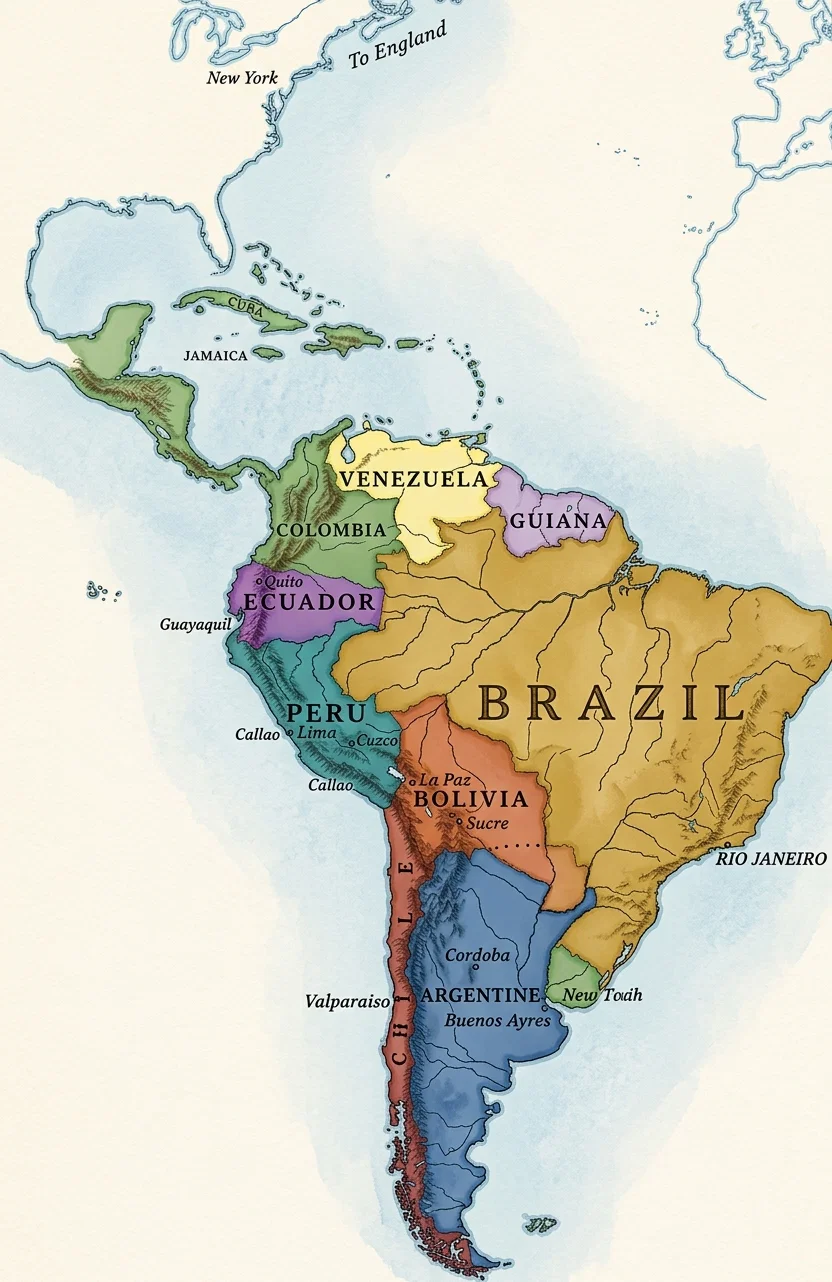
MAP OF SOUTH AMERICA
The Inca Indians are scattered in Ecuador, Peru,
and Bolivia
MAP OF SOUTH AMERICA The Inca Indians are scattered in Ecuador, Peru, and Bolivia
Treacherous and cruel as was this act, it is but one illustration of the general conduct and policy in the subjugation of these Indians, who in many respects excelled their European conquerors. The story of the conquest of the Inca empire is an object-lesson of the sure result of a complete domination of the state by the church.
It was the worst element of the Spanish population, those who loved riches as much as they despised labor, who went to these far countries as priests and laymen, enslaving these poor aborigines, whose nature was mild and kind, and who were accustomed to honest, hard labor. In consequence of this greed for gold, the natives were killed by the thousands, or deprived of nearly all their possessions.
Markham, in his “History of Peru,” tells us that forced labor in the mines, separating the unfortunate men forever from their wives and families, largely contributed to this unhappy state of things. For the mines of Potosí (Bolivia) this forced labor, or mitta, as it was called, brought together 11,199 laborers from certain districts in 1573. Just one hundred years afterward, these laws having in no way been relaxed, only 1,674 workers could be obtained. These figures speak for themselves. “In a century nine tenths of these people had been destroyed by overwork and cruelty.”
“The oppression on the part of owners of obrajes, or manufactories of coarse woolen and cotton cloths, was as crushing as that employed by the mine-owners. These manufacturers engaged men called guatacos to hunt the Indians and drive them into the obrajes. The masters then forced their victims into their debt, and thus obtained an excuse for keeping them in perpetual slavery. Children were dragged from their homes, in defiance of the law, forced to work hard at twisting woolen and cotton threads, and were cruelly whipped.
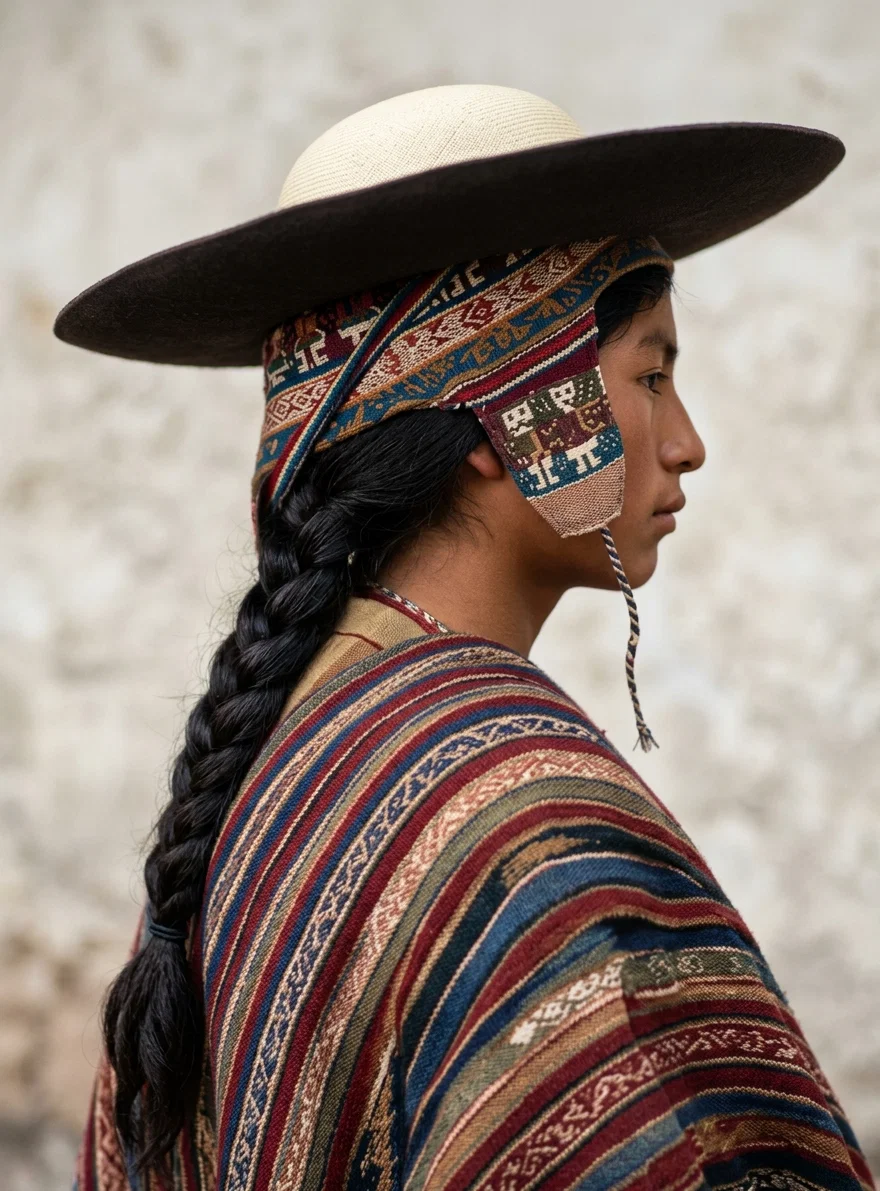
AN INCA INDIAN YOUTH
“Many districts which originally contained one thousand male Indians, and yielded eight thousand dollars of tribute, were reduced to a hundred within a century; yet the original tribute was demanded from the survivors, and payment being impossible, they were carried off into slavery.”