Experiences in Missouri

6%

Review and Herald Publishing Association · Takoma Park Station, Washington, D. C. · Oct 29, 1908

FromReview and Herald, Vol. 85, No. 44.

Read the full edition

Experiences in Missouri

We have reached the nineteenth week of the Missouri religious liberty lecture tour. My last report was written from Jefferson City, the capitol. A week was profitably spent there in personal effort, and in the distribution of the religious liberty leaflets. As this was early in August, and nearly all the State-house officials were absent upon their summer vacations, we decided to postpone public meetings.
Leaving Jefferson City, we next visited Broomville, Fayette, and Sedalia. In the last-named place we opened our campaign. From Sedalia I went to the Colorado and Nebraska camp-meetings, spending a few days in each of these annual conferences, doing what I could to arouse the people to a keen perception of the value and the need of a strong religious liberty work at this time. During my absence from Missouri, Mrs. Wightman continued the work in Sedalia and the surrounding country without interruption. From Hastings, Neb., I returned to Jefferson City in time for the political conventions, September 8. According to provisions of the new primary law of the State, all political parties were obliged to meet at the State capital not later than that date, to formulate and declare their platforms, candidates having been already chosen at the primary election. The Republican, Democratic, Prohibition, Socialist, and People's parties were represented in separate conventions by the party leaders and the foremost men of the State. A number of members of Congress were present, among them such noted political lights as Champ Clark and D. A. DeArmond. It was a favorable opportunity for your correspondent. A vast amount of religious liberty literature was carefully distributed, members of platform-making committees were visited, and every legitimate effort was made to have these leaders and lawmakers of the people see that it is no part of the duty of the civil government to enact religious legislation. Results were partially, though not wholly, satisfactory. A powerful religious element was at work. The Democratic and Republican conventions adopted a plank for “Sunday closing” having direct reference to the enforcement of laws against the saloons, but absolutely without a word of reference to the moral or religious phases of the question. This was not quite as much as the so-called “reformers” of the Judge Wallace type had hoped for; but they had to be content. Personally, I should have been glad to see the saloon question dealt with from a purely civil and social basis without special reference to “Sunday closing,” or to a particular religious institution. It should be remembered that temperance laws are ostensibly for the protection of the individual and not an institution.
Receiving a letter from the residentjudge of Callaway County, asking for a return engagement at Fulton, after visiting California and speaking in the court-house there, we hurried back to Fulton. The judge had performed a painstaking work in arranging for the meeting, and in personally advertising it, and the large court-room was literally crowded with people. Influence had been the best advertisement. So eagerly was the literature sought, that a large supply was quickly exhausted.
The next stop was at Columbia, a college town, with no fewer than five colleges. As a result of extensive advertising, six hundred persons came to an open-air meeting. Among these were at least two hundred students. The interest may be measured by the fact that when names and addresses of those desiring to know more upon the subject, and wishing to correspond with the secretary, were asked for, fully seventy were handed up. Among these were the cards of two prominent lawyers, one of whom is a member of the legislature, and leader in the Democratic party. He tarried for an interview, and at its conclusion promised to place himself on record every time as against religious legislation of any kind, and to help us at Jefferson City in making us personally acquainted with lawmakers and officials. The value of his help in this direction can hardly be estimated.
A second visit to Boonville brought out over two hundred persons to hear. A second visit to Fayette produced interesting results. We announced the meeting at half-past four, at the close of the annual stock sale.
Five hundred persons gathered on the court-house lawn; among these were the court-house officials,—judge, sheriff, clerks, etc.,—who sat by the speaker's stand. There were prominent persons from all parts of the county, who had been attracted to the stock sale. We closed the meeting at six o'clock, but did not get away until a quarter past seven, so many were the importunities for literature and information.
At Chillicothe we advertised the meeting to immediately follow the passing of Judge Taft's special train; at Higbee, to follow the passing of Colonel Bryan's special train. Four hundred listened at the former place, and six hundred at the latter. At the Lexington court-house a large audience gathered. The principal places, besides those already mentioned, in which mass-meetings were held, are Marshall, Slater, Higginsville, Carrollton, Brookfield, Gallatin, Glasgow, Brunswick, and Salisbury. The audiences at each place ranged from three hundred to five hundred in numbers, with the single exception of Gallatin. In the majority of these places the mayors of the respective cities attended, also many municipal
councilmen, police magistrates, and officials. The newspapers have been especially kind in publishing notices, in some instances allowing us nearly a column of matter prior to the meeting, and a column afterward. I am now in correspondence with some of the most prominent citizens of the State. This is very encouraging.
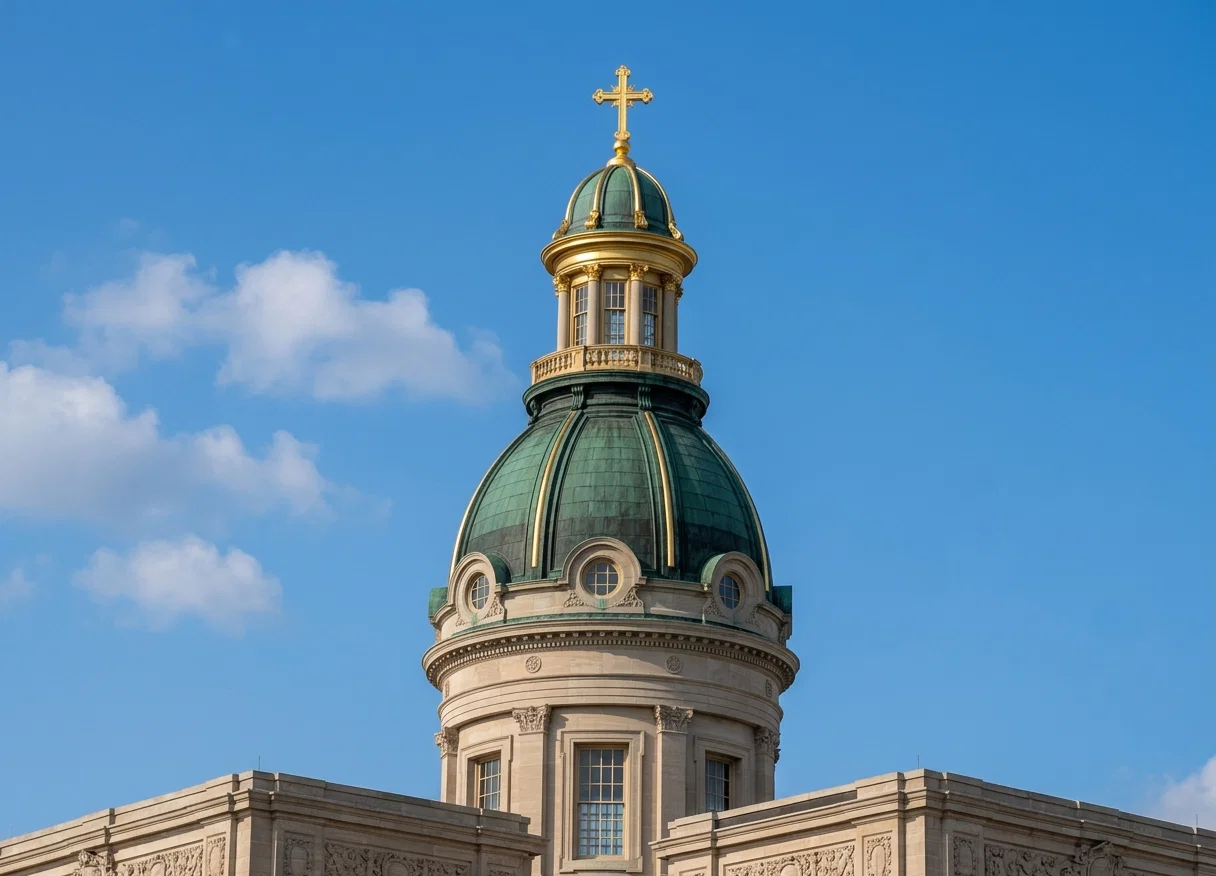
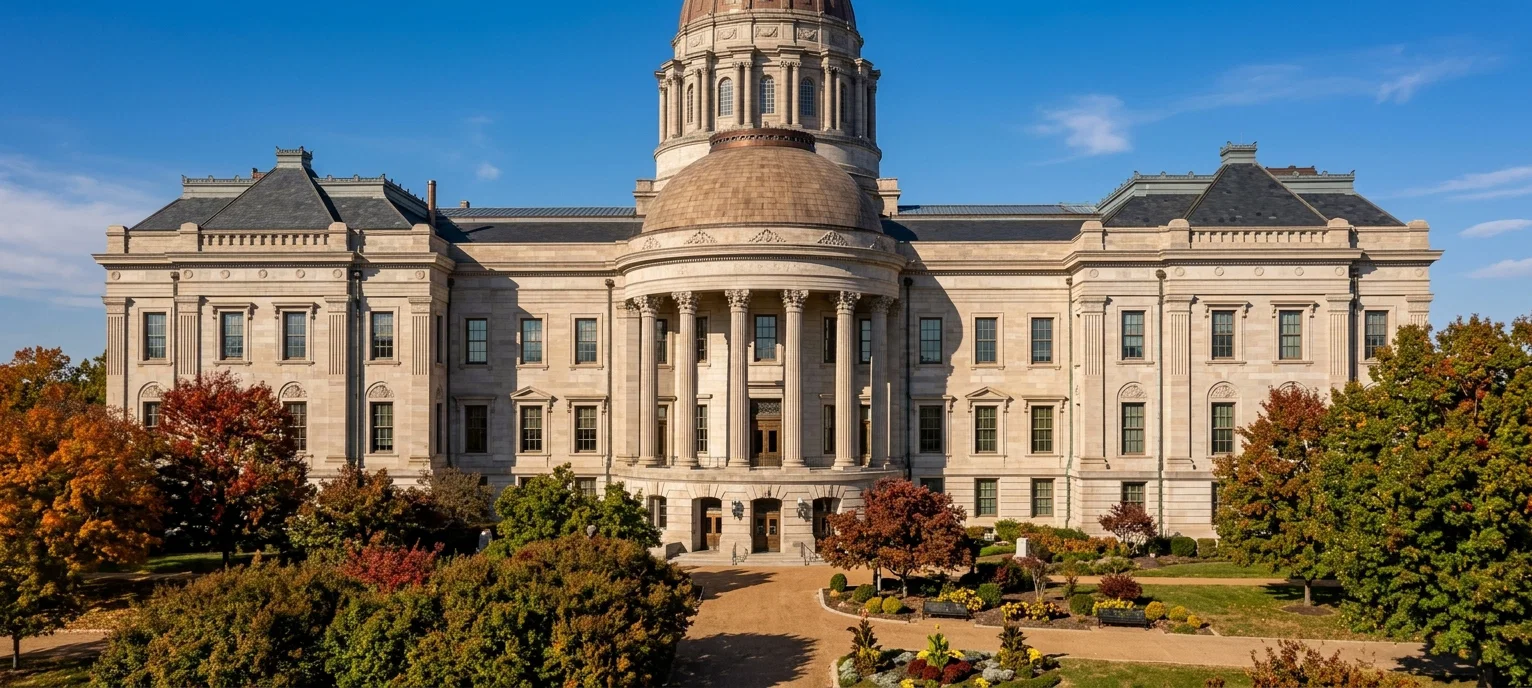
THE STATE CAPITOL BUILDING AT JEFFERSON CITY, MO.
Liberty is appreciated wherever we place it. I can not say too much for this journal. I regret exceedingly that we could not have had tens of thousands of copies of this valuable journal to circulate during this extraordinary effort to reach the public mind. Liberty is a most valuable adjunct to religious liberty work everywhere. I regard this magazine as absolutely indispensable to public work of this kind. Its circulation should be rapidly increased by a united effort upon the part of those who are standing for principle. The Religious Liberty Leaflets, Nos. 1, 2, 3, 4, 6, 8, in a State-wide tour of this kind are invaluable. This is one of the ways of leaving something behind you—a silent workman who continues the work begun. These leaflets are eagerly sought. I can scarcely supply the demand. In the face of the religio-political work of Judge Wallace and his many supporters, the people seem to be hungering for truth upon the question of proper civil government—an all-absorbing question in the State of Missouri now—and that of “inalienable rights.”
That the Lord may continue to help us is my prayer, and should be the prayer of all. We have trusted fully in his power and in his wisdom, and have realized “moment by moment” that the work belongs to him—the one who “commanded, and it stood fast.”
We are now at Glasgow, a historical spot upon the banks of the Missouri, and in the heart of the State. In the next twenty-one days we shall make a rapid trip, reaching a score of towns, and giving a lecture in each, and then the Missouri religious liberty tour will end. With sadness we shall see this work close, after a patient and persevering and continuous work of one hundred fifty days. While it will become a pleasant memory alone, who can tell of the lasting impressions, and of the good that may, in the providence of God, have been accomplished?
In a future letter I will deal with particulars of the tour, giving methods of work that may be of interest to our workers in similar lines.
JOHN S. WIGHTMAN.