The Power of the Printing-Press in the Reformation of the Sixteenth Century

20%

Review and Herald Publishing Association · Takoma Park Station, Washington, D. C. · Nov 26, 1908

FromReview and Herald, Vol. 85, No. 48.

Read the full edition
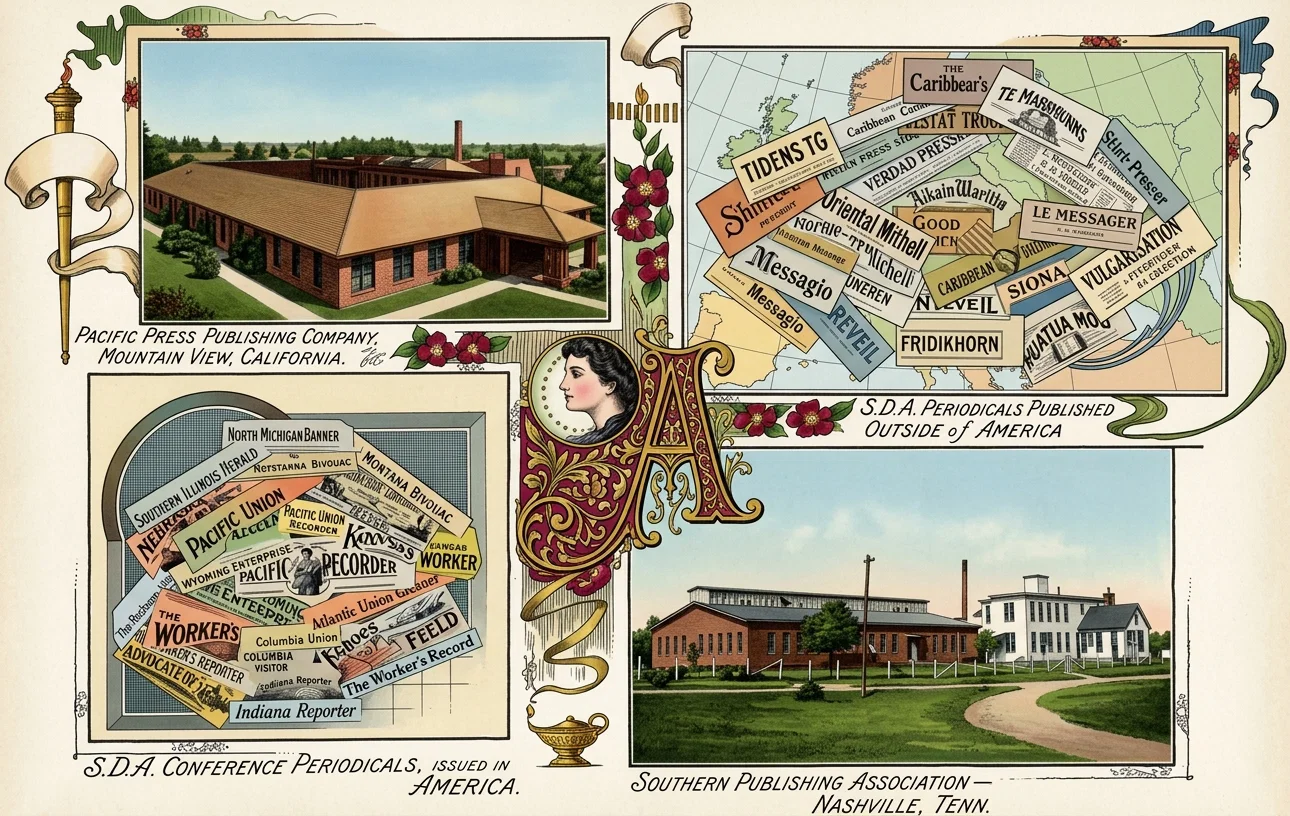
PACIFIC PRESS PUBLISHING COMPANY, MOUNTAIN VIEW, CALIFORNIA.
S.D.A. PERIODICALS PUBLISHED OUTSIDE OF AMERICA
S.D.A. CONFERENCE PERIODICALS, ISSUED IN AMERICA.
SOUTHERN PUBLISHING ASSOCIATION — NASHVILLE, TENN.
PACIFIC PRESS PUBLISHING COMPANY, MOUNTAIN VIEW, CALIFORNIA. S.D.A. PERIODICALS PUBLISHED OUTSIDE OF AMERICA S.D.A. CONFERENCE PERIODICALS, ISSUED IN AMERICA. SOUTHERN PUBLISHING ASSOCIATION — NASHVILLE, TENN.

The Power of the Printing-Press in the Reformation of the Sixteenth Century

THE publishing work is one of God's most universal and powerful agencies for spreading the gospel during the last generation. The printing-press has come to the world in fulfilment of the words of the prophet, “Many shall run to and fro, and knowledge shall be increased.” It was first recognized as a factor by the Reformers of the sixteenth century.
PUBLISHING HOUSE IN ENGLAND
As Luther stood before the stalwart, and Christian youth, who flocked to the university at Wittenberg in response to the rallying gospel call of justification by faith, he saw in them a power which could carry the gospel to all the countries of Europe, if that gospel could only be multiplied by the printing-press so as to be placed in their hands for general distribution. Therefore, Luther translated the Scriptures from the dead languages, which could be read only by the educated few, into the tongue of the common people, in order that they might be read by all. He and Melancthon also published between four and five hundred tracts and pamphlets. This literature in the hands of the students from the more progressive evangelical schools, like Wittenberg, soon became a power which enabled the gospel to gain a foothold in every country of Europe, and accomplished more than all other agencies combined in making possible the great Reformation of the sixteenth century.