Persia

13%

Review and Herald Publishing Association · Takoma Park Station, Washington, D. C. · Dec 3, 1908

FromReview and Herald, Vol. 85, No. 49.

Read the full edition

Persia

It is more than a year since I wrote to the Register concerning “Conditions in Persia;” and, as I take up my pen again, it is sad to think that I can not say a word about any improvement in things here. Instead, there is a great deal to say about the ruin and desolation of the land and the iniquity of man. Of late Persia has been moved and shaken by internal as well as external troubles.
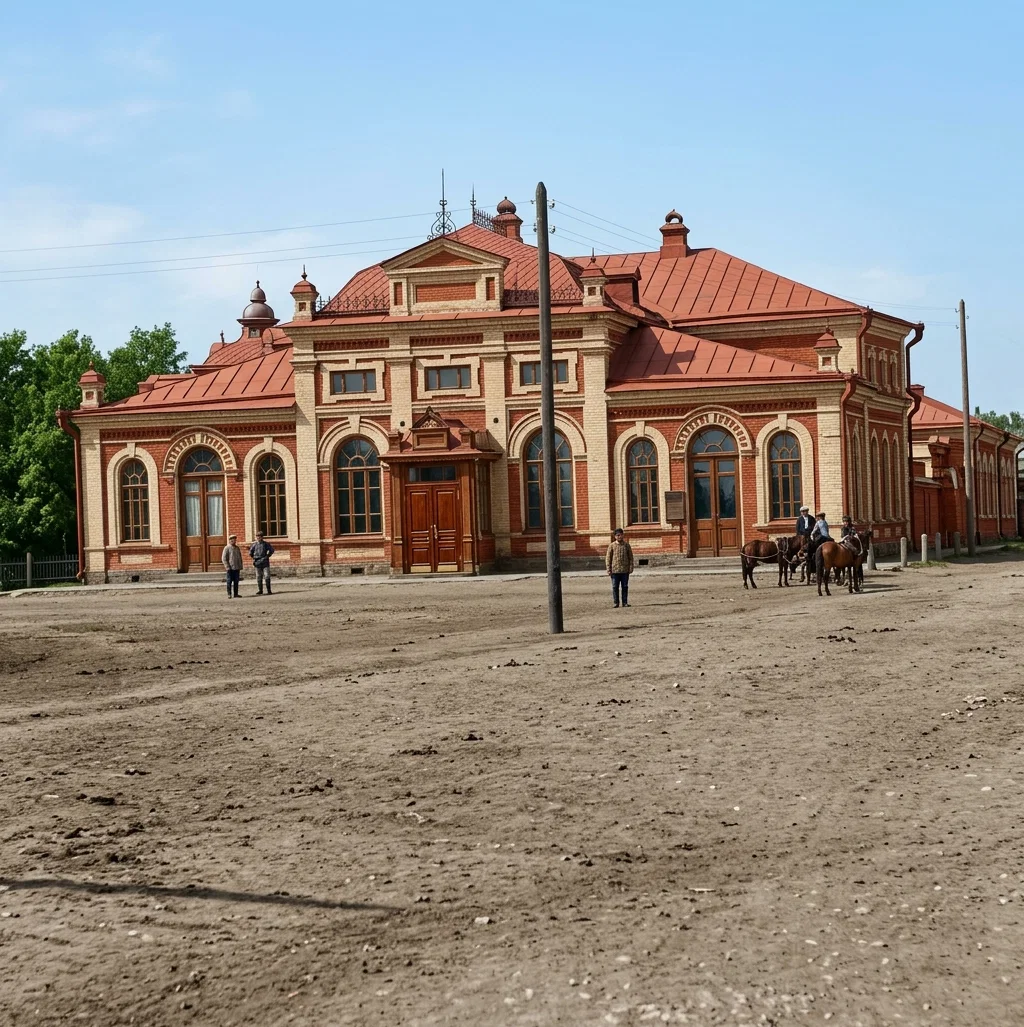
WHERE OUR MEETINGS WERE HELD IN EAST RUSSIA
One year ago, when the American papers were glowing with full columns speaking of the new Persia, and about its transition from an absolute monarchy to a government of deputies, I was quietly laughing at the idea. And then I took courage enough to write to the Register, giving some pessimistic views of the change. I say pessimistic from the point of view of others, since I myself believed that what I wrote was so.
There have been two strong forces working to destroy the parliament and ideas of reform all over the kingdom; first, the reactionary force headed by the king of Persia, which has constantly been trying to undermine the anjuman (government by the people), and to establish the old régime; second, the corrupt and unready state of the people. Any deep-thinking man will know that republics are not mushrooms, to spring forth and grow in one night; but they are oaks, which take centuries to get a full growth. But in Persia there is little hope for a development in centuries, since the people have not the idea of liberty. What can we expect from a nation of liars, pickpockets, bribe-takers, and fanatics? Did space allow, I could give many examples showing the backward falling of the government, and the increase of cruelty and injustice during the past year over what there was under the old form of government. That was bad enough; but, after seeing and testing how democratic ideas work in such untilled ground as Persia, the people got sick of such liberty, and now they cry from everywhere, “Crucify it! crucify it!” As I have said, I say again, that I would be the first one to see Persia fall in line with countries which have constitutional governments. But, knowing well the frame of mind the people have, and the awful influence that Islam has over them, I say that under such conditions, hope for reforms is distant.
But the greatest trouble in which Persia is involved to-day is the threatening Turkish invasion. The Turks have come to our western borders, and taken possession of a considerable territory, and in many places they are claiming the country and collecting revenue, etc. There are parts of Kurdistan, a province west of Urumiah, from which Persia has not derived one penny’s worth of profit. The Turks have complete control over them. By what authority?—No one knows. It is simply a matter of force,—a strong power against a weak state. Russia and England, having an agreement to keep the integrity and independence of Persia, are doing their best, in a diplomatic way, to send back the Turk. The matter is being much prolonged, as it is extremely difficult for Russian and English diplomatists to cope with Turkish lies. While they violate the international law in subjecting these borders and molesting poor subjects, when the reports are sent to St. Petersburg, London, and Constantinople, the porte denies everything done, and it takes several months to confute one Turkish lie.
Stealing, highway robbery, pillaging, and the destruction of villages, are not done by the Turks themselves, but by the hostile Kurds, who, being Persian subjects, are set free by the Turkish officials to ruin the land. The latter believe this to be one way to bring the Persian subjects to deliver themselves to Turkish control. And the Persian governmentis unable to punish its own Kurdish subjects, fearing they will be assisted by the Ottoman soldiers. In this small space I can not give a full description of the robbery and manslaughter going on every day all over the plain of Urmiah. The plain is fifty miles long, and about thirty wide, containing, perhaps, no fewer than three hundred villages. I can say that of all these towns there are not ten which are able to hold their peace, and whose inhabitants are not trying to run away from Kurdish attacks. The poor peasants, who now should be busy in working and tilling their farms, have utterly given up their work, and are busy moving to the larger centers for safety. One can see nothing on the public roads but wagons, horses, donkeys, and camels, all loaded with household goods being taken to the city to be saved from further robbery. How many thousands around us have lost their home comforts! They have rugs, but they sit on mats; they have teakettles, but drink their tea in earthenware vessels; they have silks, but wear rags. All this is done because everything is either hidden or taken to the city. Every morning we hear of a Moslem or Christian village attacked by forty or fifty Kurds. The cattle are carried away, property is taken or destroyed, and a number of men, women, and even children, are killed. It is pitiful to see men, women, and children come to the governor, with heads covered with mud, barefooted, and beating their breasts, complaining concerning their stolen property and slaughtered people.
The most interesting but deplorable thing in all this state of affairs is that the country is suffering as much from the government troops who have come for the protection of the subjects as from the Kurds. These soldiers are supposed to go out on the highways to protect caravans, and to the villages to assist the people in their sufferings. But these very soldiers who have come to protect us are the ones whom we fear the most. They rob and steal as much as the Kurds. In a certain sense, they can not be blamed for doing so, since they are so poorly fed and clothed. Imagine an American soldier living on five cents a day! A large share of what is allowed to each soldier is kept by the high officers, and that is the reason the high officers do not punish their troops for molesting the people.—Correspondence of the Christian Register.