Our Debt to the Spanish People

8%

Review and Herald Publishing Association · Takoma Park Station, Washington, D. C. · Dec 17, 1908

FromReview and Herald, Vol. 85, No. 51.

Read the full edition

Our Debt to the Spanish People

B. E. CONNERLY
THAT Seventh-day Adventists as a denomination are indebted to all people alike, by virtue of the message that they are bidden to proclaim to “all nations,” is evident. A review of the history of the Spanish people impresses me that, first as Americans, second as Protestants, and third as Adventists, we are under special obligations to the Spanish people for two reasons: (1) for thirteen centuries Rome has deceived them, and held them in an iron grip, that only the power of the Infinite can break; and (2) because the Spanish people, both in Spain and in Latin America, have been shamefully neglected by Protestant missionaries.
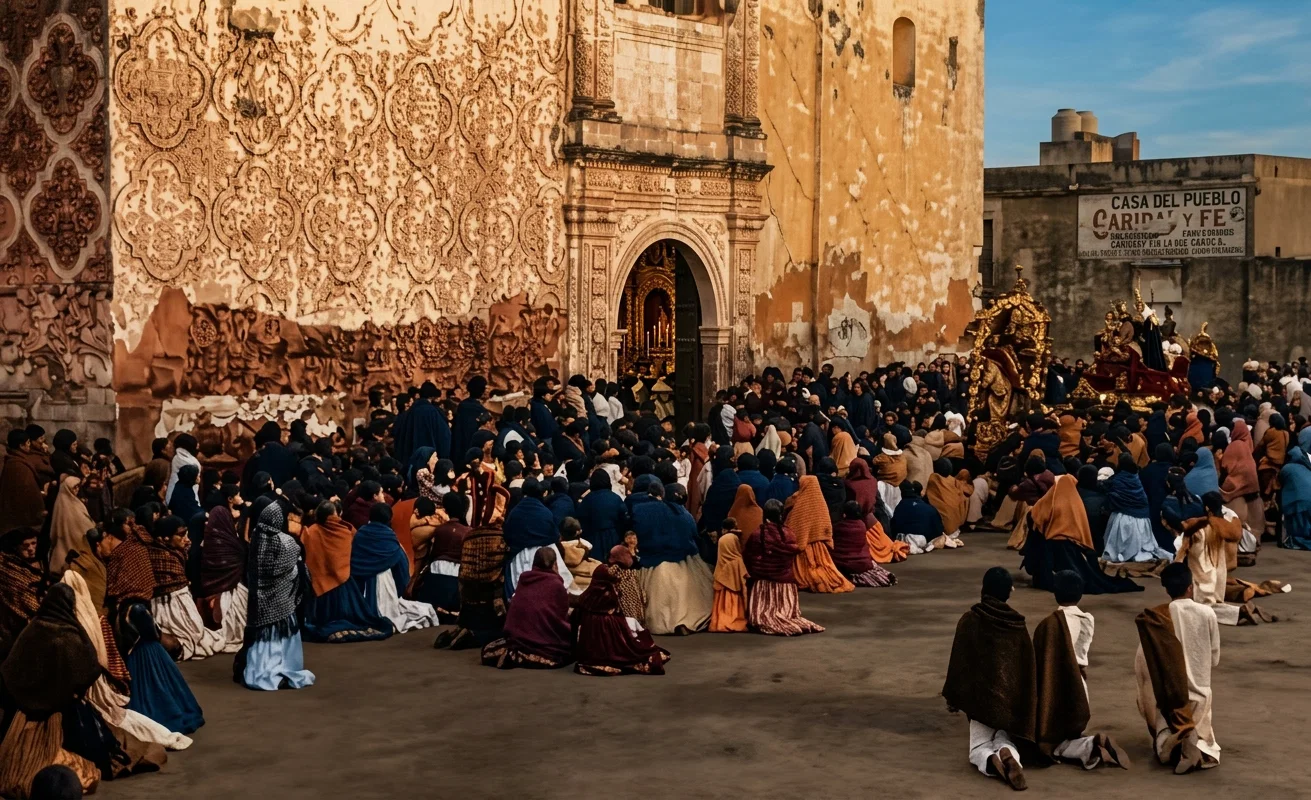
A CATHOLIC CHURCH IN A SPANISH-SPEAKING FIELD, FILLED TO OVERFLOWING
The Spanish people become more interesting to us when we remember that Spain was a nation of forty or fifty million inhabitants before the Christian era, and that in the palmy days of Rome the great Julius Cæsar was one of her provincial governors. Spain, as a part of that great iron kingdom of the Cæsars that had filled the cup of her iniquity to the brim, was overrun and settled by barbarians from the north early in the fifth century, and a hundred years later these simple people, who had left their quiet homes, in fulfilment of the prophecy of Daniel, were visited and seduced by “that woman Jezebel, which calleth herself a prophetess;” and it is evident that she found as prolific a soil among the Visigoths of Spain as that first Jezebel found in backslidden Israel in the days of Ahab.
Spain has always been very religious, and among all the Catholic nations she has been most Catholic, the most obedient to the commands of the holy see at Rome, and her sovereign was made “the eldest son of the church.” It was she who early established the Inquisition in her territory, and for six hundred twenty-five years she persecuted and put to death multitudes of men, women, and children by means too terrible to contemplate. In the days of Ferdinand and Isabella the Inquisition was sanctioned by the civil authority, and became the Holy Office, with an inquisitor-general and a host of auxiliary officers. Under this Holy Office Spain killed and banished millions of Jews, Moors, and Hollanders, the best, richest, and most industrious of her subjects, finishing last of all in the year 1826 with the few Protestants within her borders. The history of Rome is that of tyranny from whatever standpoint she is viewed. To her own faithful ones, the “bone of her bone and flesh of her flesh,” as one writer has put it, she offered the discipline of the scourge, weary pilgrimages, famishing hunger, and bodily abasement; and to those who dared to dissent were given the rack, the stake, the thumb-screw, banishment, and confiscation of property.
When the papacy was at the zenith of her power, Europe was languishing in the darkness of superstition and ignorance. But God did not forsake the nations at this time. To dispel the gloom he raised up Wyclif in England, Mathias, Huss, and Jerome in Austria and Bohemia, Savonarola, in Italy, the invincible Luther in Germany, and Calvin in France. But Spain had so bitterly opposed herself that even in this time of God’s power there could seemingly no witness arise there. God’s hand in humbling power must first rest upon proud Spain; and this it did.
During the sixteenth century Spain had not a peer among the nations, her military power was supreme by land and sea, but when in the time of Philip II she tried to rob and humble the liberty-loving and peaceful Dutch, she entered upon the road that led to decay. Her hitherto invincible armies lost their valor in the lowlands of Holland, England defeated her famed Armada in 1588, and her decline continued until she was humbled by the United States, and left a second-rate power, without colonies, wealth, or glory.
While in the entire history of Spain we find indeed little that excites our admiration or calls out our sympathies, still she is one of those nations which has been deceived by that “mother of harlots,” and God has said that she should have “space to repent;” but she can not repent until she has been made to hear the gospel and know the truth. It rejoices our hearts to know that a successful beginning has been made in Spain, where eighteen millions await the message.
We of the United States should not boast of our religious privileges over our sister republics of the south; for if God had not interposed, the great navigator that Spain sent out with the burning theory of “westward, ever westward, till the west becomes the east,” would have landed Columbus on the eastern shore of our Southern States, and thus our fair country have been given to Spanish misrule and Roman tyranny. In Latin America there are eighteen countries which have, one by one, obtained their liberty from the oppressive yoke of the mother country, and to-day these all stand open to civil and religious liberty. Here forty-eight million people are waiting for the advent message, and they have waited until our neglect has become proverbial. Here are multitudes of Indians, descendants of a noble race who have been persecuted and robbed since the day when Spanish explorers set foot on their fertile soil. Nothing but the advent message can bring redress to this perishing race.
The United States government has been a prime factor in preparing these countries for the gospel, and faithful Bible agents are doing much toward getting the Scriptures into the homes of the people. We have made a beginning in all these countries but five, but O, how little it seems when compared with what there is yet to be done!
Brethren, God has blessed us, and has made of us a great and well-ordered people; and though to enter these Catholic fields requires courage, wisdom, and love, we are well able to carry this precious message to these waiting people in this generation.
Mayaguez, Porto Rico.