Earthquake Prophets and the Law

5%

Review and Herald Publishing Association · Takoma Park Station, Washington, D. C. · Feb 4, 1909

FromReview and Herald, Vol. 86, No. 5.

Read the full edition

Earthquake Prophets and the Law

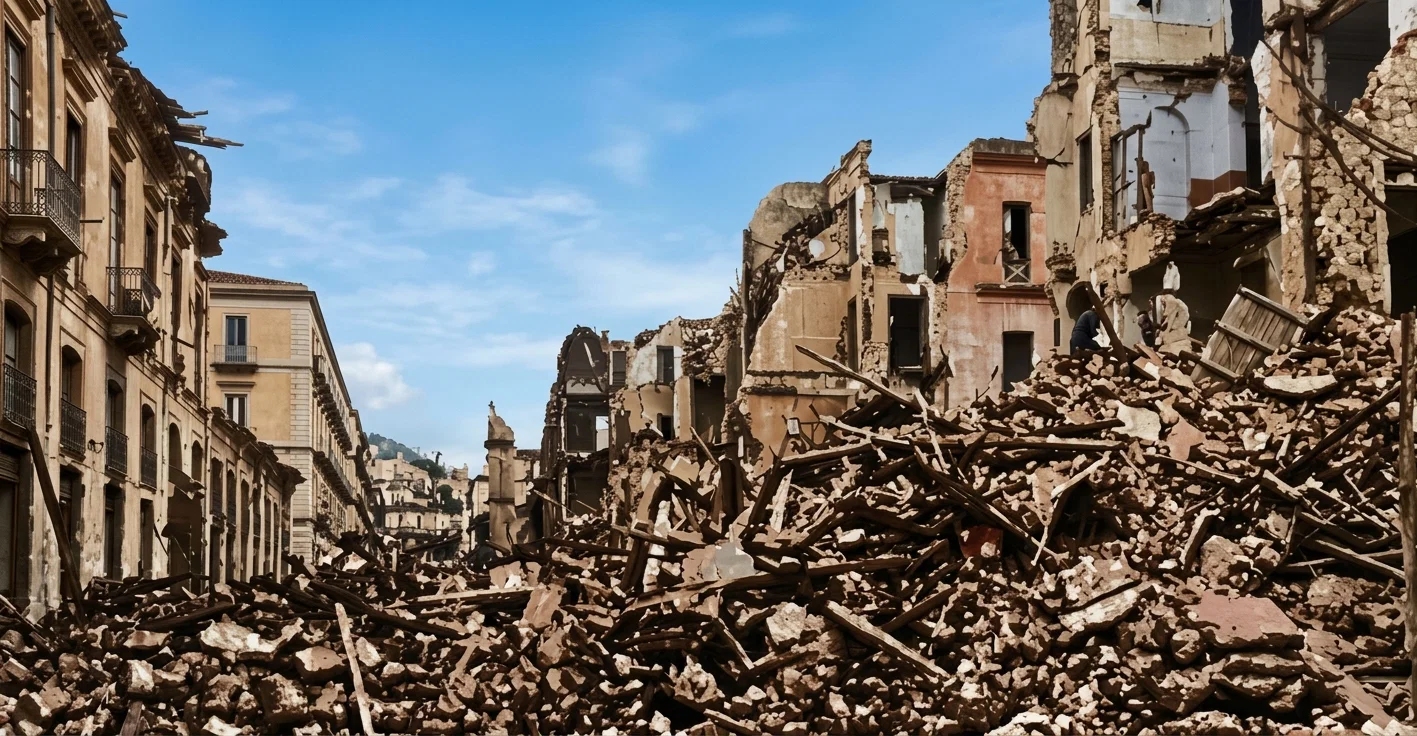
THE recent calamity in southern Italy, which has been designated by a writer in the Scientific American as “probably one of the most, if not the most appallingly destructive earthquakes in the annals of seismic disturbances throughout the world,” has been the subject of general discussion, one phase of which is of more than passing interest. While scientists have taken advantage of the opportunity to set forth anew their theory that “in all probability, an earthquake is one of the necessary consequences of the gradual cooling of the earth,” and at the same time have assured the people that “earthquakes and volcanoes have been inseparably bound up with the evolution of our planet for countless ages past,” other writers have considered the subject from a different standpoint, some suggesting the probability of the recurrence of this same display of destructive force in other parts of the world. This inclination to predict future earthquakes was the basis of an editorial in the Washington Post of January 7, from which we quote:—
Immediately after the San Francisco earthquake a lot of self-appointed prophets, soothsayers, star-gazers, and humbugs sought notoriety by predicting quakes in various parts of the country. . . . Nervous and impressionable persons are affected more or less by these predictions, and in the aggregate great harm is wrought by the scoundrels who pose as scientists and prophets. . . .
The charlatan who takes advantage of ignorance and credulity to gain cash or notoriety at the expense of acute apprehension and suffering on the part of women and children is deserving of the severest punishment. It is a pity that the law can not reach such persons.
In the face of this effort to repress any forecasts of seismic disturbances, it will be of interest to read some of the statements made by those who occupy positions which certainly ought to be filled by men of some scientific attainments. For example, Lieut. W. J. Wilson, of the Chicago Branch of the United States Hydrographic office, gives this advice to the dwellers on the shore of Lake Michigan:— If you should discern the waters of Lake Michigan receding, either gradually or tumultuously, from the shore, gather about you your family and household effects, and flee to a place of refuge inland, where a returning wave can not engulf you.
At the same time, Lieutenant Wilson reassures the people of Chicago in these words:—
This advice does not refer particularly to the people of Chicago, but there is no harm in every one knowing it. We are in no danger of earthquakes in this locality, and the bed of Lake Michigan is secure from seismic disturbances.
While Lieutenant Wilson predicts no earthquakes in his vicinity, Prof. T. A. Jaggar, of the geological department of the Massachusetts Institute of Technology, writes in a different vein. First, he declares that “the recent Sicilian disaster was foretold by an American volcanologist, Frank Alvord Perret, who has predicted disaster on Mount Etna for two years past.” In saying this, he, of course, admits the possibility of foretelling earthquakes, but he does not stop there. On the contrary, he puts forth this prophecy:—
I positively predict the violent eruption of Mount Etna within eighteen months. A careful study of the disturbances recorded in the past hundred years, and of the nature of the present slight eruption, leads me to this belief.
New York is in the center of an earthquake belt, and is as liable to eruption as any of the places in the volcanic district of Italy. Boston will hardly experience any violent shocks, but Providence and Manchester are in the zone of disturbance. One belt in which earthquakes may occur is directly south of Boston, another to the north, but no indications point to the fact that any disturbances will be felt here.
It is interesting to note that while Professor Jaggar definitely and positively predicts another earthquake within eighteen months, and even makes New York a danger-point, he agrees with Lieutenant Wilson in sounding the peace-and-safety cry to the inhabitants of his own city.
Professor Jaggar does not merely make one prediction, but he believes that the forecasting of earthquakes can be put upon a scientific basis. We will let him state the case in his own words:—
If steam pressures and temperatures were regularly recorded at widely distributed volcanic vents, and earth shrinkage were recorded by various seismometrical instruments at well-chosen stations where known tilting and faulting are in progress, and deep-seated flow were examined with pyrometers, microphonesand experimental gravity pendulums in those places where we know lava columns are in motion, as they are under Mount Etna to-day, I think there is no question but that we would, in a few years, secure empirical data from these sources which would lead to a science of forecasting outbreaks.
To the same general effect is the statement made by a writer in the last number of Current Literature, at the close of a lengthy discussion of the earthquake question:—
The science of seismology may never become so precise as all that [to predict the day on which an earthquake will occur], but when the factor of causation is given,—when we know, for certain, whether or not the sun-spots or the shrinkage of the globe or the alteration of the direction of the earth’s axis must be given credit for the earthquake,—the problem of the seismological prophet will have been practically solved.
It is not probable that the Post had in mind such writers as these when it expressed the wish that the strong arm of the law might be invoked against earthquake prophets. It no doubt had another class of persons in view. But suppose the Post had been published in Jerusalem, in A. D. 31; what would have been its attitude toward one Jesus of Nazareth, who prophesied thus: “Great earthquakes shall be in divers places”? This Man of Galilee did not talk about the tilting and faulting of the earth’s crust, and did not base his prediction upon data obtained by years of careful observation, but boldly made his prophecy. Shall those who believe this prophecy, and who base thereon their belief in the more frequent recurrence of these great disasters as signs of the last days which foretell the nearness of the return of their Lord, be classed as charlatans and false prophets, who ought to be restrained by law from disturbing “nervous and impressionable persons”? The whole problem may be reduced to this: Shall those who base their predictions upon scientific theories be permitted to foretell definitely coming disasters with
out incurring the displeasure of the public, while those whose confidence in the prophecy of Jesus of Nazareth leads them to declare that great earthquakes will occur with increasing frequency are regarded as dangerous persons, who ought to be restrained by law?
A BEAUTIFUL STREET IN MESSINA AFTER THE GREAT EARTHQUAKE
One thing is certain: if early in the year 1906 one had prophesied that within two or three years there would be great earthquakes in different parts of the world, and among them the most destructive disaster known in this world’s history, he would have been a true prophet. In view of the prophecy of Jesus and the testimony of recent history, is it safe to stigmatize as a charlatan one who declares that similar great earthquakes will occur with greater frequency in the near future? Shall the law be invoked against those who interpret the prophecies for this time?