G. A. IRWIN

6%

Review and Herald Publishing Association · Takoma Park Station, Washington, D. C. · May 30, 1907

FromReview and Herald, Vol. 84, No. 22.

Read the full edition

G. A. IRWIN

GOLD-MINES IN JOHANNESBURG, SOUTH AFRICA

From Cape Town to Kimberley

G. A. IRWIN

On Sunday, February 3, at 11:30, in company with Brethren Anderson, Chaney, and Willson, I left Cape Town for Johannesburg, in the Transvaal Colony. The day was quite warm, but as there was a good breeze, we did not suffer much inconvenience when the train was in motion. We reached the karoo, or desert—the dreaded part of the journey—just at nightfall, thus escaping the heat of the sun during that portion of the journey. Monday was cloudy, with occasional showers, which laid the dust and cooled the air, so that the trip, which had been dreaded, was made in comparative comfort. About noon, next day, Brother Chaney took leave of our company at De Aar Station, where a branch road leading to Basutoland—the location of his mission—leaves the main line.
All along the way from Cape Town to Kimberley there are blockhouses, rifle pits, and occasional graves, as reminders of the late Boer War. Near the point where the railroad crosses the Modder River was the scene of the desperate engagement between the Boers and the English, where the Scotch Highland Regiment was so nearly annihilated, and General McGregor was killed. A monument erected on the top of a kopje near the place of the conflict, in memory of the fallen heroes, can be seen from the car window. Farther down this same river was where the Boer General Cronje was surrounded and captured by the English troops under command of Lord Roberts.
The South African veldt bears a strong resemblance to the rolling prairies of Kansas and Nebraska. Much of the land is fertile, and would produce excellent crops were there sufficient rainfall. The large numbers of ostriches seen running at large upon the farms along this route attract the special attention of foreign travelers. Ostrich raising and farming are said to be the most profitable at present of all farm ventures. They live and do well upon the grasses and plants growing on the veldt, and require but little care. A male bird of a good breed will bring thirty dollars. They are picked three times in two years, and the feathers from these three pickings usually bring as much as the first cost of the bird. Counting their average life at twenty years, the owner has a good per cent of profit from the small original outlay.
The railway trains in this country do not carry special sleeping coaches, such as are in use in the United States, but provision is made in each compartment, in each of the three classes, so that one can rest quite comfortably, and that without extra charge, unless one hires blankets from the porter.
At 6:30 Monday evening we reached Kimberley, where Brethren Anderson and Willson left the train, while I proceeded, after a few moments’ delay, on my way to Johannesburg. At a siding named Content, forty-five miles out from Kimberley, and near the home of Brother Honey, I was joined by Elder Edmed, and together we journeyed on to Johannesburg, where we arrived Tuesday forenoon, and were met and welcomed by a number of the brethren, and later taken to the home of Sister Strachan, where we were entertained while staying in the city.

Pretoria

On Wednesday, February 6, Elder Edmed and I made a trip to Pretoria, the capital of the Transvaal, a city of forty thousand inhabitants, located forty miles north of Johannesburg. Pretoria was the home of Paul Kruger, formerly president of the Transvaal republic, and leader in the late Boer War. President Kruger was a minister of the gospel as well as a statesman and ruler. The large Dutch Reformed church in which he preached, stands on the opposite side of the street from his private residence. A modest monument, supporting a bust and profile of this remarkable man, marks the spot where his remains lie at rest in the Pretoria public cemetery.
Brother Edmed and his company of workers labored for a time in Pretoria, and left a company of twelve keeping the Sabbath, some of whom we visited while there.

Johannesburg

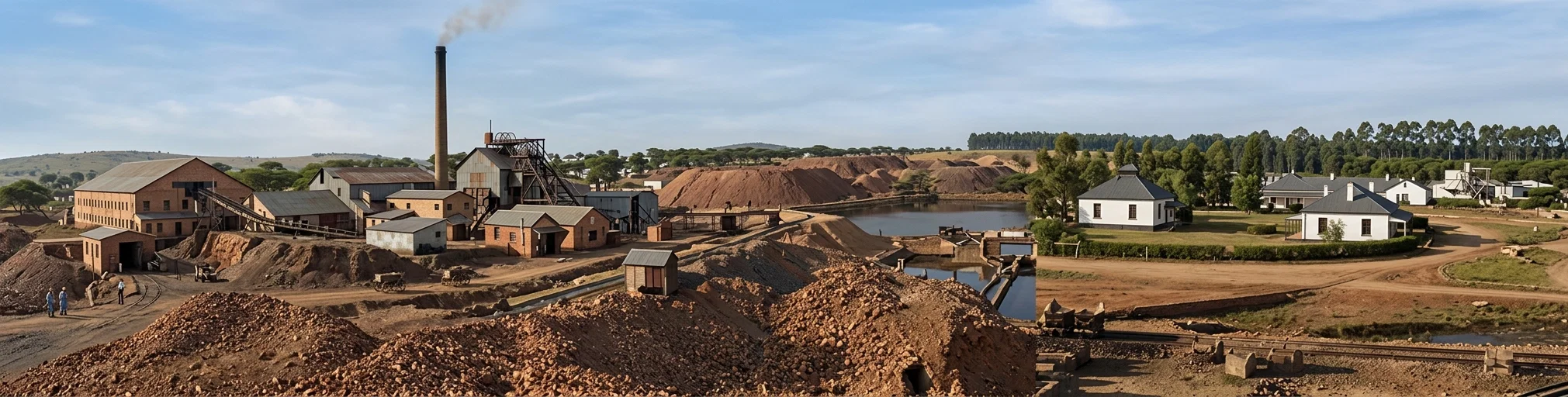
Returning to Johannesburg in the evening, I spoke to a few of our brethren who had gathered in Sister Strachan’s home, upon the origin and sacred character of the church of Jesus Christ and what membership in it implies. The church in this city had never had the privilege of thorough instruction on organization, and for this reason I continued the subject of the first evening in the Friday night and Sabbath forenoon meetings that followed. The afternoon was devoted to a talk from the missionary map of the world, showing the past progress and present status and needs of the work. At the conclusion of this service, the officers recently elected were ordained by Elder Edmed, and set apart for the respective duties to which the church had called them. This church is very much in need of a place of their own in which to worship. A proper hall for divine service is hard to find in the city, and the heavy rent charged is just so much taken from the amount that ought to be put into a place of their own. They own a lot only two blocks removed from the street-car line in one of the rapidly growing suburbs, and a strong effort will be made by the brethren this coming season to raise sufficient funds to erect a neat and comfortable house in which to hold Sabbath and special meetings when a minister is present with them. The size and importance of this city should be sufficient justification for a call for help from our brethren outside. Johannesburg is the largest and most enterprising city in South Africa. The large gold-mining plants, which are seen in every direction as far as the eye can reach, draw to this city people not only from all parts of Africa, but from all parts of the world as well. The totaloutput of gold from the Johannesburg mines during the month of January, 1907, was 537,638 ounces, which is equivalent to £2,283,741. The opportunity for employment in and about the mines has brought thousands of natives from the Zulu, Kafir, and other tribes south, and there is scarcely a tribe south of the equator but has a representative in the city. Its total population is 160,017, 84,113 of whom are white, and 75,904 colored. With the right kind of person established here, it would no doubt become an important center for the spread of the message among the native people.

Kimberley

I left Johannesburg Sunday morning, February 10, and arrived in Kimberley, three hundred miles away, at midnight, and went at once to the Kimberley Baths, located at No. 7 Cheapside. Prior to the time that Brother and Sister Willson took charge of the place, some eight years ago, it had been run by our people as an industrial home. It had proved a losing enterprise, and was heavily in debt, besides having lost caste with the people. After Brother Willson took charge, the nature of the business was changed, the industrial features were abandoned, and the place was fixed up as bath- and treatment-rooms for both sexes, and put in shape to commend itself to a different class of patrons. The conference paid some on the indebtedness, and private parties rendered assistance. Thus by shifts and turns in various ways, Brother Willson succeeded not only in holding the property intact and paying off most of the indebtedness, but in improving it, and at the same time building up a good reputation and patronage. The property as a whole consists of several lots, but so located that it is all connected, although having a frontage on three different streets. Every foot of available vacant ground has been thoroughly dug up, and converted into a beautiful flower garden. Even the walls and roofs of small buildings are utilized by being made trellises to carry grape-vines, which are loaded with luscious fruit. The flower garden is not only a thing of beauty, but a source of income as well. The profit on the garden alone last year was £150. Most of the work that produced this result was done by Brother and Sister Willson mornings and evenings, and at slack times in their bath-room work. Thus by consecration and steady, persevering effort upon the part of two persons, a property that a few years ago was bankrupt several hundred pounds, has been reclaimed, and stands to-day with its debts all paid except £300, and with present worth above this of £3,520.