A New Epoch in the History of Turkey

7%

Review and Herald Publishing Association · Takoma Park Station, Washington, D. C. · Sep 17, 1908

FromReview and Herald, Vol. 85, No. 38.

Read the full edition

A New Epoch in the History of Turkey

C. D. AC MOODY
FRIDAY, July 24, the sultan of Turkey granted a constitution to the empire, and called for the election of a parliament. The constitution is of the sultan’s own framing. It consists of one hundred nineteen articles, embodying in the main the following principles: Perfect freedom and equality alike to all Ottoman subjects, whether Christian or Moslem; freedom of the press throughout the empire; the right of the peoples of any religion to worship peacefully without molestation from the authorities; immunity from imprisonment or confiscation of property without due process of law; abolishment of all modes of torturing criminals or political offenders; the right of any individual to enter complaint against any official of the empire; an equalizing of taxation throughout the empire, levied upon, and according to, property valuation; every man the absolute master of his own property; the protection of all educational institutions in the empire, of whatever religion; and Constantinople, the capital, to be placed on a level with, and to enjoy no privileges above, any other city of the empire. The constitution provides for a parliament consisting of one member to every fifty thousand voters. The only test of a candidate for parliament is that he be able to discourse in the Turkish language, the official language of the country.
And all in one day! Only one on the ground can at all realize what stepping out of oppression into liberty in one day means to the millions of Turkey. Freedom, liberty, and justice—words long forbidden to be used in the press—fill the pages of the Constantinople papers of all languages since Friday. Especially do the Armenians feel the lifting of the terrible load. Turkish despotism has been most absolute. Thousands have lain in prison who have never been guilty of any crime. Now all such are set free. Newspapers now write freely of internal and international affairs, even commenting upon the rights of the sultan himself. It is simply a moving by a single leap from absolute monarchy to liberal constitutional government.
The sultan signed the irade granting the foregoing just before going to Selamlik (attending the Friday prayers in the imperial mosque) last Friday. Sunday the palace and grounds were surrounded by great crowds of people for hours, cheering and shouting to see the monarch. At last the sultan appeared, addressed them briefly from the palace, and cried, “Peace! Justice! Rest!” The sublime porte was surrounded by fifty thousand people shouting to see the grand vizier (prime minister), who finally appeared, and took oath in the presence of foreign ambassadors, and before the mass of people, as to the integrity of the sultan’s proclamation.
These Constantinople demonstrations come reported to the writer, who is not at Constantinople during these days, but at Bactehedjik, an Armenian town of ten thousand population, where is situated the largest Seventh-day Adventist church in the Levant Union mission field. The demonstration reached a high mark here yesterday, when hundreds of citizens formed in procession, waving banners and Turkish flags, and singing old Armenian national airs, for years forbidden by the imperial government. Our own dear brethren, who with the rest of the Armenians have felt the burden of Turkish bondage, with tears in their eyes likened the day to the deliverance of Israel from Egypt. Throughout the country, Moslems and Christians are falling on each other’s necks and calling each other brother.
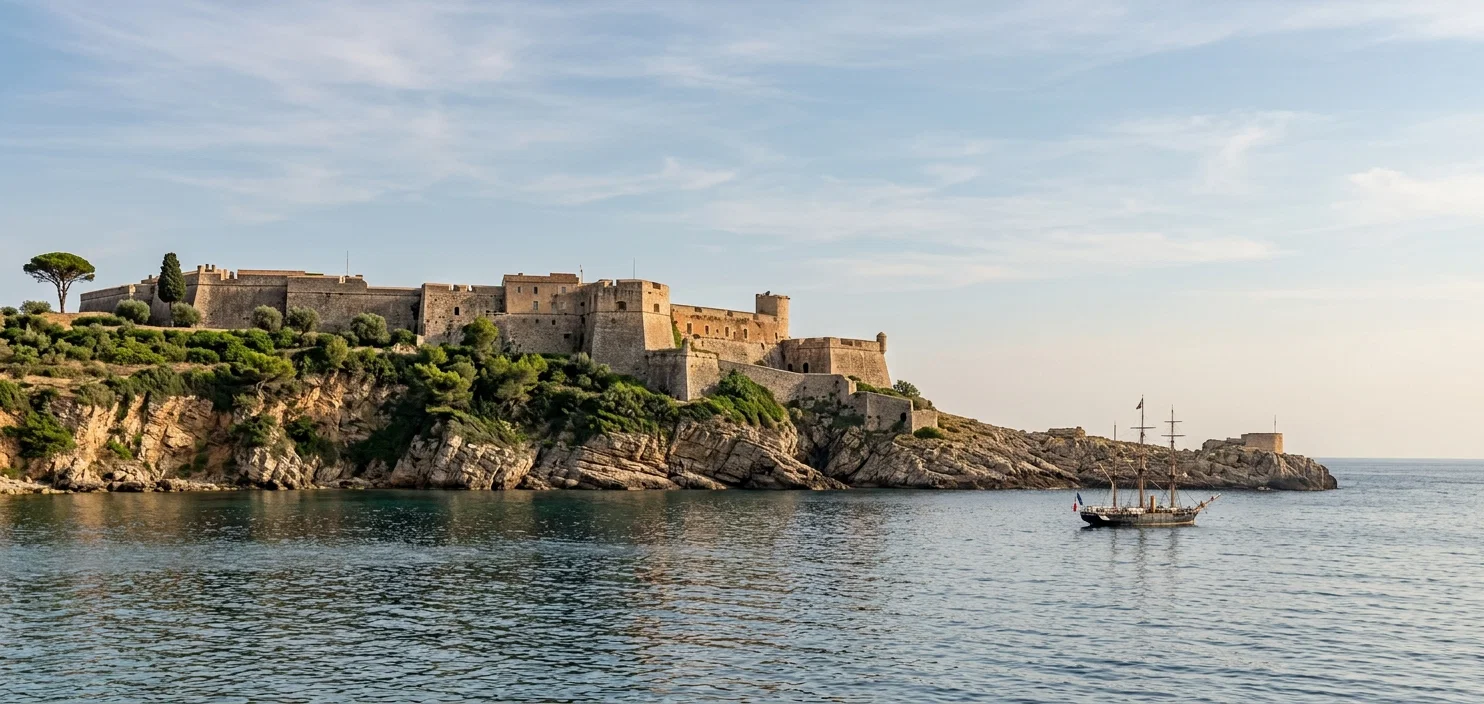
AN OLD FORTRESS AT MYTILENE POINT, OF WHICH ENGLISH WAR-SHIPS LAY IN 1877, DURING THE RUSSO-TURKISH WAR
This is what appears to-day. But what does it all mean to the student of prophecy? A striking parallel presents itself. Though this is more than has ever been granted before, it is not Turkey’s first attempt at constitutional government. A constitution was granted in 1876, and the first Turkish parliament in history assembled March 12, 1877. But that constitution and parliament were but the prologue to the Russian-Turkish war, which followed in the same year, ending in the treaty of San Stephano, March 3, 1878. San Stephano is just outside the walls of Constantinople, and marks the extent of the advance of the Russian forces at that time. But God’s hand was on the helm of the destiny of nations, and the four angels of the seventh chapter of Revelation held back the winds of strife. England, which had been bitter toward Russia since the Crimean war (1853-55), would not consent to the stipulations of the San Stephano treaty, which took practically all of Macedonia from the Turk. A council of the powers was held at Berlin, and there, largely through the efforts of England, in the person of Lord Beaconsfield, the Bulgarian kingdom was born, and Macedonia was “thrust again under the heel of the Turk.” From that day to this the “sick man of the East” has been the target of all Europe.
Now what do we have? Last summer was held the second great peace conference at The Hague. (Remember that the first peace conference was followed by the Russo-Japanese war). Then followed the various ententes between various European powers. But all the time these same great powers have been, and are still, vying with each other in building new ironclads, and it seems, as a German cartoonist illustrates it, that “John Bull, Uncle Sam, Japan, and Germany are all inflating their armaments with what breath they have. The question is, Who will first be out of breath?”
Since that conference, Persia has attempted constitutional government, with the result that the shah disbanded his parliament by bombarding with shells for several hours the building in which it was assembled. Europe has been looking upon the scene of Persian revolution without lifting a finger to stop it. The bloodshed and general chaos have not particularly aroused that peculiar type of political humanitarianism in Europe which similar conditions in Macedonia would arouse to fever heat. The king of England and the czar came to an understanding about Persia; England’s sphere of influence being the south of Persia, Russia’s the north, with a neutral zone in the center. But no solution of the Macedonian question has been reached.
During the last two years the Macedonian question has been taking on great proportions. Month after month we read of the terrible atrocities in Macedonia. No force that the sultan has been able to put into the field has been able to bring about peace. There have been constant encounters between Greek and Bulgarian bands. During all this there has arisen a new movement in Turkey, known as the Young Turk movement. The Young Turks have had to work more or less secretly, but they have become a vast army. Just before the proclamation which has prompted the writing of this article, the Young Turks began to number among their members large companies of the army in Macedonia. I can do no better here than to quote from the London Daily Times of July 21 a despatch from the special correspondent of the Neue Freie Presse at Monastir:—“The Young Turk movement dominates the whole of the third and part of the second army corps districts. Its center is in the vilayet of Monastir, where the Young Turk’s Committee, in places,already assumed executive power. The ordinary authorities are powerless, and can undertake no serious action against the mutineers, because the corps of officers and the troops without exception show solidarity with each other. A deputation of officers yesterday handed to the consuls here a memorandum with the request that in their reports to the great powers they would support the just cause of the Young Turks. The agricultural population is almost entirely won over by emissaries of the movement. The Albanians grant free conduct to the emissaries, who induce the Mussulmans to swear fidelity upon the Koran. The Christians obey willy-nilly. The important question, How will the Macedonian bands behave? is still undecided; but it is probable that the Bulgars, who are best organized in the district, will join the movement openly, and that the Greeks and Kutzo-Vlachs will slowly follow suit. . . .
“The Young Turks’ Committee has successfully begun to collect taxes everywhere. The statement from Constantinople that the mutineers are remorsefully returning to their duty ignores the fact that many fugitives are returning because in the company of their comrades they no longer fear the authorities. A proof of this is the attempt upon the life of the General Osman Hidayet Pasha, who was reading out in the barracks a new telegram from the sultan, which began with threats of the severest punishment, and ended, as usual, with promises of favors and promotion. Before the general had read to the end, four revolver shots wounded him severely, but not mortally, in the head, the neck, and the arm. The man who fired left the barracks quietly and unmolested. Two warning shots were also fired yesterday at the assistants of the director of police.”
It is also reported that Osman Hidayet was shot in the presence of two thousand troops.
(To be concluded)