William Lloyd Garrison’s Protest Against Sunday Laws
The time was 1848. The occasion, a convention in Boston, in response to a call issued by Garrison and a score of associates, “To the Friends of Civil and Religious Liberty.” In that year an organization called the American and Foreign Sabbath Union had been particularly active in urging the enforcement of Sunday observance, and, in the midst of the historic antislavery agitation, of which Garrison was the leader, it was felt by friends of liberty that the occasion called for the sounding of a note in behalf of religious liberty. Truly a clarion note is sounded in the resolutions introduced by Garrison, and his speech upon them, which follow. It was of Garrison and his championship of civil and religious liberty, that John Bright, the English statesman, wrote to James Russell Lowell, “I know no nobler man than William Lloyd Garrison.”
In view of the present widespread agitation for Sunday enforcement, this trumpet call in behalf of true principles will be read with deep interest.
The Resolutions
“1. Resolved, That they who are for subjecting to fine or imprisonment such as do not receive their interpretation of the Scriptures in regard to the observance of the first day of the week as the Sabbath, are actuated by a mistaken or malevolent spirit, which is utterly at variance with the spirit of Christ; which, in various stages, has resorted to the dungeon, the rack, the gallows, and the stake, for the accomplishment of its purpose; and which ought to be boldly confronted and rebuked.
“2. Resolved, That the penal enactments of the State legislature compelling the observance of the first day of the week as the Sabbath are despotic, unconstitutional, and ought to be immediately abrogated; and that the interference of the State in matters of religious faith and ceremonies, is a usurpation which cannot be justified.
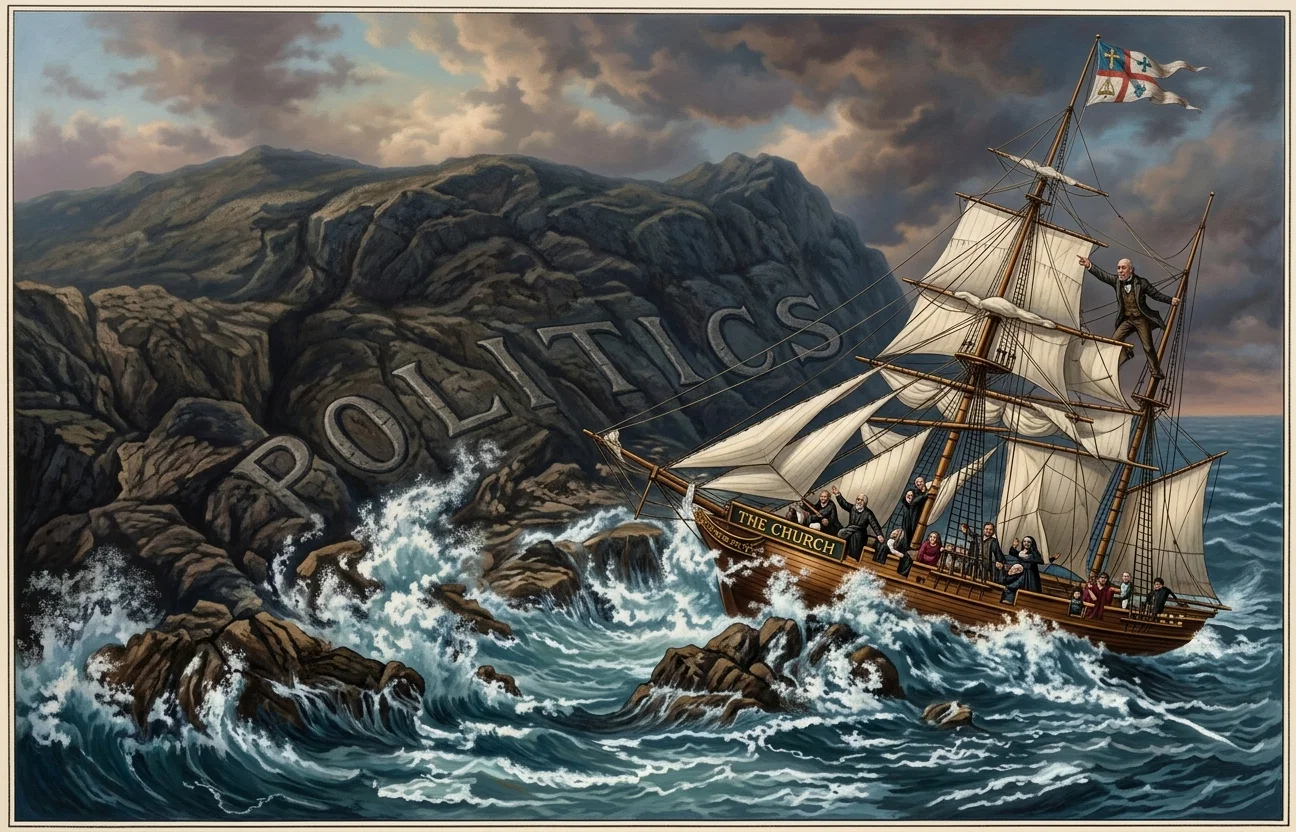
THE CHURCH RUNNING ONTO THE POLITICAL REEF
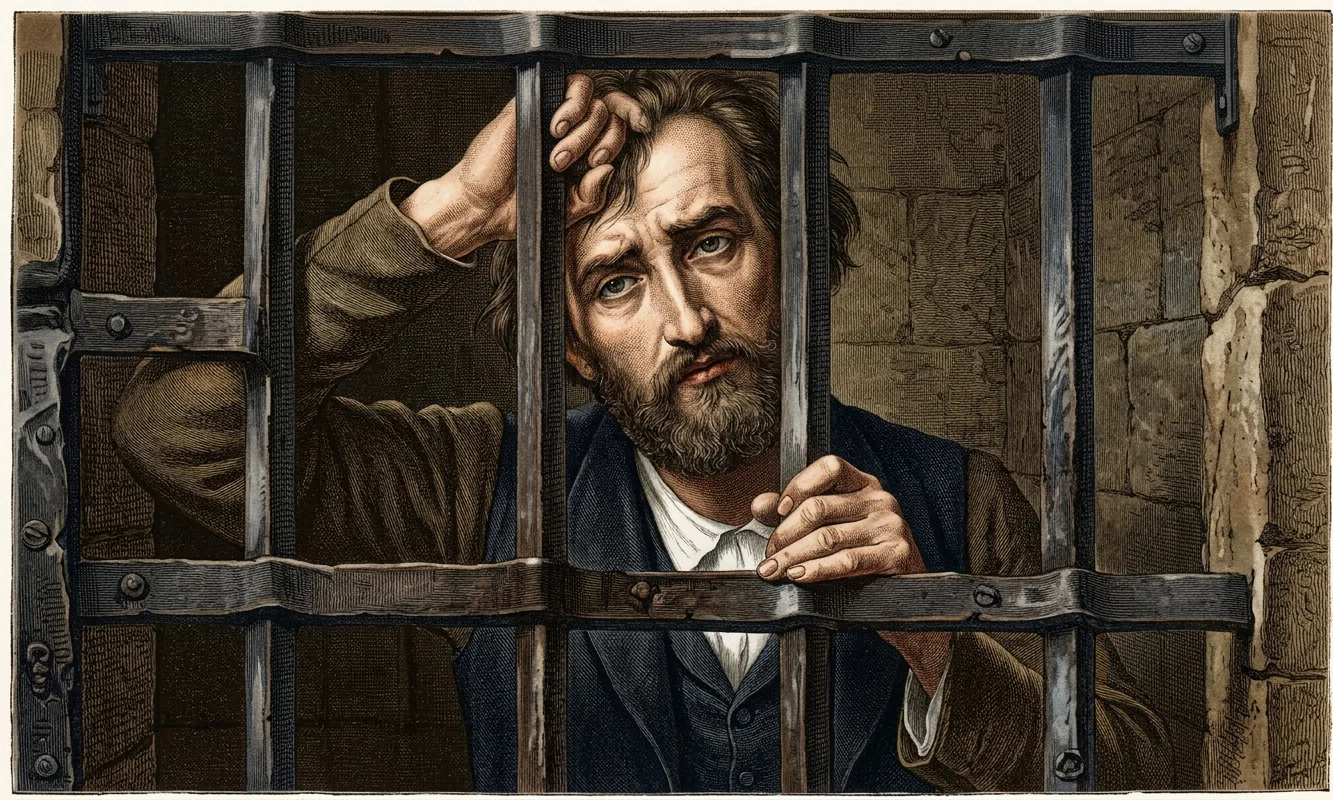
IN PRISON FOR CONSCIENCE’ SAKE
“3. Resolved, That as conflicting views prevail in the community, which are cherished with equal sincerity, respecting the holiness of days; and as it is the right of every class of citizens to be protected in the enjoyment of their religious sentiments on this and every other subject pertaining to the worship of God, all classes should be united in demanding a repeal of the enactments alluded to, on the ground of impartial justice and Christian charity.
“4. Resolved, That this convention recommend to all the friends of religious liberty throughout the country the presentation of petitions to the next legislature, in every State in which such laws exist, protesting against their enactment as an unhallowed union of church and state.
“5. Resolved, That if the legislature may rightfully determine the day on which people shall abstain from labor for religious purposes, it may also determine the place in which they shall assemble, the rites and ordinances which they shall observe, the doctrines which they shall hear, the teachers whom they shall have over them, and the peculiar faith which they shall embrace; and thus entirely subvert civil and religious freedom, and enable bigotry and superstition, as of old, to—
“Go to their bloody rites again; bring back
The hall of horrors and the assessor’s pen,
Recording answers shrieked upon the rack,
Smile o’er the gaspings of spine-broken men,
And perpetrate damnation in their den!”
“6. Resolved, That as it has been found safe, politic, and beneficial to allow people to decide for themselves in all other religious observances, there is no reason to doubt that the same good results would attend their liberation from the bondage of a Sabbatical law; for ‘where the Spirit of the Lord is, there is liberty.’
Garrison’s Speech upon the Resolutions
“Of all the assumptions on the part of legislative bodies, that of interfering between a man’s conscience and his God is the most unsupportable and the most inexcusable. For what purpose do we elect men to go to the general court? Is it to be our lawgivers on religious matters? . . . This passing a law forbidding me or you to do on a particular day what is in itself right, on the ground that that day, in the judgment of those who make the enactment, is more holy than another,—this exercise of power, I affirm, is nothing better than usurpation. It is the spirit which in all ages has persecuted those who have been loyal to God and their consciences. It is a war upon conscience, and no religious conclave or political assembly ever yet carried on that war successfully to the end. You cannot by enactment bind the consciences of men, nor force men into obedience to what God requires.
“Who wants to be persecuted on account of his own conscientious views? I will ask the first-day Sabbatarian, Do you claim a right to entertain your views, without molestation, in regard to the holiness of time?—‘Most assuredly.’ How do you make it out that the first day of the week is the Sabbath?—‘I believe it to be so; if it is not, to my own Master I stand or fall. Under a government which avowedly tolerates all beliefs, I claim the right, as a first-day Sabbatarian, to keep that day as the Sabbath.’ Well, I do not recall that right. I claim the right also to have my own views of the day; the right to sanctify the first, second, or third, or all days, as I think proper.
“Now I turn to that first-day Sabbatarian, and ask him how he dares to dictate to me to keep the day which he regards as holy, and to say, ‘If you do not obey me, I will put my hands into your pocket, and take out as much as I please in the shape of a fine; or if I find nothing there, I will put you in prison; or if you resist enough, I will shoot you dead.’ How dare he do this? If he is not a ruffian, is he a Christian? Talk of the spirit of justice animating the bosom of the man who comes like a highwayman with, ‘Do, or die!’ Who made him a ruler over other men’s consciences?
“In a government which is based on equality, we must have equal rights. No men, however sincere, are to wield forceful authority over others who dissent from them in regard to faith and observance. The case is so plain that it does not need an argument; and I am confident that in the course of a few years, there will not be a Sabbatical enactment left unrepealed in the United States, if in any part of Christendom. It belongs to the tyrannical legislation which formerly sent men to the stake, in the name of God and for his glory, because they did not agree with the theological views of those who burned them.
“Christianity as taught by its Founder does not need any governmental safeguards; its reliance for safety and prosperity is not on the rack or the stake, the dungeon or the gibbet, unjust proscription or brutal supremacy. No; it is the only thing under heaven that is not afraid; it is the only thing that repudiates all such instruments.
“Let us be careful how we trample on human liberty or human conscience. Said the apostle, ‘Every one of us shall give account of himself—not to the legislature of Massachusetts, not to the Congress of the United States, but—‘to God.’ . . .”