Reconnoitering

7%

Review and Herald Publishing Association · Takoma Park Station, Washington, D. C. · Nov 2, 1916

FromReview and Herald, Vol. 93, No. 54.

Read the full edition

Reconnoitering

Pioneering Experiences in the Solomon Islands — No. 7

Reconnoitering
G. F. JONES
The people of the Solomon Islands do not live together in large numbers anywhere. Some islands are more populous than others, and some have been depopulated by disease and war. At the places we called there were no villages. The people lived in districts, but sometimes a long ways apart, each family having its own house. Yet those of one language can be called together at any time for a feast or a council, and also for a mission school or for meetings.
Before we could make any promises to establish a mission among them, we desired to know the conditions we should have to meet, and how many persons there were, all told, so as to know whether it was worth while to go to the expense of erecting buildings for a home and a school. But we cannot get satisfaction from these people as to numbers. When they want us, they say, “A great many.” Then we ask, “Have you one hundred, or one thousand?” and they always reply, “Oh, we don’t understand counting like you white people!” So we go away guessing and have no assurance of anything. This condition of uncertainty among the natives makes mission work slow and expensive, as it necessitates more workers.
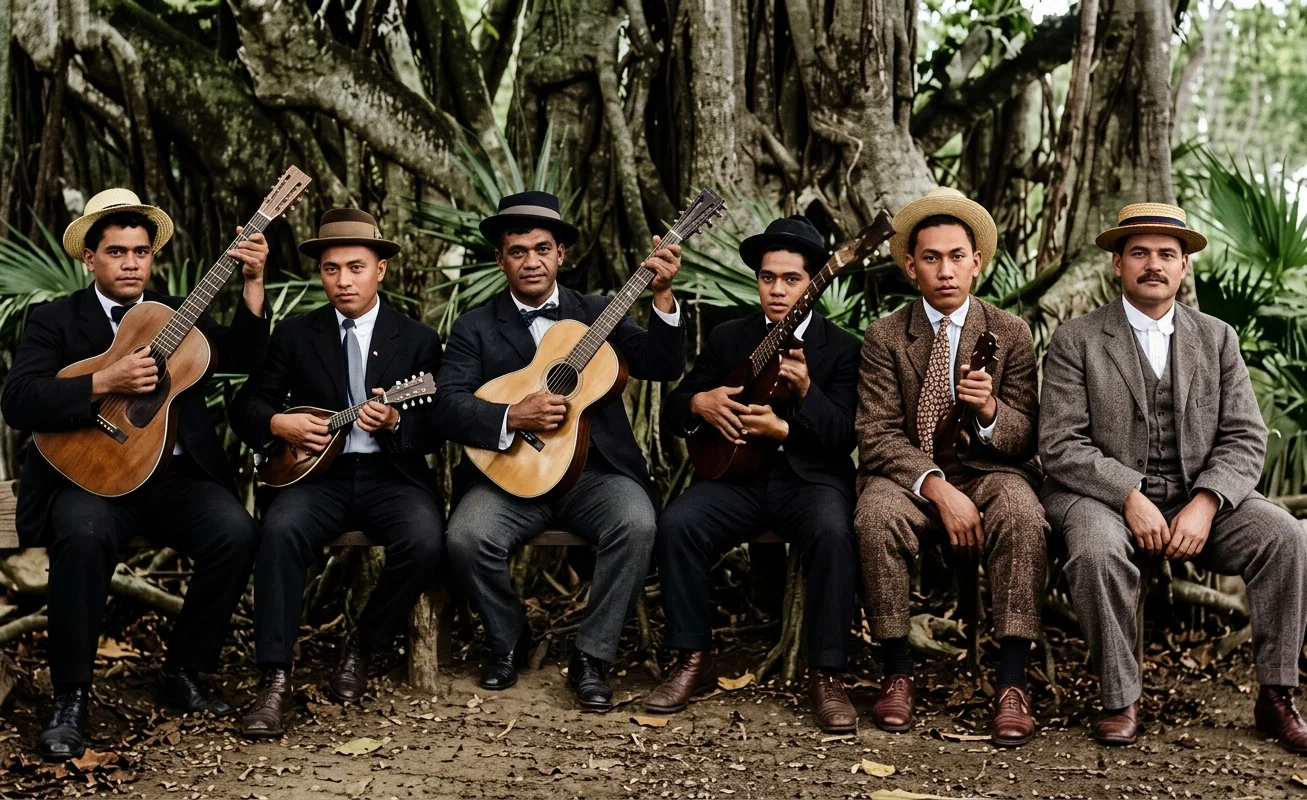
EMPLOYEES OF BROTHER JONAH KUMALAE'S UKULELE FACTORY
One day we sailed toward a large white cliff in a bay where the sea is nearly always high and boisterous. Not until we almost reached the cliff could we see an opening, but it led us immediately into a large, beautiful harbor, quite closed in, with not a ripple on the water. The sudden change reminded us of our old advent hymns describing the departure from this stormy world to our calm and everlasting haven of rest. The ranges of mountains with their high peaks in the background, with the glassy water of the harbor reflecting the beauty all around, made a magnificent view.
Were there any natives living there? — Yes. A few naked, scrofulous old and young men soon made their appearance in canoes. They wanted tobacco, pipes, cloth, medicine; but did they want a missionary? We waited a few days for their answer, when one of their young men came forward as spokesman and said in pidgin English: “Me fellows cut him tree fall. You fellow stop make him one school.” We tried to learn how many persons there were in this district, as we were hoping to find a place to start where there would be a number of natives who could be brought together; but we failed to get any definite information. So we planned to look elsewhere for a location for our mission, and call again at this place.
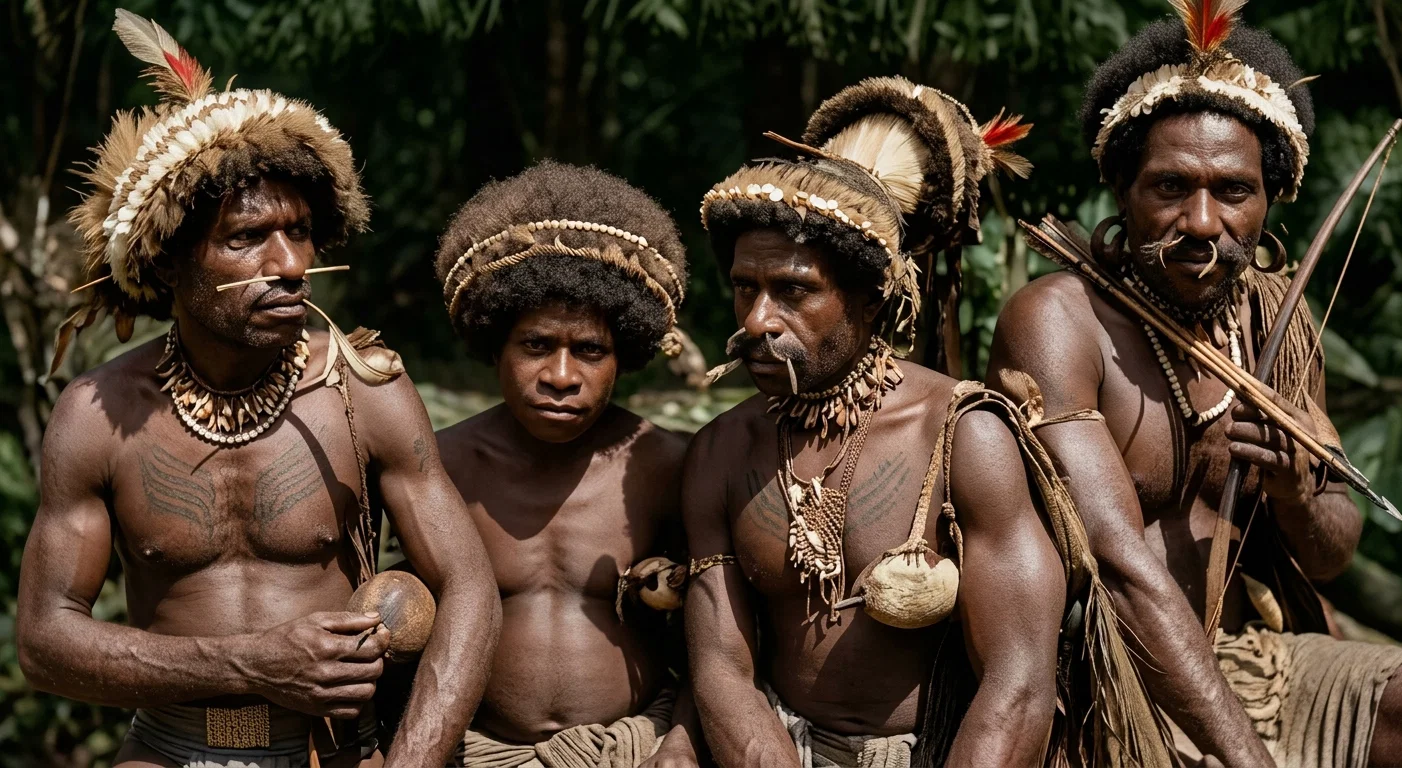
SOLOMON ISLAND SAVAGES, READY FOR ANYTHING
However, these young people did not wait. They went ahead and cut down huge trees and cleared the bush, then went through swamps and found a location on higher ground beyond. I felt very dubious about the place. It looked like a malarial district, and I feared that none of us could live there. They insisted that it was a good place. I searched through the nautical directory for a description of the harbor. It said, “Viru harbor has proved to be a healthful place.” I have since learned with sorrow that the other places we chose as sites for our mission stations, with no swamps in sight, have been unhealthful and malarious; while Viru harbor has been somewhat better for the health of the workers.
The Viru people went ahead with the work, so that it was difficult to deny them. I wondered how many would finally make their appearance at the
meetings and school, for I could see only two houses in the distance. We did not mean to give these people up, but wished to go farther and see what might be waiting for us beyond. So we called at several districts between thirty and fifty miles away, and saw their chiefs, but none were ready to decide, all wanted time to counsel together. Returning to Viru, we found the natives willing and ready. A stormy season struck us, and we were obliged to lie still and be content in this sheltered harbor.
Circumstances seemed to shut us in with the Viru people, and there we started our first mission. Between seventy and ninety attended our meetings every Sabbath. They nearly all lived miles away, in the bush and up the rivers. It was a pleasure to see the attention they gave during the service, and their willingness to learn. We had between thirty-five and forty-five attending school every day. One of their number, a young man named Verane, is now ready to start a mission outschool at Nono. We are training our native young people for service as quickly as we can. A few more will soon be ready. Verane is a quiet, conscientious, studious Christian boy, and is a real jewel. Brother and Sister O. V. Hellestrand are now in charge of the Viru Mission.