Colporteur Work in Southern Bolivia

7%

Review and Herald Publishing Association · Takoma Park Station, Washington, D. C. · Feb 22, 1912

FromReview and Herald, Vol. 89, No. 8.

Read the full edition

Colporteur Work in Southern Bolivia

OTTO H. SCHULZ
The city of Potosi has no Protestant missionaries, and great spiritual darkness is hovering over the people. I was the first Adventist to proclaim the last message there. Now not only the farthest northern city (Hammerfest) but the highest city of the world has been warned through our publications. There is hunger after the true word of God, and thirst after the living water. People search for the way of salvation, but find it not, as the priests have hedged up the path to eternal life.
Some intelligent and gifted men, also a prepossessing lawyer, the father of the burgomaster, are looking for something better than the Roman Church teaches them. The latter was glad when he heard I was a Protestant. He, himself a Catholic, said: “You have a sound teaching, and I like you for it; I do not care for Catholic doctrine.” This sounded good to me. He bought a copy of “Home and Health” and of “Christ Our Saviour,” and two copies of “Coming King,” as well as other literature. He first bought one copy of “Coming King,” and after hastily examining it, said: “This is just what I want. Bring me another one for my friend. Have you any other books here?” I answered, “No.” “Well,” he said, “give me a list of all your books, and when you come back bring me one of each of them.” He is a man of much influence.
I now like that city very well; I met many obstacles there, but Satan’s plans came to naught. As soon as I have opportunity, I shall go there again and endeavor to bring the people closer to Christ, and farther away from the worship of Mary.
One month after reaching Potosi, I took the coach for Sucre. This city is about five thousand feet lower than Potosi. Sucre, the former capital, is the prettiest city in Bolivia. It is built in modern style, with straight, wide streets, tall buildings, and has many shade-trees, which give it a very pleasing appearance. The aristocracy of Bolivia have their residences there. But since La Paz has been made the seat of government, this city has become a quiet place, there being no commerce, and no work for the poorer class. Going there in the hot season, the change of climate incapacitated me for work for several days. The richer class had left for the country, and all institutions and public buildings had closed their doors.
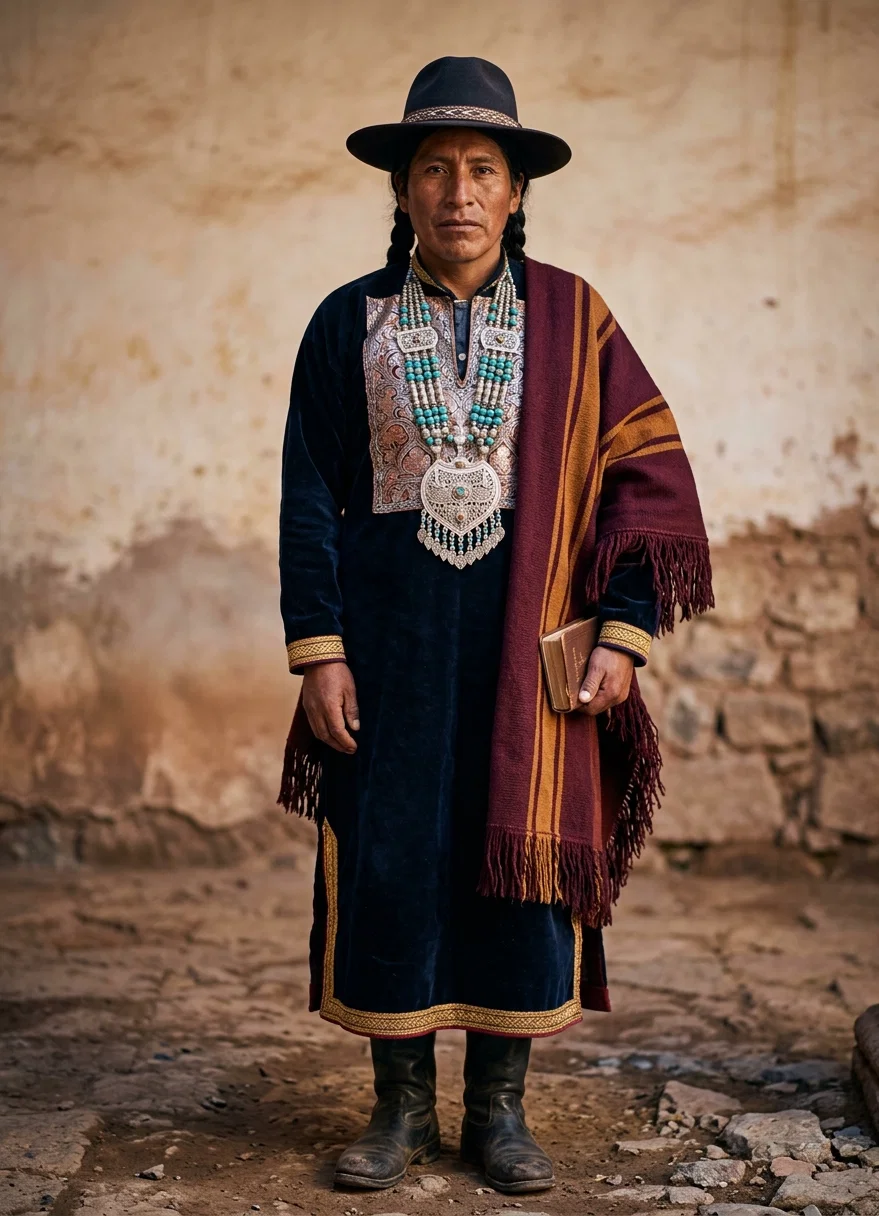
NATIVE INDIAN OF POTOSI, BOLIVIA
Such a situation makes a very dull time for a book agent. At the same time the feast in honor of the dead was celebrated for a whole week, all the people spending their time at the graves. They even ate their meals there. About the only money spent on such days is for drink, thus making the many whisky dealers rich. Most of the feast-days fall upon the first or fifteenth day of the month, when the people have the most money, the very time when the colporteur wishes to deliver his books.
I had much trouble in Sucre. But who can hinder the truth of God? At the end of November when this trip closed, I had sold over $458 worth of literature, although one month of the time was spent in traveling. On the nineteenth of November I left Sucre for Cochabamba, my home. At Rio Malato I had an attack of mountain sickness, and left the train. The next day, however, I was ready to continue my trip. A week later I reached home, but within four days suffered a severe relapse, which continued for a week, and was accompanied with such pain that I could not walk, sit up, nor sleep. The sudden changesof climate in going from one city to another, and from one elevation to another, often a change of from three thousand to five thousand feet, is very trying on the nervous system.
All these fatigues I count as nothing compared with the many joys of my heart, when I see people turning from Romanism to the gospel. I could read in their faces that they strive for deliverance out of spiritual darkness. Young Bolivia fights against priestcraft of long standing. The people know well that its teachings are fables. We need workers to proclaim the everlasting message. How can they hear without a crying voice in the wilderness to prepare the way? See Rom. 10: 17.
The Lord opens the doors wonderfully. Civil marriage was established a few months ago. The separation of church and state is the next question for Bolivia to settle. I not only believe but I see already that our literature has a great future in Bolivia, and will do a great work in a short time. It is true that traveling is expensive at the present time, but seven railroads are in process of construction, and five other enterprises of the same sort have concessions granted them. The Lord himself is opening the way for his message. With great speed it must go everywhere, for the time is short. Emigrants from all parts of the world will come here to hear the glad tidings of a soon-coming Saviour.
Soon the railroads will open fertile regions. Thousands of square miles in this country are still unknown, and there are tribes of Indians that have never seen a white man. Now is the time to pray for means and laborers to be sent forth. Much has to be done here.
Elder Conradi said last year, “Indeed, South America is the most neglected land,” but he saw only the coast lands, which are ahead of the interior. Bolivia ought to have not one but ten canvassers right now, also at least one nurse. Here is plenty of room. Let us have at least one young man who is willing to go with me to fanatical towns where the priests rule with all power over the people. Not long ago a school was established in Peru for the Aymara Indians. Over fifty already have been baptized. Why not establish an institution for the Quichua Indians? This tribe is larger than the Aymara. Plans were laid long ago for an industrial school. We are anxiously looking forward to the time when the $300,000 Fund for missions will have reached its mark, so that something may be done for the poor brown race, oppressed and inhumanly treated. Many of these slaves of the whites will sit with us at the feet of Jesus, when he has claimed his own, and will sing the new song on the sea of glass. How soon will our longings be satisfied?
Cochabamba.