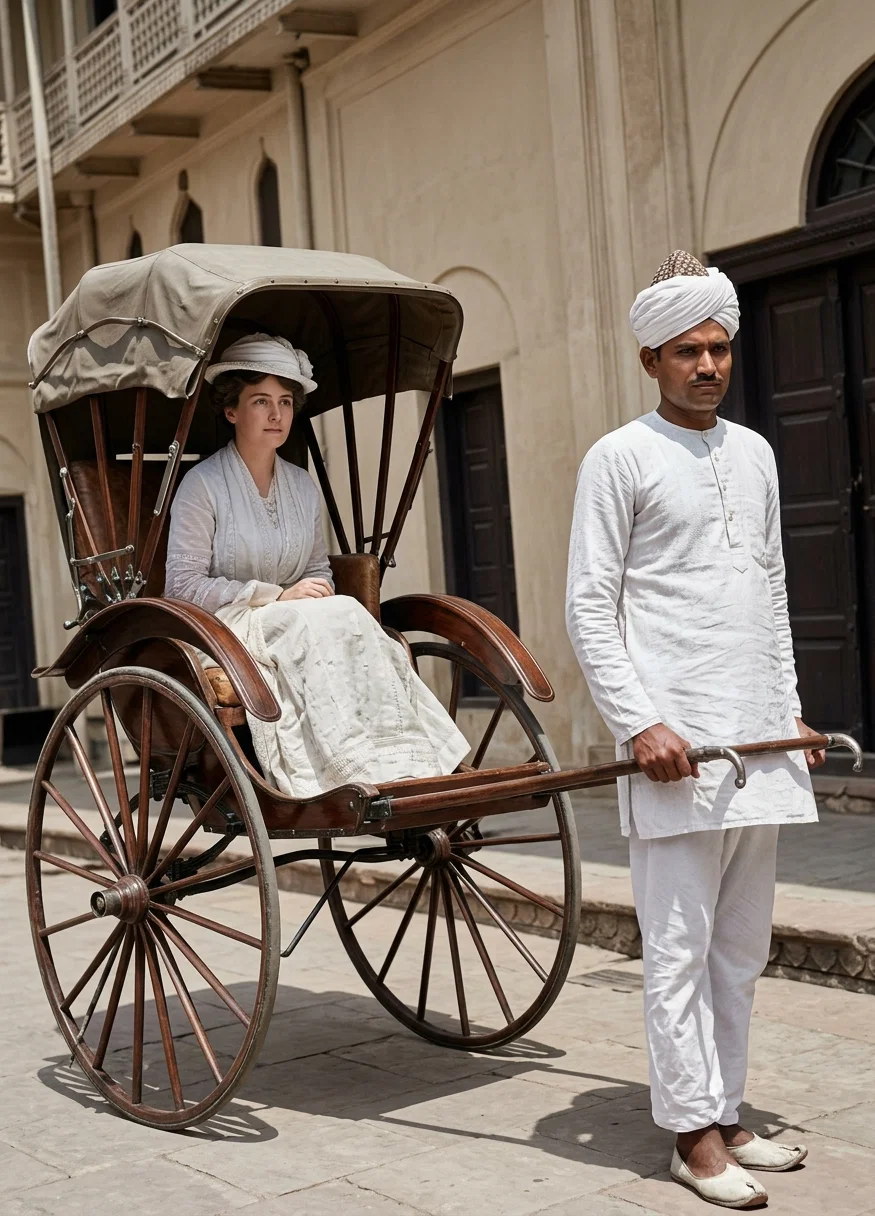
Lucknow, India

11%

Review and Herald Publishing Association · Takoma Park Station, Washington, D. C. · Mar 12, 1914

FromReview and Herald, Vol. 91, No. 11.

Read the full edition

Lucknow, India

WALTER S. MEAD
Sometimes we read of the interesting experiences of a worker among the Mohammedan women of India. I have thought that the readers of the Review might enjoy hearing just a few items more concerning that work.
The worker concerning whom I wish to write is Miss Vera Chilton, who came to India from England several years ago. Miss Chilton learned and accepted the Adventist faith at the sanitarium at Mussoorie, and for some time past has done earnest work among the shut-in Mohammedan women of the city of Lucknow. The accompanying picture was taken just as she was returning in her jinrikisha from the daily round of teaching, comforting, advising, exhorting.
The work among the zenanas, or homes of the women, has encouragement in it, although the number of women who make a bold stand for Jesus as their Saviour is very small. But, as a recent article told you, one young woman's people said to Miss Chilton (regretfully, of course) that the young woman was thoroughly baptized in heart into Christianity even if she was not baptized publicly. And then they arranged to send the young woman away, out of the further reach of our worker. It is then that we can only cry to God to care for the little ones of his flock.
Perhaps the worker among Mohammedan women sees and realizes more of the awfulness of the grip of Islam on its followers than does any other worker. Miss Chilton often says that the call of the muezzin from the mosque just across the corner, five times each day calling the faithful to prayers, seems to her a veritable challenge to all Christendom.
Photo by Walter Mead
MISS VERA CHILTON
Photo by Walter Mead MISS VERA CHILTON
An interesting fact in connection with this particular mosque is that it stands surrounded, except its entrance from the street, by the grounds of the Isabella Thoburn Christian College. A mosque may be ever so neglected or in any state of disrepair or ruin, but it may never be sold; and so no sum of money can buy it. Consequently, if the land one wishes to buy and use happens to contain a mosque, he must plan to build around it, leaving an entrance from the street to the mosque. About twenty persons were killed in a riot the other day, following an endeavor by the government to remove, for the purpose of widening a city street, one corner of a small building attached to a mosque. The Mohammedan leaders had at first consented to it, but the people decided that every brick was sacred—and so immovable. How much they need to know that God's service is a matter of the heart rather than of bricks.
Simla, India.