Through Siberia

5%

Review and Herald Publishing Association · Tacoma Park Station, Washington, D. C. · Jan 14, 1915

FromReview and Herald, Vol. 92, No. 3.

Read the full edition

Through Siberia

(Concluded)
J. T. BOETTCHER
It took me three days to go from Manchuria to Irkutsk. My train went no farther, and the next train did not leave until morning. Brother Gnedjin and a friend of the truth were at the depot to tell me the latest news. All the men and horses had been taken, so that it was hard to get a cab. I stopped with a friend of ours and held a Bible reading.
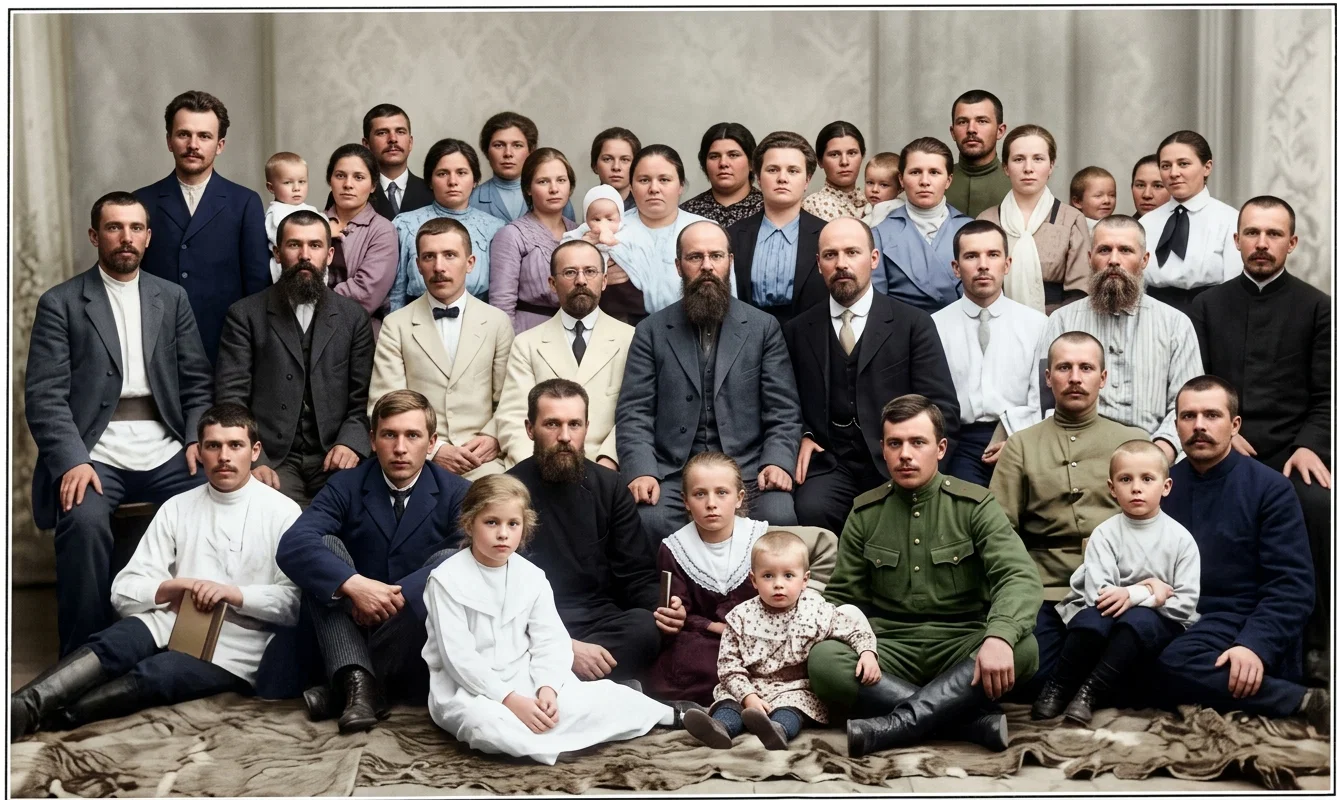
THE CHURCH OF IRKUTSK, SIBERIA
Before we reached Irkutsk an officer came through the cars and asked for the passports. He was in search of Germans.
In Irkutsk we have twenty-two members. Somehow they have permission to hold meetings as often as they please. The house was full when I spoke. One Bible worker here was imprisoned some months ago because he advertised a meeting and preached from the Bible. The meeting was closed at once. He is still in prison awaiting trial. We do not know when it will be. The superintendent was left all alone in that great field, but he was willing to do his best.
Calls are coming from many places. I will quote from a letter which Brother Gobel, the superintendent of the Amur Mission, received while I was with him:—
“DEAR BROTHER GOBEL: The peace of God be with you as from the least of your brethren Pazink and Chomenko. We had expected you to come to us either the last of May or the first of June, but you did not come. Now we ask you to tell us why you did not come to see us. We are concerned about you. Did anything happen to you, or has some misfortune befallen you? Is it because you have no money? Please let us know. We will come to get you or come to you. But there are nine of us, and we cannot all leave our homes. Please do come after harvest and instruct us in the message.”
This is one of the many letters that might be presented. During 1913 there were seventy-four members added by baptism and vote. Only four workers are being employed. This is a good record.
Monday morning, August 10, I went to the depot in Irkutsk, but was told that there was no place to be had on the train. I had to go, so I got onto the train and found myself in a compartment where were a number of children, a woman, and a Russian merchant whom I had met before. Objection was raised to this. After I had my luggage put up, I went out to say good-by to our brethren. Then I saw the Italian doctor and asked him if he had a place. He said, “Yes, and one for you, too.” I changed over quickly. The night before, the doctor was introduced by a Russian captain to the head of the police. These gentlemen caroused all night in Irkutsk, and were in a very humorous spirit. The head of the police ordered a compartment to be vacated when they came to the train, and this was done. I could see how God looked after me all the time; I felt sure he would, and so he did. I had a splendid place. We were the only two in the compartment during five days.
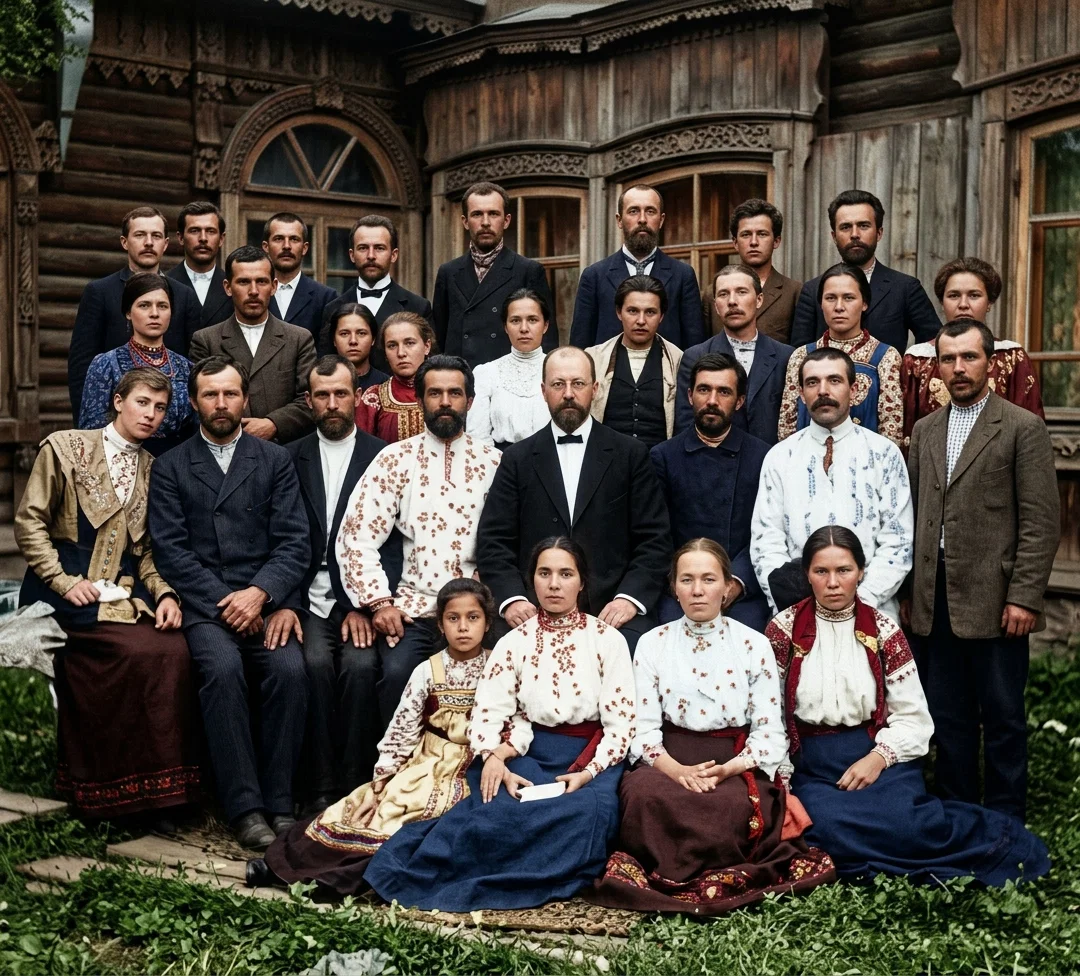
CHURCH MEMBERS IN HARBIN, MANCHURIA
Sabbath morning, August 15, I was in Omsk, where the workers from the West Siberian Mission had come to counsel with reference to their work. One of the ministers came nearly six hundred miles by team. There is only one railroad in Siberia, and that goes east and west. We had meetings every day while I was with them. The fields were white and the crops splendid, but there were no men to harvest the grain. The women had to shoulder the burden. I saw them out in the fields mowing with the scythe as men usually do. It was very touching to see the soldiers say farewell to their wives and children. They would hold on to their loved ones until the train was even in motion. War is a dreadful thing.
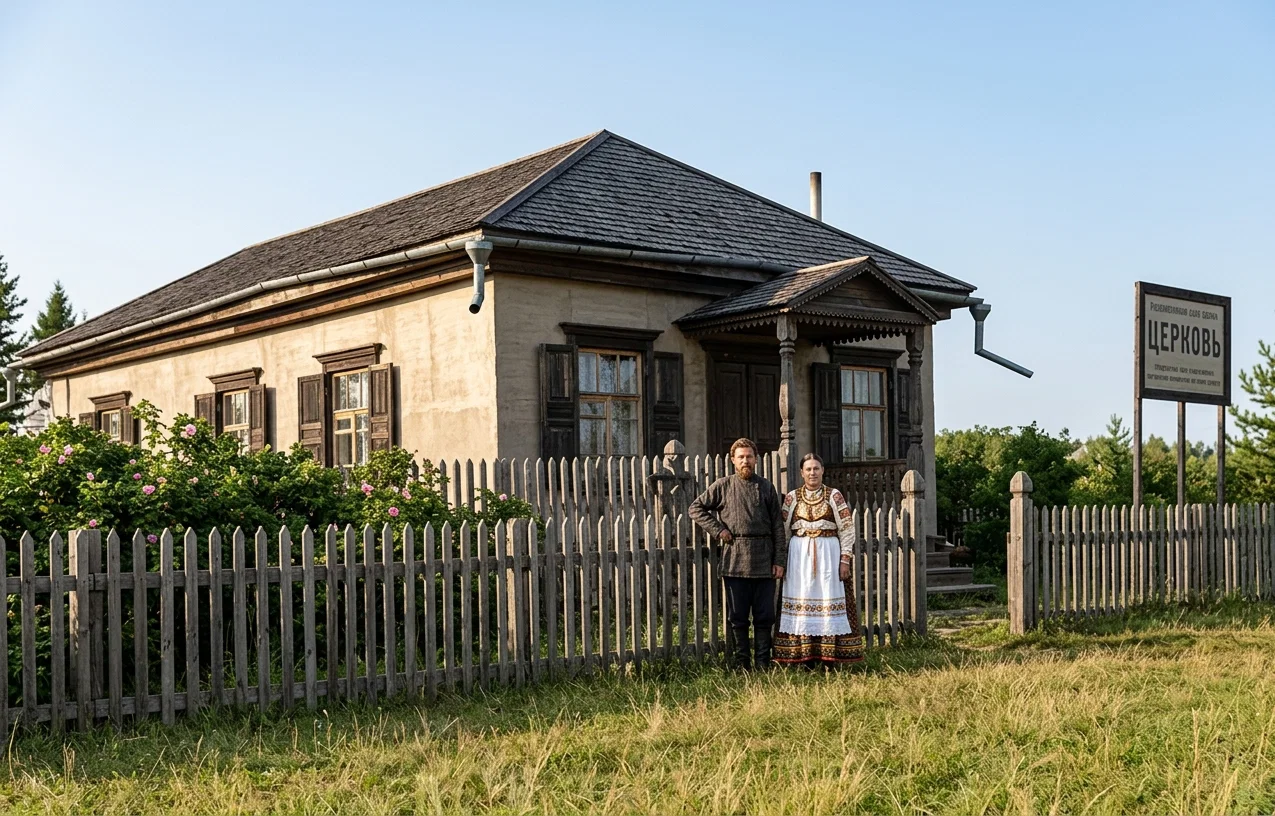
OUR CHURCH BUILDING OF IMAN, EAST SIBERIA
In the country around Omsk there were thousands of military tents pitched. In the city the soldiers were boarded free of charge. Nights and mornings great numbers of horses were brought to the river Irtysh to drink. Everybody knew that Russia was in earnest about the war. The stations were crowded with troop trains. All passenger trains, and even the express trains, were stopped. Only one mail train went each day, and this not on schedule time. These trains had to stop from five to thirty minutes at each station to wait for further instructions from some source. Trains and trains of soldiers went east and west. At the stations the people would come and ask for news. We gave them papers if we had them, but it was hard to get papers. I had never seen Russians so anxious to read the newspapers. One would get a paper and read aloud, while the others would stand in large groups and listen to every word as if spellbound. This war has brought the people of Russia together in one common brotherhood; Jews, Poles, Esthonians, Tartars, Lettonians, and the Russian Germans stand side by side.
Our workers were cut off from the head office, and were already without money, so we counseled together, and I promised them that we would help them from Riga as long as we could, but told them that every minister would have to do with less and cut down all possible expenses. They were willing to do this,and to stand by the work even if they should have to work with their hands part of the time. I am glad that we have such a loyal class of workers.
I had planned more meetings in west Siberia, but thought best to go back to Riga without attending the others. Tuesday, August 18, very early in the morning I went to the depot to wait for the train. The Lord again helped me to find a place. By Friday morning I was in Samara, where we have one worker. This brother was at the station to meet me. I tried to get a ticket farther on, but was unable to procure one. No tickets were to be had. I tried all sorts of persuasive methods, but without effect; so I stayed in Samara, and held meetings on Sabbath and Sunday. Sabbath I baptized a young man, and two others promised to follow their Lord. Sunday afternoon a man who was a baker promised to close his shop and keep God’s Sabbath day. I felt very thankful to God that I had had to stay.
Sunday, August 23, I prepared to go aboard a steamer on the Volga, at about 7 P. M., but it did not come until after midnight. Tuesday morning, at four, I was in Saratof, where I had a meeting with the workers and the president of the East Russian Union Conference. Some of the brethren were to go to a general meeting, but it was thought best that I should not go. After counseling about our present income, we fixed a new wage standard, cutting down the wages of all the ministers one third. If the money comes in as it usually does, we can keep going for a while. If not, we shall have to cut down still more.
Sunday, August 30, I was in Riga. I found that our bookkeeper here had gone. He and four other German brethren were sent to Orenburg.
The meetings in Riga were never better attended. The people are having most earnest thoughts. God will work good out of it all. Riga is as quiet as ever. If it were not for the newspapers, one would hardly know there is war. The first few days there was a run on the banks, but conditions are now normal again. A few builders have stopped their work, but others are still building. The prices on living articles are about the same as they were. There is a fine of $1,500 for charging more than the price fixed by law. But the greatest blessing Russia is experiencing is the law which forbids the sale of alcohol. Every shop where liquor was sold is closed. Nothing in the form of intoxicating drink is sold. There are no drunkards to be seen anywhere, no singing or shouting on the streets. One is perfectly safe to be out at any time, for all the questionable houses are shut down. Crime in many places has diminished from fifty to seventy per cent. I wish these conditions might continue.
As yet we are not suffering, but if the war continues we shall have to call for help to provide our workers with what they need for their subsistence. But we hope our churches will be faithful and come to the help of the Lord. God is ruling in the affairs of this world. Our trust is in him. We are one people, and must stand together in this closing work.
Riga, Russia.