Australasian Union Conference and Ministerial Institute
By Arthur G. Daniells
THE Australasian Union Conference held its quadrennial session for 1914 on the St. Leonards camp ground during the month of September. St. Leonards is a suburban station of Sydney, New South Wales.
The conference was opened by the president, Elder J. E. Fulton, Wednesday morning, September 2. After receiving the president’s report for the quadrennial period just closed, the delegates elected the usual standing committees, and decided to defer the consideration of all business features of the conference for two weeks. This was done because the executive committee had arranged to devote that part of the conference to a ministerial and workers’ institute.
When the institute opened, it was found that there were 200 in attendance—160 conference laborers, 15 students, and 25 laymen. The wives of some of the ministers are included in the number of conference laborers. The students were some of the oldest and most advanced young people in Avondale Missionary College. The number was doubled before the institute closed. The laymen were brethren and sisters who came from different parts of the union to attend the institute.
Of this large gathering 19 represented the general work of the union, 29 were from New South Wales, 29 from Victoria-Tasmania, 20 from New Zealand, 15 from South Australia, 11 from Queensland, 10 from West Australia, and 17 from the island mission fields of the Southern Pacific. The students and laymen were from all these divisions of territory.
No one in that gathering could fully appreciate the feelings of Mrs. Daniells and myself as we looked upon that large company of loyal, consecrated workers. The doxology is usually sung at the close; we wanted to sing it at the opening. We remembered the day of small things, when there were only three ministers in all this union, and not more than one hundred believers. And there were no others south of the equator. We could but exclaim, “Behold what God hath wrought!”
The workers had been looking forward to this occasion for a long time and with deep interest. They felt the need of the study, counsel, and association. They were expecting to receive great benefit, and entered most earnestly into the spirit and work of the institute.
Brother Fulton conducted a study on the need and the place of the Holy Spirit in the work of the gospel, and took the general oversight of the institute. Brother Johanson and Sister Hindson gave a series of lessons on home missionary work. I gave a continued study on the gospel ministry, and took charge of the question box hour. These regular studies, with the evening services and the special meetings of consecration, kept us all busy. The time was too short to compass all that we could see spread out before us.
Each institute that I have attended has been different in some ways from every other, and yet each one has seemed to be just what was needed by those in attendance. So it was on this occasion. It was not just what we had at either Philadelphia, College View, South Lancaster, or London; but for the field and the workers it was just as inspiring and helpful as any of these mentioned.
The first Sabbath of the institute was a very precious day. At 8:30 A. M. the workers crowded together in the young people’s tent for one of those special meetings we have so often had in our institutes. The Lord surely met with us. We were filled with the spirit of surrender and consecration and confession. As we were not ready to close this meeting11when the hour came for the general meeting in the large tent, it was arranged that we should continue this special meeting in the afternoon. This was done. The second meeting lasted till the close of the Sabbath. Then, instead of having the regular preaching service in the evening, we all gathered in the large tent to continue this earnest seeking of the Lord with all who were on the ground. The blessing of God rested upon us. All were calm, yet earnest and resolute. We felt that the time to finish the work of God had surely come, and that we must have a new vision of this great work, that we must make a new consecration of our lives to the work, and that the Lord must ordain us anew by his divine Spirit for greater efficiency and power in the work. The Lord heard us, accepted us, and blessed us.
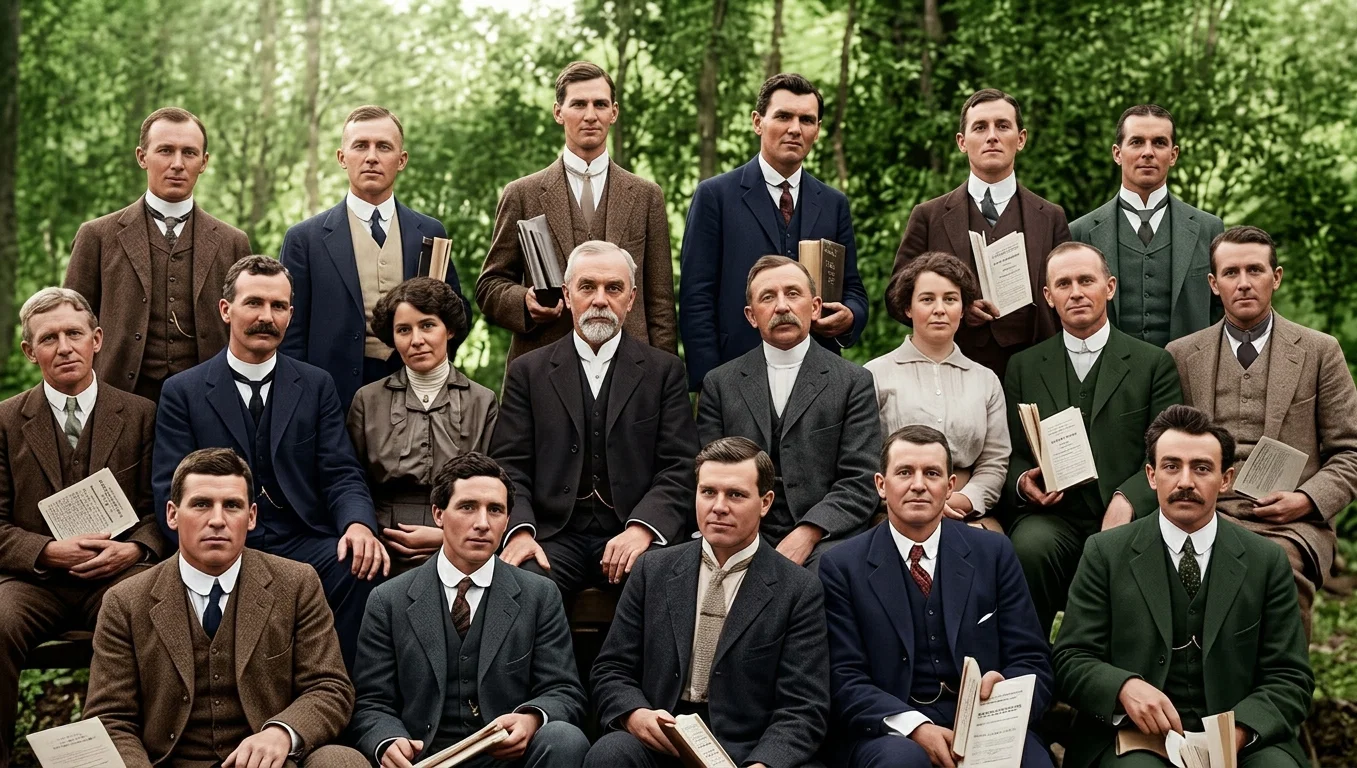
COLPORTEURS ATTENDING AUSTRALASIAN UNION CONFERENCE, 1914
It was a great pleasure to have the presence and association of our missionaries who are laboring in the island mission fields of this union, and for the natives of Australia and New Zealand. Brother and Sister C. H. Parker were present from the New Hebrides, where they have had such serious times the past year. They were enjoying fairly good real health, and were full of courage regarding their field. Brother and Sister A. G. Stewart came from Fiji. Their reports were most encouraging. Brother and Sister S. W. Carr were present from New Guinea, where they have their mission fully launched and are now working for the heathen around them. Brother F. E. Lyndon, who has been seven years without a break at Tahiti, came for a change and a spiritual uplift. Brother and Sister G. L. Sterling came from the Cook Islands. This was their first meeting with the Australasian workers. Brother and Sister George Stewart came from Tonga, Brother A. H. Ferris from Norfolk Island, and Brother T. A. Driver from Lord Howe Island. Sister McCoy, a daughter of Brother J. R. McCoy of Pitcairn Island, was with us. Brother and Sister P. B. Rudge, who are working for the aborigines of New South Wales, and Brother R. K. Piper, who has charge of the work for the natives of New Zealand, were also present. Then Brother B. Judge, who is on furlough from Sumatra, and Brother and Sister Harold Sharp, who had just returned from Singapore for a rest, were with us. We had also the presence of Brother and Sister Caldwell, who have been doing such good work with literature in the Asiatic Division.
I have given this long list of workers with the names of the fields they were from, that the readers may get some idea of the extensive missionary operations the Australasian Union Conference is carrying on in addition to the usual work of any one of our union conferences, and also to let it be known what excellent help the institute had to make it more than an ordinary meeting. These missionaries brought to the meeting a freshness, a strong, active faith, an experience, and a courage that were a distinct help to all. And their association with the brethren in the homeland, the fresh assurances they received of brotherly love for them and deep interest in their fields, were a real blessing and encouragement to them. They will return to their labors with new courage to continue the struggle. The general feeling expressed was that this meeting marked a new experience to many, and that it would prove to be the beginning of a new era to the work in the Australasian Union Conference.
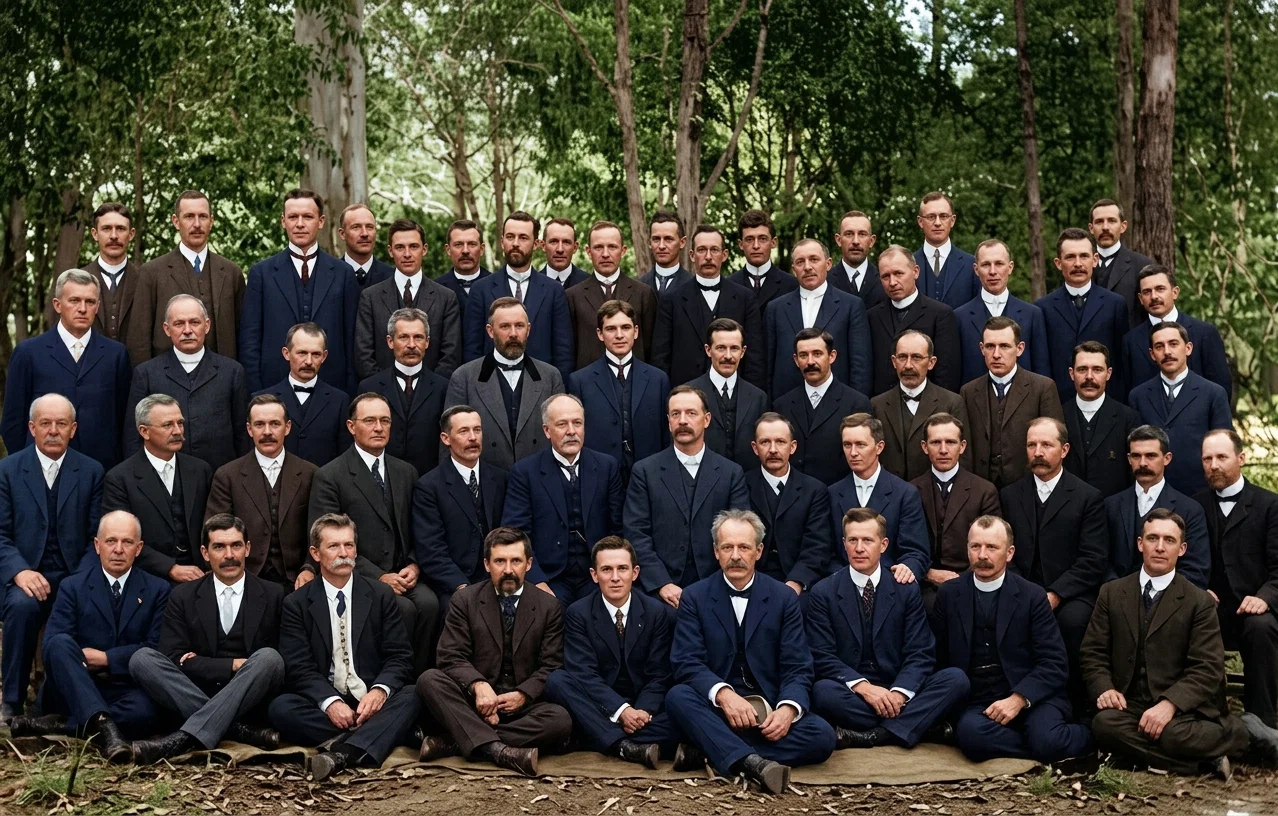
SEVENTH-DAY ADVENTIST MINISTERS OF AUSTRALASIA
At the close of the institute the conference resumed its regular work. It had been arranged with the New South Wales Conference that during the last two weeks the New South Wales camp meeting should be combined with the union conference. This proved to be the largest gathering of our people ever held south of the equator. Two hundred and sixty tents were pitched, and many rooms in the vicinity of the camp ground were rented. The attendance on the Sabbath must have been close to fifteen hundred. These were nearly all our own people. On Sundays the attendance was still larger. The sermons preached by the different ministers during the camp meeting were timely and stirring. The Lord has raised up loyal, strong men in this field to proclaim his message.
The reports submitted by the presidents of conferences, superintendents of missions, and heads of departments and institutions, were well prepared and very encouraging. The past four years have witnessed a decided advance in every department.
The plans adopted and the various changes and adjustments made were all designed to press the work on with greater vigor and efficiency than ever. The field of operation is so large, and the lines of work are so numerous and heavy, that it was decided to have the vice president devote his entire time to the general work of the union. Elder C. H. Watson was released from the presidency of the Queensland Conference to take the vice presidency of the union. He has located at the headquarters, to be closely associated with Brother Fulton. By taking definite responsibility12for certain lines of work, attending camp meetings in distant states and visiting the island mission fields alternately, he will relieve the president of a heavy load he has been carrying the last four years.
The president’s burdens will be lightened, and at the same time the efficiency of the general administration will be increased, by the step taken to center all the departments at the headquarters and to place in charge of them secretaries who will give their whole time to their interests. Elder W. W. Fletcher, president of the South Australian Conference, was elected secretary of the Missionary Volunteer and home missionary departments. Brother F. G. Rampton, general canvassing agent for New Zealand, was elected assistant secretary of the home missionary department, and will give all his time to that work. Sister Rampton will assist Sister A. L. Hindson in her heavy work as secretary of the Sabbath school department and corresponding secretary of the Missionary Volunteer and home missionary departments. Brother James Gregory was elected assistant secretary of the religious liberty department. In addition to this work he will assist Sister Hindson in the editorial work of the Australasian Record and the church missionary paper. Brother L. D. Lemke, who has charge of the subscription book department of the union, will locate at headquarters with the heads of the other departments.
By this arrangement the president of the union will be able to give the work of the departments closer study and more intelligent cooperation. He will also be able to secure the counsel of all these leaders in their various lines of work when he finds it possible to spend time at his office. The union conference holds its sessions quadrennially. Four years is rather a long period in these times when everything moves so fast. It is essential to efficient administration that those in charge of the work be so situated that they can counsel frequently and work together with the most intelligent cooperation. This union has done excellent work in the past, but the adjustments here mentioned will, we feel sure, greatly strengthen the administration.
The entire meeting was good — one for which we feel profoundly thankful to the Lord. More of interest could be written, but this report is already long. Let us pray the Lord to help the conference to make great strides during the four years’ period upon which it has just entered. A. G. DANIELLS.