The Signs of Our Times

1%

Review and Herald Publishing Association · Takoma Park, Washington, D. C. · May 10, 1915

FromReview and Herald, Vol. 92, No. 23.

Read the full edition

The Signs of Our Times

Or, The Significance of Current Events-in-the Light of Prophecy

By C. P. Bollman
WONDERFUL things are revealed in the Bible, and living as we are at the focal point alike of profane history and divine prophecy, many of these things pertain to our own day. Truly— “We are living, we are dwelling, In a grand and awful time; In an age on ages telling— To be living is sublime.”

Signs in the Heavens

Twelve or more great lines of Bible prophecy point unerringly to this age, to the very time in which we live, as the most eventful of all the ages since the world began; and of these last days, our Saviour himself, the greatest of all the prophets, said:—
“There shall be signs in the sun, and in the moon, and in the stars; and upon the earth distress of nations, with perplexity; the sea and the waves roaring; men’s hearts failing them for fear, and for looking after those things which are coming on the earth: for the powers of heaven shall be shaken. And then shall they see the Son of man coming in a cloud with power and great glory.” Luke 21:25-27.
In Matt. 24:29, 30, some of these things are described a little more in detail: “Immediately after the tribulation of those days shall the sun be darkened, and the moon shall not give her light, and the stars shall fall from heaven, and the powers of the heavens shall be shaken; and then shall appear the sign of the Son of man in heaven: and then shall all the tribes of the earth mourn, and they shall see the Son of man coming in the clouds of heaven with power and great glory.”

The Sun Darkened

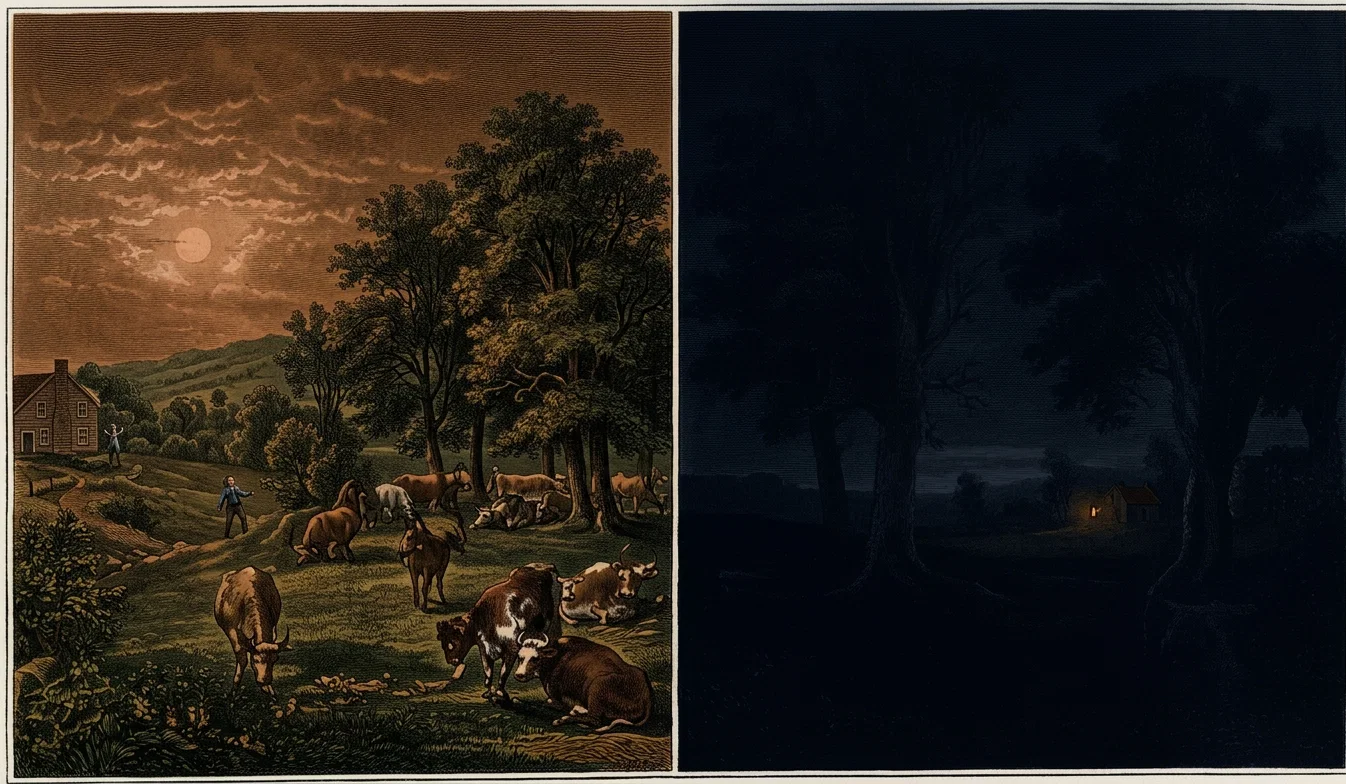
Not all these things have yet been fulfilled, but beginning with the notable dark day of May 19, 1780, these words have met, and are still meeting, wonderful and exact fulfillment. The Lord in his mercy gives us “line upon line,” as well as “precept upon precept.” He spreads his warnings over many years; by his signs he speaks to his people; by his judgments he would fain arouse his church to renewed diligence, and turn the ungodly to righteousness.
Noah preached for full one hundred and twenty years that a flood was coming; now for something less than one hundred and thirty-five years the signs foretold by our Lord have been testifying to both the church and the world the coming of the flood of fire that is to engulf and destroy “the world that now is,”—this wicked modern world,—even as a flood of waters engulfed and destroyed the wicked antediluvian world.
In the providence of God the western continent was reserved as an asylum, a refuge, for the oppressed, the downtrodden, the persecuted of all nations. Here Protestantism was to have its perfect development; and from these shores would go forth to all the world the message, “Behold, the Bridegroom cometh; go ye out to meet him.” And here it was that only a little more than a century and a third ago was fulfilled the prophecy of Amos 8:9: “I will cause the sun to go down
at noon, and I will darken the earth in the clear day,” a sign of “the great and terrible day of the Lord.” For while the worldly-wise smile at the simplicity of those who see in any of the phenomena of nature warnings of impending destruction, those who witnessed these things recognized them as portents of the coming of the judgment and the outpouring of divine wrath upon the finally impenitent.

The Phenomenon Described

“Life of Edward Lee,” No. 379 (old series), American Tract Society, has this testimony both as to the fact of this wonderful phenomenon and as to its effect upon the minds of those who witnessed it:—
“In the month of May, 1780, there was a very terrific dark day in New England, when ‘all faces seemed to gather blackness,’ and the people were filled with fear. There was great distress in the village where Edward Lee lived, ‘men’s hearts failing them for fear’ that the judgment day was at hand; and the neighbors all flocked around the holy man; for his lamp was trimmed and shining brighter than ever amidst the unnatural darkness. Happy and joyful in God, he pointed them to their only refuge from the wrath to come, and spent the gloomy hours in earnest prayer for the distressed multitude.”
Timothy Dwight, D. D., in “Connecticut Collections” says:—
“The 19th of May, 1780, was a remarkably dark day. Candles were lighted in many houses. The birds were silent, and disappeared. The fowls retired to roost. It was the general opinion that the day of judgment was at hand. The legislature of Connecticut was in session at Hartford, but being unable to transact business, adjourned.”
Rev. Dr. Tenney, writing to the Massachusetts Historical Society in 1785, of the same event, said:—

The Cause Unknown

“Although the uncommon darkness which attracted the attention of all ranks of people in this part of the country on the 19th of May, 1780, was a phenomenon which several gentlemen of considerable literary ability have endeavored to solve, yet I believe you will agree with me that no satisfactory solution has yet appeared.”—“Collections of Massachusetts Historical Society,” 1798, Vol. I.
Of the duration, degree, and extent of the darkness, another authority bears this testimony:—
“On the 19th of May, 1780, an uncommon darkness took place all over New England, and extended to Canada. It continued about fourteen hours, or from ten o’clock in the morning until midnight. The darkness was so great that the people were unable to read common print or to tell the time of day by their watches, or to dine, or to transact their ordinary business without the light of candles. They became dull and gloomy, and some were excessively frightened. The fowls went to roost. Objects could not be distinguished but at a very little distance, and everything bore the appearance of gloom and night. Similar days have occasionally been known, though inferior in the degree or extent of their darkness. The causes of these phenomena are unknown. They certainly were not the result of eclipses.”—Robert Sears’s “Guide to Knowledge,” New York, 1845, page 488. (Astor Library.)

How the People Were Impressed

As showing the lasting impression made by the dark day, witness the following, written by the poet Whittier many years after the event:—
“’Twas on a May day of the far old year Seventeen hundred eighty, and there fell Over the bloom and sweet life of the spring, Over the fresh earth and heaven of noon, A horror of great darkness, like the night In the day of which the norland sagas tell— The twilight of the gods. “Birds ceased to sing, and all the barnyard fowls Roosted; the cattle at the pasture bars Lowed, and looked homeward; bats on leathern wings Fitted abroad; the sounds of labor died; Men prayed, and women wept; all ears grew sharp To hear the doom blast of the trumpet shatter The black sky.”

The Failure of Moon and Stars

Foretelling the same event, the prophet Joel wrote:—
“The sun shall be turned into darkness, and the moon into blood, before the great and the terrible day of the Lord come.” “The sun and the moon shall be darkened, and the stars shall withdraw their shining.” Joel 2:31; 3:15.
These texts introduce two new features; namely, the peculiar appearance of the moon, and the absence of starlight. These specifications were literally fulfilled, in both moon and stars. Though at the time the moon was only a few hours past its full, when under ordinary circumstances it shines all night, Stone’s “History of Beverly” (Massachusetts) says:—
“The night succeeding that day [May 19, 1780] was of such pitchy darkness that in some instances horses could not be compelled to leave the stable when wanted for service.”
Of the impressions of that night, and of the appearance of the moon when later it became visible, Milo Bostwick wrote:—
“My father and mother, who were pious, thought the day of judgment was near. They sat up that night, during the latter part of which they said the darkness disappeared, and then the sky seemed as usual, but the moon, which was at its full, had the appearance of blood. The alarm that it caused and the frequent talk about it impressed it deeply on my mind.”
Under ordinary circumstances even where there is no moon, the stars give sufficient light to make it comparatively easy for those who are familiar with their surroundings to get about, but according to the prophecy of Joel the stars, too, were to “withdraw their shining.” This feature of the prophecy is thus incidentally emphasized by Dr. Tenney, who says:—
“The darkness of the following evening or night was probably as gross as has ever been observed since the Almighty first gave birth to light. I could not help conceiving at the time that if every luminous body in the universe had been shrouded in impenetrable darkness, or struck out of existence, the darkness could not have been more complete. A sheet of white paper held within a few inches of the eyes was equally invisible with the blackest velvet.”—Tenney, December, 1785, “Collections of Massachusetts Historical Society,” 1798, Vol. I.

Falling Stars

The next phenomenon mentioned by our Saviour as a sign of his approaching advent, was the falling of the stars: “The stars shall fall from heaven.” The same event was foretold also in Rev. 6:13:—
“And the stars of heaven fell unto the earth, even as a fig tree casteth her untimely figs, when she is shaken of a mighty wind.”
In 1697, writing his “Sacred Theory of the Earth,” and commenting upon Matt. 24:29, Bishop Burnet said:—
“The last sign we shall notice is that of ‘falling stars.’ ‘And the stars shall fall from heaven,’ says our Saviour. Matt. 24:29. We are sure, from the nature of the thing, that this cannot be understood either of fixed stars or planets; for if either of these should tumble from the skies and reach the earth, they would break it all in pieces, or swallow it up as the sea does a sinking ship, and would put all the universe into confusion. It is necessary, therefore, by these stars, to understand either fiery meteors falling from the middle region of the air, or blazing comets and stars. No doubt there will be all sorts of fiery meteors at that time; and among others, those that are called falling stars.”—Page 486.
if we accept the bishop’s very reasonable view of the meaning of our Saviour’s words, as it would seem all must do, it must be admitted also that the prophecy met a most accurate and literal fulfillment in the great meteoric shower of Nov. 13, 1833. Of the extent of this phenomenon, Professor Olmstead, of Yale College, wrote:—
“The shower of 1833 was such as to cover no inconsiderable part of the earth’s surface, from the middle of the Atlantic on the east to the Pacific on the west; and from the northern coast of South America to undefined regions among the British possessions on the north, the exhibition was visible, and everywhere presented nearly the same appearance. This is no longer to be regarded as a terrestrial but as a celestial phenomenon; and shooting stars are now to be no more viewed as casual productions of the upper regions ofthe atmosphere, but as visitants from other worlds, or from the planetary voids.”
The Connecticut Observer, of Nov. 25, 1833, said:—
“We pronounce the raining of fire which we saw on Wednesday morning last, an awful type, a sure forerunner, a merciful sign of the great and dreadful day which the inhabitants of the earth will witness when the sixth seal shall be opened. . . . A more correct picture of a fig tree casting its [unripe] fruit when blown by a mighty wind, it is not possible to behold.”
Many more equally interesting statements might be quoted, but these will suffice, for no one will have the hardihood to deny a fact of history so well attested as the great meteoric shower of 1833.

Signs on the Earth

But our Saviour spoke not only of signs in the heavens, but also of portents that would appear upon the earth, saying, “There shall be famines, and pestilences, and earthquakes, in divers places.” Matt. 24:7.

Famine

Space would fail us even to give a list of the various famines, whose victims have been numbered by hundreds of thousands. We can mention only a few. In 1837-38, 800,000 persons perished by famine in Northwest India. Twenty-eight years later, 1,000,000 perished from the same cause in Bengal and Orissa. Only twelve years later, 5,000,000 out of a population of 30,000,000 perished by famine in the Madras presidency alone. During the ten years from 1891 to 1901 India lost 8,000,000 in population on account of famine, or an average of 800,000 each year.
This is a terrible record, to say nothing of famines in Russia, Ireland, China, and other countries during the same period of earth’s history.

Pestilences

In the nine years from 1896 to 1904 inclusive, black death, or bubonic plague, claimed victims to the number of 3,385,436. According to Hecker, 25,000,000 persons died of plague in Europe during the fourteenth century, an average of 250,000—a quarter of a million a year for the whole hundred years.

Earthquakes

But even more startling and striking in some respects is the increase of earthquakes in frequency and violence. From only sixteen recorded earthquakes during the 1796 years from B. C. 1700 to A. D. 96, such disturbances increased to an average of eight a year for the 1750 years from A. D. 96 to A. D. 1846. We select this date because it was then the seismograph was first introduced, since which time many minor earthquakes have been noted that would otherwise have escaped observation.
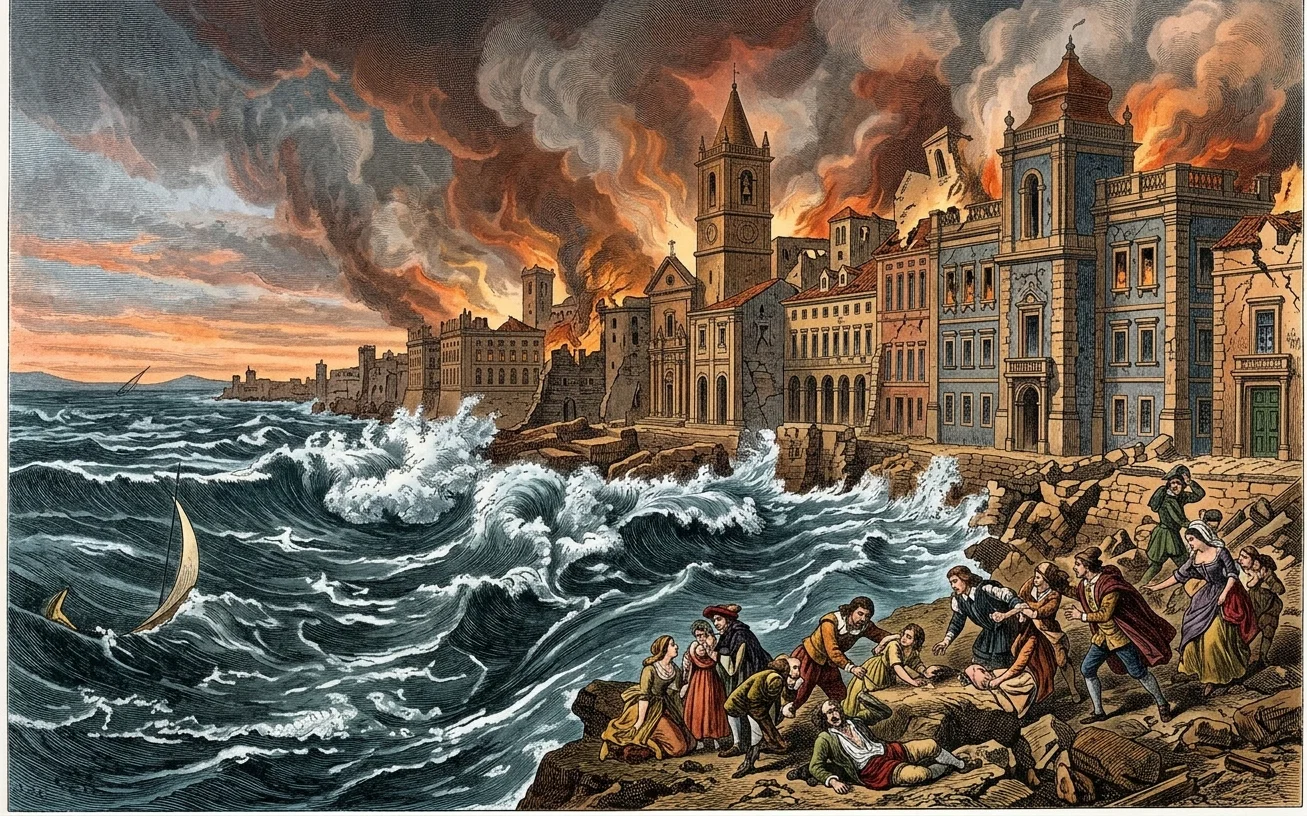
Among the destructive earthquakes, that of Lisbon in 1755 stands forth preeminent.
This earthquake was felt over nearly all of Europe, large sections of Africa and Asia, and as far west as the eastern coasts of North and South America. Ninety thousand lives were in a few moments snuffed out by it, and the property loss ran into untold millions of dollars. But while the greatest in extent and severity within historic times, the Lisbon earthquake is only one of many serving to emphasize the instability of what we sometimes rather boastingly refer to as terra firma.
D. T. Taylor states that in 1868 more than one hundred thousand persons perished by earthquakes. In the single month of January, 1869, there were eleven earthquakes, two of them great and destructive.
In our own country the several earthquakes occurring in December, 1811, and the first two months of 1812, resulting in the formation of Reelfoot Lake, West Tennessee, are among the most notable. In 1865 and 1869 California was visited by destructive earthquakes. In 1886 occurred the Charleston earthquake, with a toll of forty lives, and destruction of property valued at $5,000,000.
One of the most recent great earthquakes was that of San Francisco, April 18, 1906, with a property loss in that and neighboring cities amounting to fully $400,000,000, due in part, however, to the fires that followed the shock.
Among other comparatively recent earthquakes attended by great loss of life and property, may be mentioned several in Italy, one of which occurred only a short time ago. Others have occurred in South America, and still others in Japan, all attended by considerable loss of life and great destruction of property. Certainly the words of the prophet are being literally fulfilled, “The earth shall reel to and fro like a drunkard; . . . and the transgressors thereof shall be heavy upon it; and it shall fall, and not rise again.” Isa. 24:20.

Volcanic Eruptions

Closely associated with earthquakes are volcanoes. The greatest destruction by these has been in Italy, in the Strait of Sunda, and in the Windward Islands.
Beginning with the notable eruption of A. D. 79 that overwhelmed the cities of Herculaneum and Pompeii, Italy’s great volcano, Vesuvius, has claimed tens of thousands of human victims, besides burying out of sight many millions of dollars’ worth of property.
In August, 1883, over thirty-five thousand persons lost their lives by the explosion and utter destruction of the island of Krakatoa, in the Strait of Sunda, and the tidal wave occasioned by it. The property loss also was very great.
But in some respects the most terrible of all such disasters was that of Mont Pelée, island of Martinique, May 12, 1902. Between Mont Pelée and the bay was St. Pierre, a city of 30,000 inhabitants not one of whom escaped. All were in a moment ushered into eternity. The bursting of the mountain released a large volume of combustible gases, which speedily enveloped the doomed city. Then in an instant followed an explosion that in a moment destroyed every living thing, not only in the city, but as far as the gas covering extended. People were not burned to death,—there was no fire for that,—they died where they stood, sat, or reclined, surrounded by flame and even filled by it, for the very air they were breathing became instantly combustible. All of this is most suggestive of the time foretold by the apostle Peter, in the words, “The heavens shall pass away with a great noise, and the elements shall melt with fervent heat.” 2 Peter 3:10.

Increase of Cyclones

Our Saviour’s words, “The sea and the waves roaring,” find their fulfillment in tidal waves, tempests, tornadoes, etc., now so familiar to us all. All these have been greatly multiplied in modern times. Only a few years ago, well within the memory of men and women yet active, tornadoes, popularly called cyclones, were of rare occurrence. Now, however, they are quite common, even in regions formerly supposed to be wholly exempt from them. Some years ago the late Dr. Talmage, after recounting a number of the then more recent tornadoes, said:—
“Satan, prince of the powers of the air, never made such cyclonic disturbances as he has in our day. And am I not right in saying that one of the characteristics of the times in which we live is disasters cyclonic?”

Signs in the Social World

When considering modern social conditions, the first fact that confronts us is that never before in the history of our race was a high civilization so world-wide, a good degree of learning so general, as now. Papers, magazines, books, schools are everywhere. Modern conveniences abound, and it is difficult to get beyond the reach of steam or electric transportation, or away from the electric telegraph and telephone, to say nothing of the demonstrated possibilities of wireless telegraphy and telephony, or of submarine and aerial navigation.

Revealed 2500 Years Ago

And the wonder of it all is that the marvelous achievements of this age were revealed to a prophet of God twenty-five hundred years ago. Said the angel, “But thou, O Daniel, shut up the words, and seal the book, even to the time of the end: many shall run to and fro, and knowledge shall be increased.” Dan. 12:4.
As there never was a time when knowledge was so general as now, so there never has been in any past age a time when people were running to and fro upon the face of the earth as they are doing now.
Another phase of modern social life is foretold in the Scriptures in these words:—
“As it was in the days of Noe,” “even thus shall it be in the day when the Son of man is revealed.” Luke 17:26, 30.
The days of Noah were strongly marked by pleasure seeking and wickedness. Ours is likewise a wicked age, a pleasure-loving age, and in this it resembles the days that were before the flood, when “they were eating and drinking, marrying and giving in marriage.” Matt. 24:38. Not that these things are wrong in themselves, but wrong when they become the end, or object, instead of means to right ends. “Behold,” says the Lord by his prophet, “this was the iniquity of thy sister Sodom, pride, fullness of bread, and abundance of idleness was in her and in her daughters, neither did she strengthen the hand of the poor and needy.” Eze. 16:49.

The Times Perilous

For obvious reasons we cannot go into details, but the well-informed reader needs only to be referred to these things. Hasty and ill-assorted marriages and equally hasty divorces, together with the social evil with its hideous white slavery, are all too well known to require more than the merest mention.
A high civilization does not mean a high standard of morals. Babylon, Rome, and Greece are known to have been most licentious at the very zenith of their power, or rather of their magnificence. To far too great an extent our boasted modern civilization also is only a thin veneer, many times scarcely serving to conceal the grossest animalism. This very condition was foretold not only by our Lord in the words quoted above from the seventeenth of Luke, but also by the apostle Paul when he wrote:—
“This know also, that in the last days perilous times shall come. For men shall be lovers of their own selves, covetous, boasters, proud, blasphemers, disobedient to parents, unthankful, unholy, without natural affection, trucebreakers, false accusers, incontinent, fierce, despisers of those that are good, traitors, heady, high-minded, lovers of pleasures more than lovers of God; having a form of godliness, but denying the power thereof: from such turn away. For of this sort are they which creep into houses, and lead captive silly women laden with sins, led away with divers lusts.” 2 Tim. 3:1-6.

Signs in the Industrial World

One of the most significant signs of the times is the great conflict that is on between capital and labor, between the rich and the poor, between “big business” and the masses of the people. This is touched only indirectly in our Lord’s great prophecy of the twenty-fourth of Matthew, but in the second chapter of Habakkuk and the fifth chapter of James so many details are given that it is impossible to mistake either the import of the prophecy or the time of its application. This apostle says:—
“Go to now, ye rich men, weep and howl for your miseries that shall come upon you. Your riches are corrupted, and your garments are moth-eaten. Your gold and silver is cankered; and the rust of them shall be a witness against you, and shall eat your flesh as it were fire. Ye have heaped treasure together for the last days. Behold, the hire of the laborers who have reaped down your fields, which is of you kept back by fraud, crieth; and the cries of them which have reaped are entered into the ears of the Lord of sabaoth. Ye have lived in pleasure on the earth, and been wanton; ye have nourished your hearts, as in a day of slaughter. Ye have condemned and killed the just; and he doth not resist you. Be patient therefore, brethren, unto the coming of the Lord. Behold, the husbandman waiteth for the precious fruit of the earth, and hath long patience for it, until he receive the early and latter rain. Be ye also patient; establish your hearts: for the coming of the Lord draweth nigh.” James 5:1-8.
To refer to this scripture is not to say that all employers are selfish and unjust, or that all employees are ground down and oppressed; but no one needs to be told that in this age of ease and luxury for the few, and exacting toil and deprivation for the many, something is wrong. Conditions will not be improved, however, by strikes and riot.

Conditions Growing Worse

That conditions are growing worse rather than better, and in general the relations between capital and labor more strained, is evident. That this is so is abundantly testified by events at Ludlow, Colo., only last year, and also by an almost equally unfortunate clash between strikers and deputies at Roosevelt, N. J., no longer ago than January of this present year.
It is not our purpose to attempt to pass upon the merits of the controversy between employers and employees, between capital and labor, but simply to emphasize the fact that there is between them an irrepressible conflict; and that it is, according to the Scriptures, a most significant sign of the times.

Before the Door

While there is always room for question as to the merits of each particular case, there can be no question as to the principle involved, nor as to the general situation. The Bible says there is wrong and oppression; but instead of giving encouragement to violence and lawlessness, prophet and apostle alike counsel peace. “Be patient therefore, brethren, unto the coming of the Lord.” “Stablish your hearts; for the coming of the Lord draweth near.” “Behold, the Judge standeth before the door.”
Such is the counsel which divine inspiration gives at this time, and such are the plain statements of Holy Writ, big with meaning to those who are permitted to live in these last days; days made terrible on the one hand by wickedness and violence; but on the other hand full of encouragement to the child of God, because of promise of speedy and eternal deliverance.

Signs in the Political World

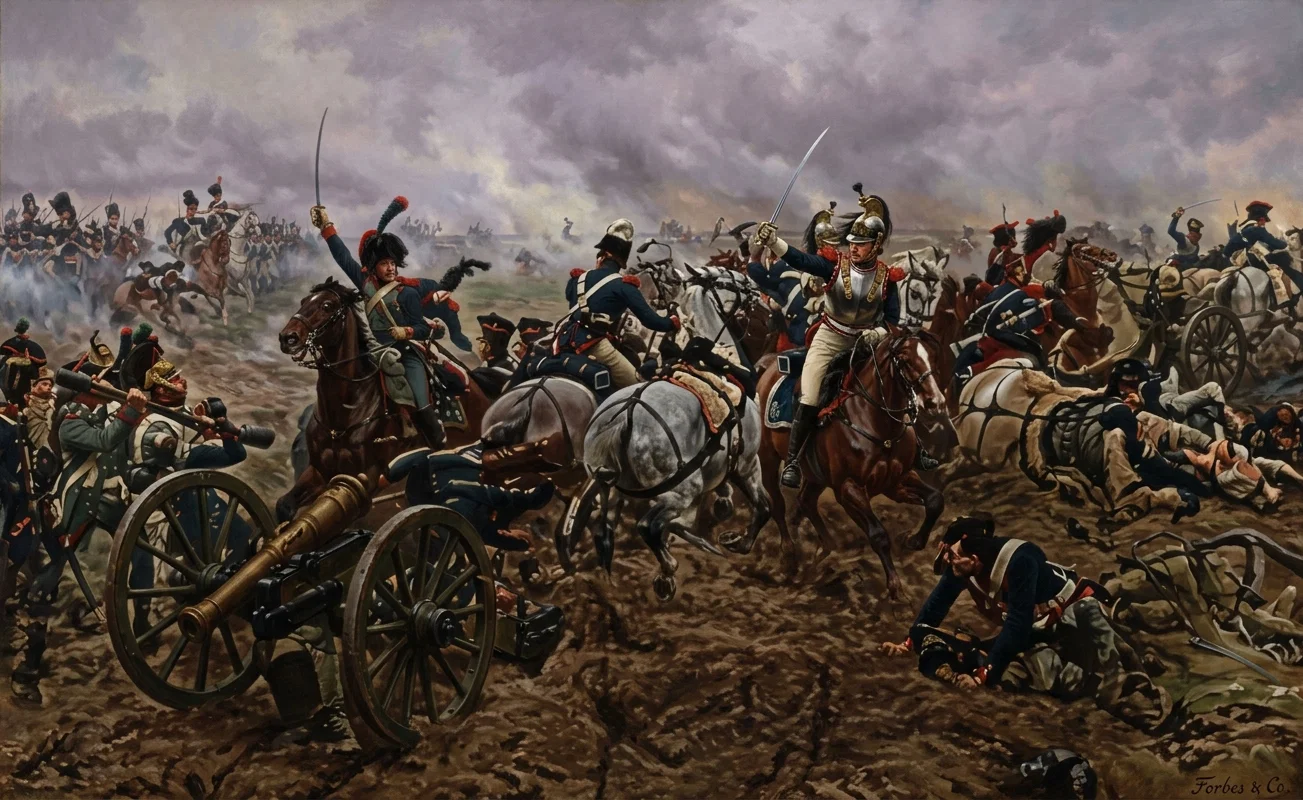
Turning to the political world we find conditions there also exactly as described in the divine Word. “Nation shall rise against nation, and kingdom against kingdom,” said our Saviour; and this has been true all throughthe ages. But, as in other things, these conditions become worse and worse as we near the end, until today we see a state of affairs absolutely unparalleled in all the history of the past. Never before has the world witnessed such scenes as are today being enacted in Europe, in Asia, in Africa, in the islands, and upon every sea. Even the western continent is not an exception, for hostile ships sail our seas. Canada is sending her sons and her ships to fight the battles of the Allies, while Mexico is still convulsed with civil war, as she has long been, and still seems likely to be.

Peace and Safety

Men talk of peace, and our own honored Secretary of State only a few months ago, in fulfillment of prophecy, as he seemed fondly to believe, caused a number of swords to be beaten into miniature plowshares. But the Lord, by the mouth of the prophet, says:—
“Proclaim ye this among the nations; Prepare war, stir up the mighty men, let all the men of war draw near; let them come up; beat your plowshares into swords, and your pruning hooks into spears: let the weak say, I am strong.” Joel 3:9, 10, A. R. V.
And this prophecy of Joel clearly has its application in the last days, at which very time, according to both prophet and apostle, many will be saying, “Peace, peace; when there is no peace.” In Isa. 2:3-5 and Micah 4:2-5 we are told what “many people” and “many nations” would say, and what they are saying; but the Lord says “war;” not that he
wants war, but because while peace is on men’s lips war is in their hearts.
Permanent peace can come only by the coming and reign of the Prince of Peace. And his throne must first of all be established in the heart of the individual. Nevertheless, men will continue to follow, to their eternal undoing, this will-o’-the-wisp, the vain hope of an enduring man-made peace. “For,” writes the apostle, “when they shall say, Peace and safety; then sudden destruction cometh upon them, as travail upon a woman with child; and they shall not escape.” 1 Thess. 5:3.

Signs in the Religious World

It is eminently fitting that this study of some of the many signs of our times should close with at least a brief reference to signs in the religious world. And here, as already noted, we find a two-sided picture. On the one hand, we find faith; on the other, unbelief; on the one hand, godly lives, while on the other, licentiousness abounds. But in the midst of it all God’s work goes forward; and today we see a world, while still wicked and largely indifferent to divine truth, nevertheless stirred by the gospel message. If the work is not already accomplished, we stand as it were upon the very eve of the time of which our Saviour spoke when he said, “The gospel of the kingdom shall be preached in all the world for a witness unto all nations; and then shall the end come.” Matt. 24:14.

The Gospel to All Nations

Today there is not a nation that has not heard more or less of the gospel of the Son of God. Probably the Lord does not design that we shall know just how near we are to the accomplishment of this great work; but is there not great significance in the fact that in this generation, when all the other signs to which we have referred are testifying that the end is near, united Christendom should adopt for its slogan (as it has done) the motto, “The gospel to all the world in this generation”?
Go where you will, and in every national and international convention or conference of Christian people, you will see prominently displayed this soul-inspiring motto. Only a few years ago it suddenly became the rallying cry of every Protestant missionary society the world around. And today, notwithstanding war and commotion, the work of evangelizing the world is steadily progressing. Indeed, the scourge of war seems to
make people everywhere all the more ready to listen to the divine message of “on earth peace, good will to men.”

Not Conversion, but Warning

Our Saviour does not say the world shall be converted by this gospel, and then shall the end come; but he does say, “This gospel of the kingdom shall be preached in all the world for a witness unto all nations; and then shall the end come;” and today we see this sign, if not entirely fulfilled, certainly in the very last stages of complete fulfillment—a grand consummation of a grand work; the sure harbinger of the glorious coming of the Son of man to reap the harvest of the earth, to take to himself his waiting, expectant people.

Prepare to Meet Thy God

And the fact that there are now in the world, not a few merely, but many who are looking for the speedy return of our Lord, is in itself a significant sign of our times. History tells us that there was at the time of the first advent a condition of general expectancy in the coming of the promised Deliverer. This was true not only of the Jews, but Gentile philosophers and poets shared in it, if not equally with the Jews certainly in a high degree. The wise men from the East were not Jews, but men of another nation; but they responded to the divine drawing, they yielded to the cravings of their own better natures, and found it indeed true that God is not very far from every one of us.
Expectation leads to preparation. The wise men prepared themselves for the service they were to render to the new-born King, not only by princely gifts, “gold, frankincense, and myrrh,” but we may well believe also by that preparation of the heart, the “meek and quiet spirit” that is with God of great price.
And so we, too, who live in this day, when the last sands are about to leave the great hourglass of time, should be setting our spiritual houses in order, putting out of our lives every wrong thing, preparing our hearts, holding them ready for instant participation in the grand home-coming when the angels shall be sent forth to gather from the east and the west and the north and the south the faithful of all ages to sit down with Abraham, and Isaac, and Jacob in the kingdom of heaven.
The gracious invitation is sounding; “The Spirit and the bride say, Come. And let him that heareth say, Come. And let him that is athirst come. And whosoever will, let him take the water of life freely.” And then he which testifieth these things, even our Lord himself, as though to lend wings to our sluggish faith, saith, “Surely I come quickly,” while his prepared and hence waiting people, respond with joy, “Amen. Even so, come, Lord Jesus.”
Reader, what is your attitude toward this gracious invitation, attested by so many evidences of its genuineness, and which by this paper has now come within the circle of your life? “Behold, the bridegroom cometh; go ye out to meet him.” “Come; for all things are now ready.”
THE METEORIC SHOWER, NOV. 13, 1833
THE DARK DAY, MAY 19, 1780
A RAILWAY STRIKE
A RAILWAY STRIKE
THE LISBON EARTHQUAKE
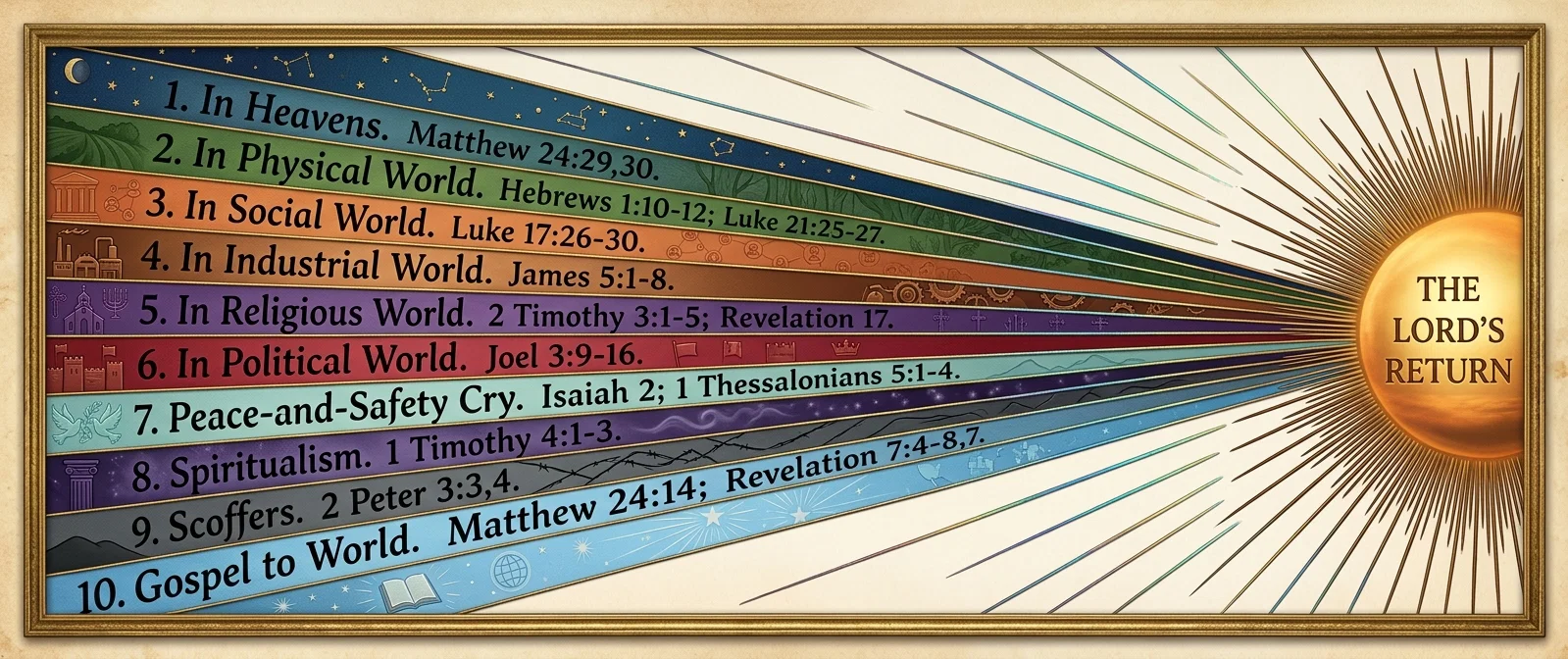
SIGN PROPHECIES OF THE LORD'S RETURN
THE "PEACE AND SAFETY" PROPHECY FULFILLED
AT HISTORIC WATERLOO — 1815