The Mexican Mission

2%

Review and Herald Publishing Association · Washington, D. C. · Jun 8, 1905

FromReview and Herald, Vol. 82, No. 23.

Read the full edition

The Mexican Mission

The Beginning of Our Work in Mexico
The missionary work of Seventh-day Adventists was begun at Guadalajara by Elder D. T. Jones, who was assisted by a physician and some nurses. The medical work begun by them prospered till more room and better facilities were thought to be imperative, and the Guadalajara Sanitarium was built under the auspices of the Foreign Mission Board.
A church was organized at Guadalajara, which was the headquarters of our work in Mexico for some time. In 1899 Professor Caviness, who had been living at Guadalajara, was advised to move to Mexico City, where Brother Alfred Cooper and his wife had previously located.
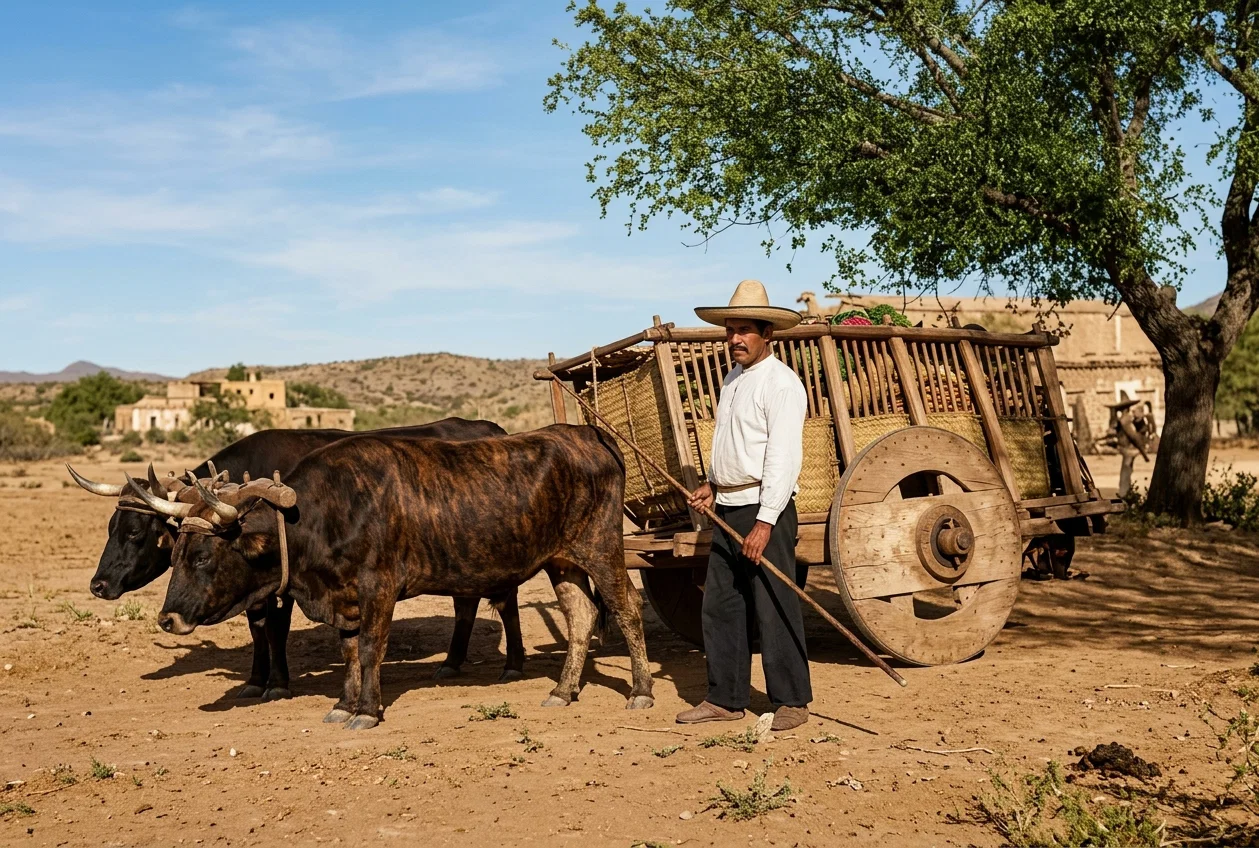
MEXICAN CART
MEXICAN CART
In July, 1901, the evangelistic paper El Amigo de la Verdad (Friend of the Truth), which had been printed at Guadalajara, was moved to Mexico City, its name being changed to El Mensajero de la Verdad (The messenger of the Truth). Other workers were added to the force from time to time, and a little church of twelve members was organized.
At the time of the last General Conference there were fifty-four church-members and seven isolated Sabbath-keepers in Mexico.
As the mission work was not fully organized nor records kept prior to the time that Elders Daniells and Knox visited the field just before the last General Conference, it will not be possible for me to institute comparisons between the work done and offerings made during the last two years and the preceding biennial period.

Our Work Since the Oakland General Conference

The greater part of our aggressive work has been done in the circulation of our literature. In this work Brethren Bodwell, Harzman, Placencia, and Erkenbeck have been engaged, and the sales and subscriptions have amounted to about $1,116.15. Hundreds of thousands of pages of literature have been given away, and many Bible readings and visits have been held with the people. While the cash received may seem small, it must be remembered that it was mostly from the poor people, and came in small amounts made up of Mexican centavos, which are worth only half a cent.
Elder Leland’s time was principally spent in Guadalajara. He was pastor of the church there, worked with the patients at the medical mission, and held some services at the sanitarium.
Professor Caviness has had charge of the church at Mexico City, and edited the El Mensajero, besides doing some translating. Six members, all new believers, have been added to the Mexico City church. Five of these were Mexicans. Three were brought to the light through the faithful work of Brother F. C. Kelley, who has been engaged in self-supporting work since the last General Conference.
Through the efforts of Brother B. B. Blachley, another Bible colporteur, Brother A. N. Colunga came to see the Sabbath truth, and has been calling the attention of the people wherever he has been to the importance of studying the Bible and heeding its plain teachings.
Now Brother Colunga writes me that the colporteur who worked with him after Brother Blachley went home is convinced of the Sabbath, and will keep it. A man who subscribed for the El Mensajero when Elder Leland and I were at Gomez Palacio last year, began to keep the Sabbath, and others there have joined him. I have recently spent some time in San Luis Potosi, where two men began to observe the Sabbath through reading the paper. They gave it up, however, before I went there, on account of the teachings of the other missionaries, who told them that the law, Sabbath and all, was abolished, and that if they were Christians, they did not need to keep the Sabbath. With the Lord’s help I was able to show them the fallacy of these sophistries.
This experience, and some others which we have had, demonstrate the importance of personal work with thesepeople, in order that, being once convinced, they may be rooted and grounded in the truth.

Publishing Work

During the last two years we have raised about $2,037.93 for the establishment of a printing-office. Of this sum the Mission Board kindly donated three hundred dollars, and the remainder was given by our brethren in Mexico and a few friends in the United States.
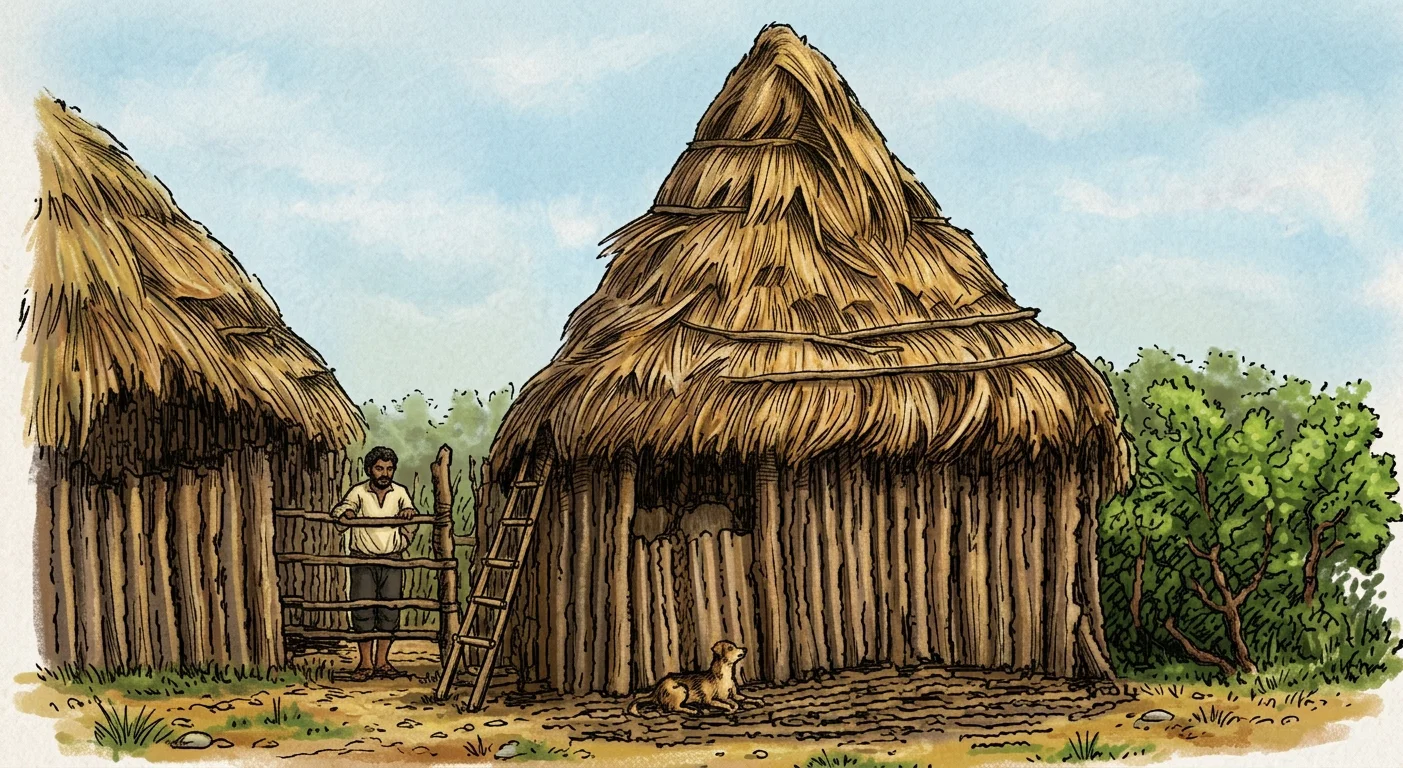
A NATIVE HOUSE
A NATIVE HOUSE
As religious bodies can not legally hold property in Mexico, it was necessary to organize a corporation for this purpose. Accordingly a corporation known as “La Compania de Publicaciones La Verdad” (The La Verdad Publishing Company) was formed. A small printing outfit, consisting of a lightning jobber, Gordon press that will print a form ten by fifteen inches, a twenty-three-inch Peerless Gem paper-cutter, a Brehmer wire-stitcher, and an assortment of body and display type was purchased, and we began to print the El Mensajero on our own press in December, 1903.
Later a lot in Tacubaya, one of the principal suburbs of Mexico City, was purchased, and as soon as we had the means, we built a brick building eighteen by thirty-six feet. The machinery, which up to that time had been occupying some rooms in the house of Professor Caviness, was moved into this in July, 1904.
We keep one man busy all the time, and part of the time have two employed, paying them by the piece. Each month we print two thousand copies of the El Mensajero, which has sixteen pages and a cover, and two thousand copies of La Esperanza del Christiano, an eight-page paper. Each quarter since January, 1904, we have printed from two hundred to two hundred and fifty copies of the Sabbath-school Lesson Pamphlets in Spanish. We have also printed the following tracts: two thousand copies of “Second Advent,” thirty-two pages, a translation of Elder James White’s tract by that name; two thousand copies of “Is Man Immortal?” eight pages, a translation of our well-known English tract by that name; two thousand of “The Sabbath in the New Testament,” sixteen pages, also a translation; five thousand of “The Virgin Mary,” ten pages, which was prepared by Brethren Harzman and Caviness.
We have found our little printing outfit a great convenience, and more than that, it has enabled us materially to reduce the cost of our literature, thus enabling us to accomplish more with the money at our command than we could if we had to hire our work done.
We have no debt on this enterprise, and while we need more type and a few other things to enable us to do the work to better advantage, we have gotten along without these things in order to avoid incurring debt.

Medical Work and Institutions

The medical work at Guadalajara has had a fair degree of prosperity, and considering the circumstances, financially and otherwise, in which they have been placed, the workers there have done nobly.
Dr. Erkenbeck, the physician in charge of the sanitarium, has heartily co-operated with us in every way, and is a member of the Mexican Mission Advisory Board. He reports that one Mexican patient began to keep the Sabbath while at the sanitarium, and after going away, he showed his faith by his works, in that he refused to continue the sale of tobacco and liquor in his store.
During 1903 and the first three months of 1904 the doctor in charge of the medical mission was paid by the mission funds. We also paid the traveling expenses of Dr. Gaston, who came to take charge of the work when Dr. W. J. Erkenbeck resigned. Formerly the mission was paying eighty-five dollars Mexican each month for rent, but last fall rooms were fitted up on the sanitarium ground for the use of the mission, and thus the rent is now being saved, and the mission is more conveniently situated than formerly.
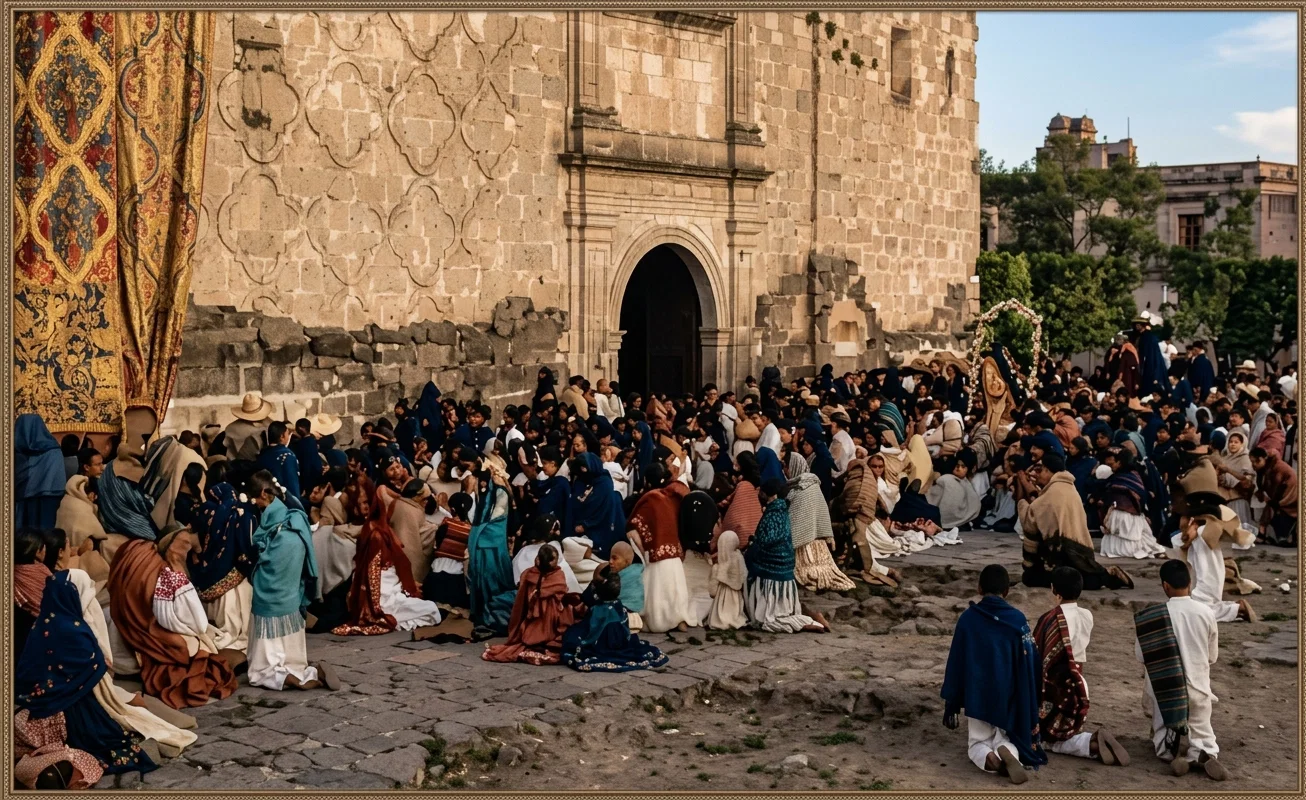
A CHURCH FILLED TO OVERFLOWING
As the Guadalajara property is owned by the Michigan Sanitarium and Benevolent Association, the corporation which owns the Battle Creek Sanitarium, the institution is under the control of that Board, instead of the Mission Board, and therefore can not properly be considered as an enterprise for which the Mexican Mission is responsible.

Finances

The tithe from the field during 1903-04 was $5,236 Mexican, which is equivalent to about $2,618.12 in United States money.
The annual offerings and other donations, including those made to the literature fund, amounted to $587.22 Mexican, or $293.61 United States money.
The Sabbath-school offerings over and above what was used for the running expenses of the schools amounted to $150.16 Mexican, or about $75 in United States money. It is to be remembered that these funds are in addition to the amount raised for the printing work, report of which has been made in another place.
Some of the brethren in our mission field have been very liberal in making offerings to the cause, and we believe that this is a substantial evidence of their interest in the work, and also of the fact that a good degree of love and harmony exists among the believers in Mexico.

Workers

The present force of workers in the employ of the mission is very small, Professor Caviness, Brother John Harzman, Pedro Godinez, and myself being the only ones who are paid from mission funds.
Sister A. G. Bodwell left the work here on account of ill health in the spring of 1904. Elder J. A. Leland and his family returned to the States early in January of this year, and Elder Bodwell a little later. These changes were made necessary by the financial condition of the Mission Board treasury, which seemed to demand retrenchment. I am sure, however, that if we do any aggressive work, we must employ some additional workers who can do colporteur work, and locate at different points where interested persons are waiting to receive instruction in the present truth. If we could have the means to place about three such workers where they are needed most, I feel sure that in a very short time we should have two or three companies of believers ready for organization.
Brother Harzman will soon locate at San Luis Potosi, making that his headquarters, and while working the surrounding towns will instruct the interested ones in San Luis.
Brother Blachley, who is still in the employ of the Bible Society as a colporteur, has moved to Torreon, and will make that the center of his work, but of course while in the employ of the Bible Society he can not devote his time to our work.
We are made sad to record the death of Sister Lillie E. Froom Cooper, one of the first medical missionary workers in the Mexican field. She died in March, 1904, after a long illness, which she bore patiently and with Christian fortitude. Though not engaged directly in the work for some time prior to her death, she was an efficient officer in the church, and did all she could to advance the cause that she had always loved.

The Present Situation

We now have American Sabbath-keepers living at Cuautla, Morelos; Montecristo, Tabasco; Tuxpan, Veracruz; San Luis Potosi, S. L. P.; Torreon, Coah.; and Ameca, Jalisco, besides those living at Guadalajara and Mexico City, where our two churches are located.
There are Mexicans who have recently begun keeping the Sabbath at San Luis Potosi, S. L. P.; Monterey, N. Leon; Gomez Palacio, Dgo.; Los Reyes, Jalisco, and the city of Durango, besides those who are connected with the churches at Guadalajara and Mexico City.
The interest in our work is constantly growing, as is evidenced by the frequent reception of letters like the following, of which I give a free translation: “Having seen a copy of El Mensajero de la Verdad, I desire that you will kindly accept my subscription, payment for which I enclose in stamps.” This letter was from a gentleman connected with the firm that is digging the great canal from Tampico to Tuxpan. Our paper circulates in nearly every State in the republic, in the southwestern States of the United States, in the West Indies, Honduras, and Peru, Chile, and Argentina, in South America. While the circulation is not so large as it ought to be, we feel that it is very good, considering the amount of work that we have been able to do to extend it. There are interested persons in many cities, and some have already begun to keep the Sabbath through reading the paper alone.
Brethren, the seed sown in Mexico is bearing fruit, and what we are now beginning to see is but an earnest of what we shall see if we prayerfully and perseveringly push the work. You have placed us in that field to do this, and by the grace of God we expect to do it, but we beg that you hold up our hands with means, which will enable us to employ consecrated men to gather in the harvest and continue to sow the seed.

Our Imperative Needs

We should have the funds necessary to employ at least three men, whom we could locate at strategic points, such as Torreon and Monterey, where there are interested persons now keeping the Sabbath. These men could instruct the new believers, and extend the influence of the truth by working near-by towns. For this we will require a monthly outlay of about one hundred and fifty dollars United States money, or about eighteen hundred dollars a year, which is about what other denominations pay one missionary.
We need at once about four hundred dollars United States money to enable us to publish the matter prepared on Daniel and the Revelation. Our brethren in the field will supply at least a third of the funds required for this work, but we must have help. We do not ask much, for we know that there are heavy demands on the treasury. Neither are we asking for more than we expect to receive, for we have asked for only that which is absolutely necessary to hold the ground that has been gained.

Summary

There are now two churches in our mission field, with a combined membership of fifty. There are about fifty Sabbath-keepers in the republic, in addition to the members of churches.
The tithe and offerings have amounted to about three thousand dollars during the last two years. In addition to this $1,737.93 has been raised in the field for the establishment of the printing-office. A large amount of literature has been circulated in all parts of the country. The receipts for that which has been sold amount to $1,116.15.
We now have Sabbath-keeping Mexicans at four different places outside of Mexico City and Guadalajara, all of whom have recently come to the light. Besides these there are interested ones in many other places, who are helping to circulate our literature, and are waiting for some one to teach them the way more perfectly.
The progress of the work has aroused opposition from the advocates of Sunday sacredness, which we accept as good evidence that there is real progress.
Institutions have their place in the great work of God in these days. But institutions without a constituency can do but little to build up the work.
I believe, after careful study of the field, that if the efforts and means which have been spent in institutional work in Mexico had been spent in carrying the truth to the homes of the people, more would have been accomplished. But we are not to dwell upon the mistakes of the past. We are to learn lessons from past experiences that will enable us to improve present opportunities.
Now, brethren, we ask that you hold up our hands while we go to the Mexican people with the third angel’s message. And if we do not have some churches of sturdy believers in present truth to show for our efforts, then we have greatly misjudged the power of the message and the character of the people.
GEO. M. BROWN, Superintendent.