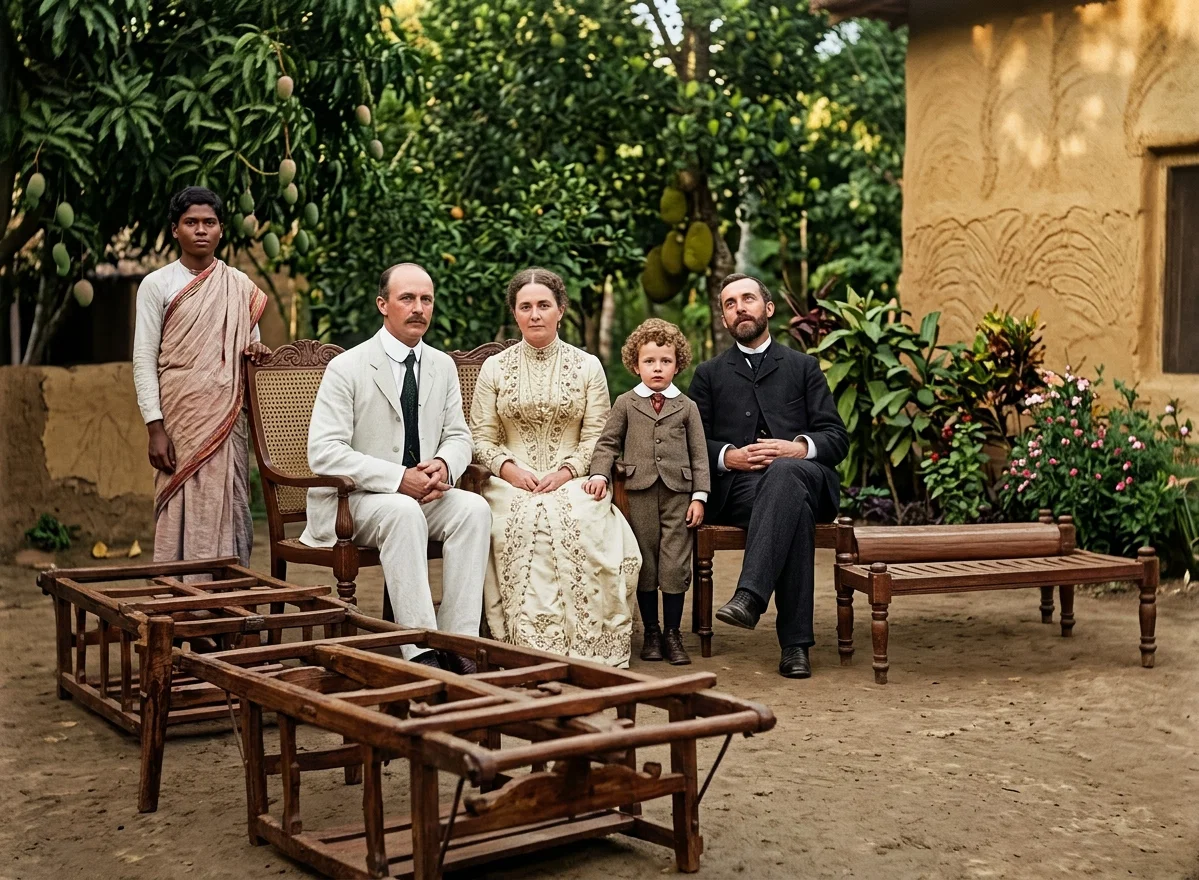
During the past week it was my privilege to visit our two mission stations—one located at Simultala, the other at Karmatar. Brother Barlow is doing a good work among the Santals at Simultala. He is living with his family in a large mud bungalow. The three large living-rooms are very comfortable, although the walls are papered and the floor carpeted with mud. Instead of scrubbing the floors as we do at home, they cleanse them with a fresh coat of mud. On either side of the bungalow is a large veranda. A short distance from the house is a long mud building, where the native students live. Near this is a mud hut in which the school is held. In a compound surrounding the buildings are fruit-trees and flowers. Altogether, it is a homelike place.
There are twenty boys in the school, ranging in age from eight to twenty years. Two languages—Hindi and Santali—are taught. The boys are very anxious to study English, but it is not possible to teach it at present. In addition to the language, they study Bible, arithmetic, reading, writing, and spelling. Two native teachers are employed to assist. A foreigner is not at all favorably impressed as he enters the native school. Upon the floor, with books in their hands, sit the students, studying out loud; and strange to say, they do not disturb one another. Most of these boys are earnest Christians, paying tithe on the few pices they earn.
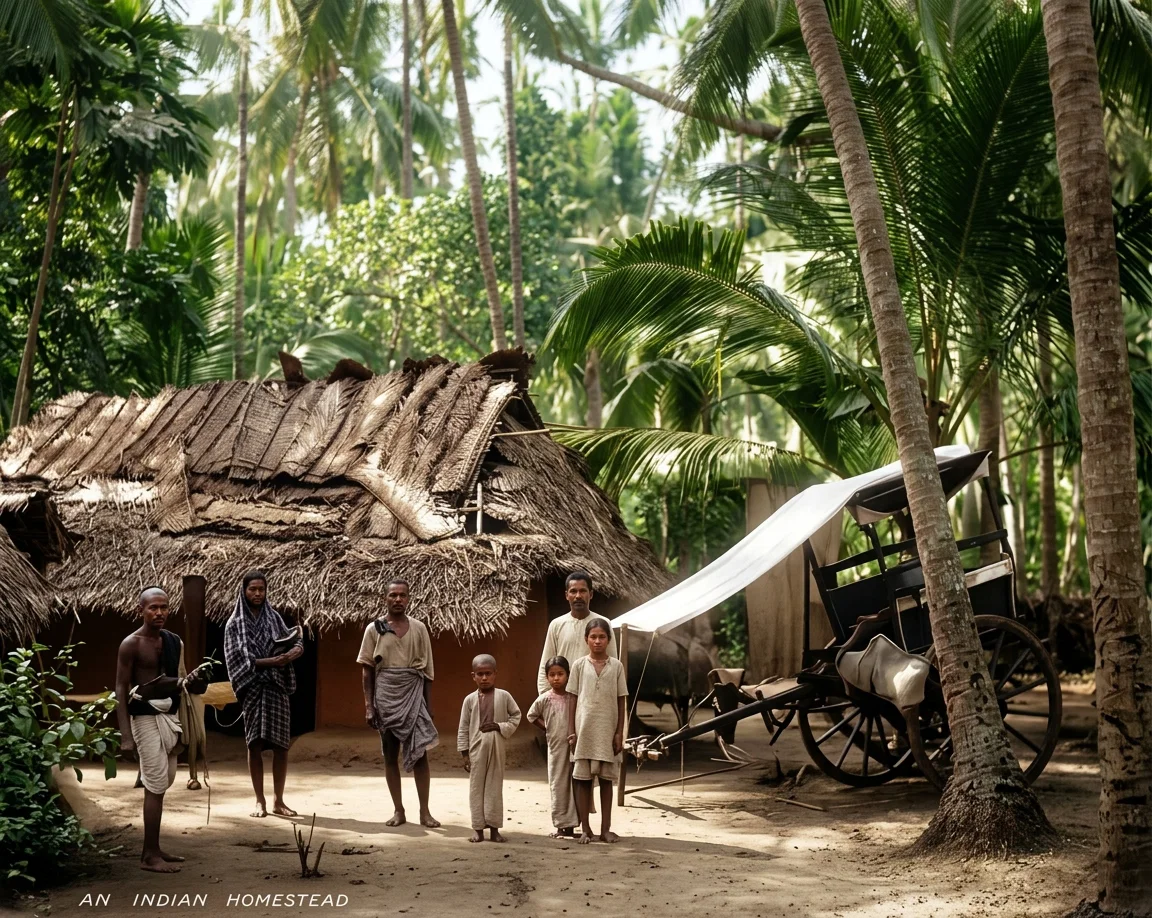
AN INDIAN HOMESTEAD
I was very anxious to visit the native village, so Brother Barlow dismissed the school for one day, to let the boys take us about the villages, and to a new mission station that is just being opened ten miles from Simultala. The cart owned by the mission was undergoing repairs, and there was no other means of conveyance through the jungles. After considering a number of ways, Brother Barlow decided that two of our party could ride horseback, and the third member could be carried on a dulay (a rude couch), on the shoulders of four of the students. We started early in the morning, in order to cover as much of the ground as possible before the terrible heat of the day.
W. A. BARLOW AND FAMILY
The small Santal villages are located here and there in the jungle. As we entered the villages, the natives crowded about us, bringing their sick to be helped. If we rode past them, they would catch hold of the horses' bridles, and hold us until we would do something for their sick. A man dying with hunger and disease was brought to us. He was a living skeleton. His wife knelt by the side of our horses, grasping our feet, and said, “See my poor husband; can't you help him?” We went to the place where they lived. It could not be called home—a wall of brush and straw on two sides, no covering over their heads. Here we found three small, hungry children. Brother Barlow thought the best medicine he could give them would be food, so he sent one of the boys for some rice. As he gave it to them, he called their attention to their Heavenly Father who supplied their need. The women gathered about Miss Haegert and me, begging for help. They will not tell their troubles to a man. Some came sick with fever, wanting us to feel their pulse. One poor woman drew aside the rag that covered her, and showed me her leg, double its natural size, covered with open sores. We did what we could for them. But how helpless we felt! How we longed for the power of Christ and the early disciples to rebuke disease. Brother Barlow gave the people a simple lesson from the Bible. He first called their attention to the heavens, the earth, the trees, fields of grain, the garments they wore, showing them that all they had came from the true God who dwells in the heavens.
By the time we reached the new mission, the sun was high in the heavens, and we were glad for a shelter from it. Brother Barlow called the villagers into the small mud hut, and gave them a lesson from a picture of the ten virgins which hung on the wall. He uses pictures often in his work, as they enable him to teach the lessons much better. These people are much like children, and must be taught as children. When we returned, Brother Barlow left one of the native teachers in charge of the school at this place.
The Santals worship devils, and very often they become possessed with them. Brother Barlow has a servant who became13ill; and in spite of all they could do, he went home. As he passed a heathen temple, his jaws locked, and his body became rigid. The people gathered about him, saying he was possessed with a devil. The chief of the village was called. He told the boy the devil would leave him if he would give two goats and a piece of red cloth used in heathen festivals. By a look, the boy acknowledged he would, and immediately the devil left him. As we go among these people, we can see something of the conditions existing when Christ was on earth.
Some months ago a native Christian erected a hut in the vicinity of Brother Barlow's home. Brother Barlow visited him, giving him readings. He has accepted present truth, and is rejoicing in the light. He is well educated, having been a teacher, is able to read English well, and is reading all our books. He says Mrs. White's writings help him spiritually. There is just one fault to be found with him—instead of telling the good news to others, he thinks he must purify self first. He takes the life of John the Baptist to substantiate his views. He sits in his rude hut the entire day, reading the Bible and our books.
It is about fifty miles from Simultala to Karmatar. Here the work is more advanced. The buildings and grounds are more on the European plan. Our printing-press was moved recently from Calcutta to Karmatar. One reason for this was to give the students work. We have about twenty native boys and girls in the home. A number come from the village for recitations each day. Brother Little has charge of the printing-office, Miss Knight of the school, and Miss Whiteis does medical missionary work in the villages. The office is receiving calls to print tracts in the different languages, but is hindered because of lack of means. Our brethren in the missions are of good courage, and are laboring earnestly to fit the young people committed to their care to give the message to their own people.