Nazareth

20%

Review and Herald Publishing Association · Washington, D. C. · Jul 27, 1905

FromReview and Herald, Vol. 82, No. 30.

Read the full edition

Nazareth

NAZARETH
NAZARETH
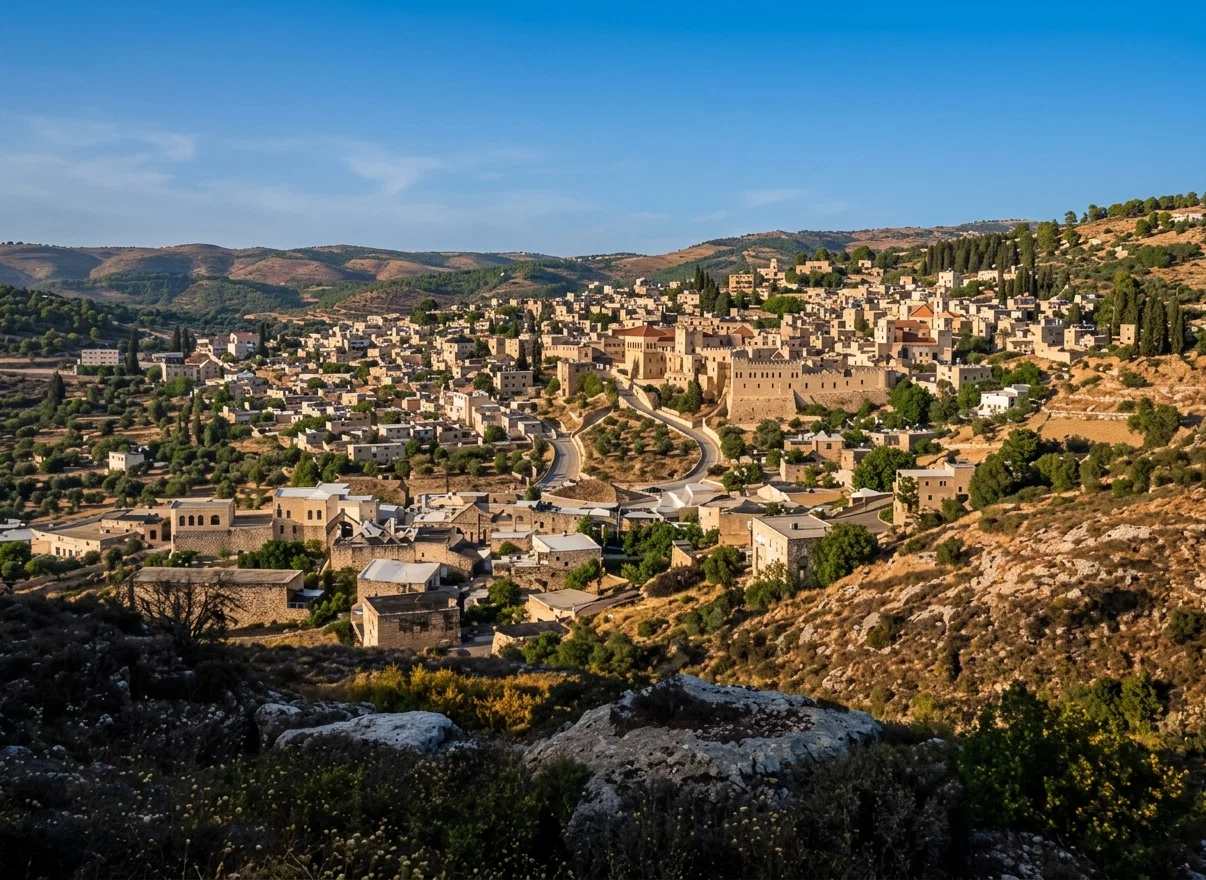
The name of this town is inseparably linked with that of the Saviour, from the fact that here he spent the greater part of his life previous to beginning his public ministry. It was “Jesus of Nazareth” who went about doing good among the inhabitants of Judea. The site of the town is described as “the side of a barren, rocky elevation, facing the east, and commanding a long valley.” “Nazareth is situated on the side, and extends nearly to the foot, of a hill, which, though not very high, is rather steep and overhanging.” This hill suggests to the mind the description given in Luke 4:29, of the attempt of the men of Nazareth, under the control of passion, to cast Jesus over a precipice that he might be killed. A steeper and higher precipice situated in a ravine at some distance from the modern town is regarded by some as the more probable location of this incident.
Nazareth was a small town belonging to Zebulon, in lower Galilee, lying to the west of Mount Tabor. There seems to have been nothing in its location or surroundings to give it prominence or elevate it above the level of an obscure mountain village. The only reputation it possessed was of an undesirable sort. “Can anything good come out of Nazareth?” was the query of those who were invited to consider the claims of Jesus of Nazareth as the Messiah. It can not be said that the childhood of the sinless Man was passed amid the most favorable surroundings.
The modern town of Nazareth contains about three thousand inhabitants, of whom five hundred are Turks, the remainder being classed as Christians. A large Latin convent is the principal building in the town, dating back to the year 1730. In this convent the traveler is shown “the house of Joseph and Mary,” and “a subterranean cavern, divided into small grottoes, where the Virgin is said to have lived.” The convent, which has very thick walls, is reported to serve occasionally “as a fortress to all the Christians in the town.”