Egypt

6%

Review and Herald Publishing Association · Washington, D. C. · Aug 24, 1905

FromReview and Herald, Vol. 82, No. 34.

Read the full edition
Egypt

M. E. KERN
The story of the unearthing of these ancient civilizations is full of romance. Not only the sphinx, but the mighty pyramids and lofty obelisks of Egypt were a mystery. The obelisks, temples, and tombs were covered with strange characters. If they represented a language it was unknown.

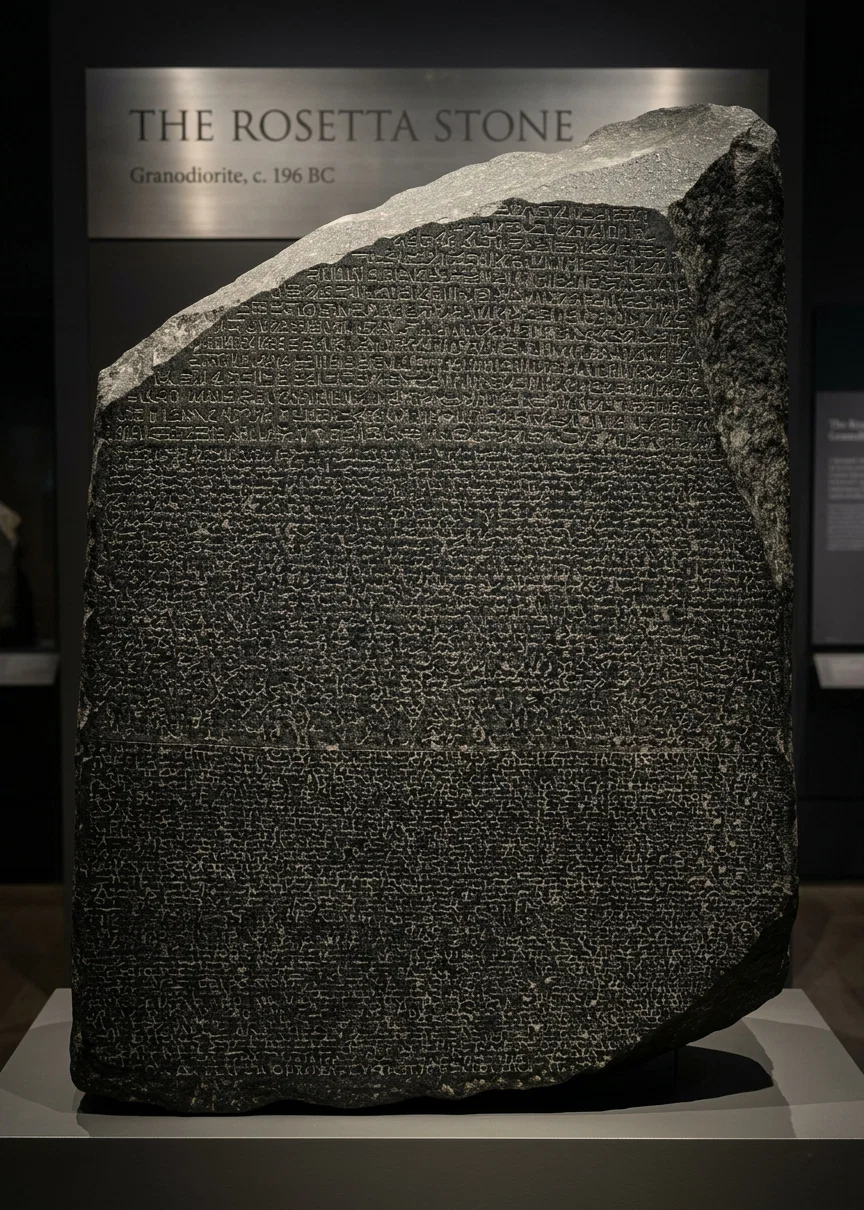
The Rosetta Stone

In the year 1799,—the next year after the beginning of the time of the end, when many should run to and fro, and knowledge be increased,—one of Napoleon’s generals in Egypt discovered at Rosetta, near Alexandria, a stone covered on one side with no less than three kinds of writing. This Rosetta stone proved to be the key to unlock the old Egyptian language. The writing at the top is the same as is everywhere seen on the temples and tombs, the middle is what is known as the Demotic text, and the bottom inscription is in Greek. The Greek, of course, could be read; from it the character of the inscription was learned, and there was strong evidence that the other inscriptions told the same story. With this as a clue, scholars set to work to decipher the long-forgotten hieroglyphics. The task was accomplished by Champollion, a French scholar, in 1818. Scholars now read the Egyptian language as readily as Greek or Latin, and wonderful indeed has been the revelation from the land of the Pharaohs.

Explorations

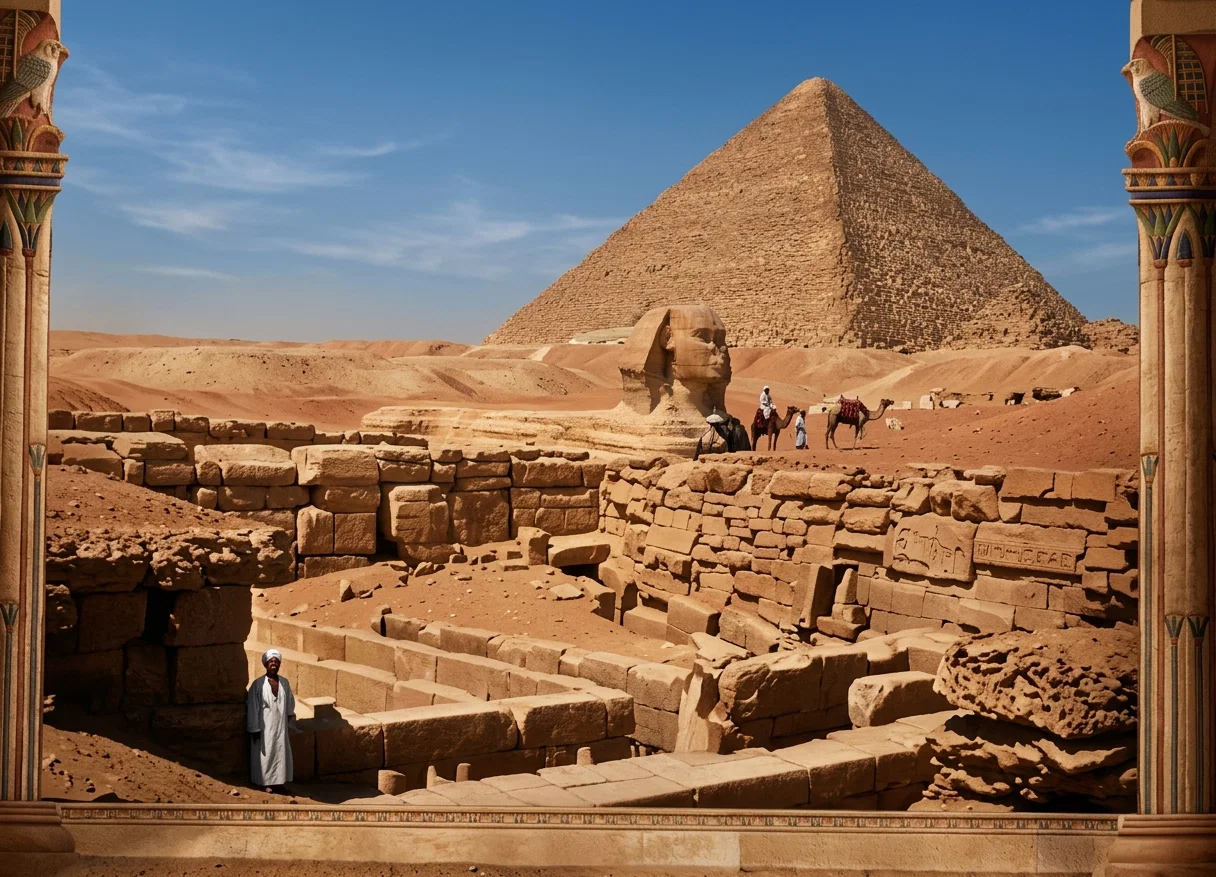
For the last fifty years Egypt has been the scene of busy activities of the excavators. Scholars from different nations have explored the long, narrow valley of the Nile, and studied its ruins. The pyramids have been entered. At the feet of the sphinx the sands of the desert have been cleared away, and a great temple unearthed. Not only have the buildings been found in Egypt, but the builders themselves. While in other countries, reliefs and statues of the kings have been found, in Egypt we have been permitted to look upon the very features of the Pharaohs. Perfectly preserved mummies by the hundred have been removed from the sacred tombs on the west side of the Nile.
THE ROSETTA STONE
THE ROSETTA STONE

Rameses II

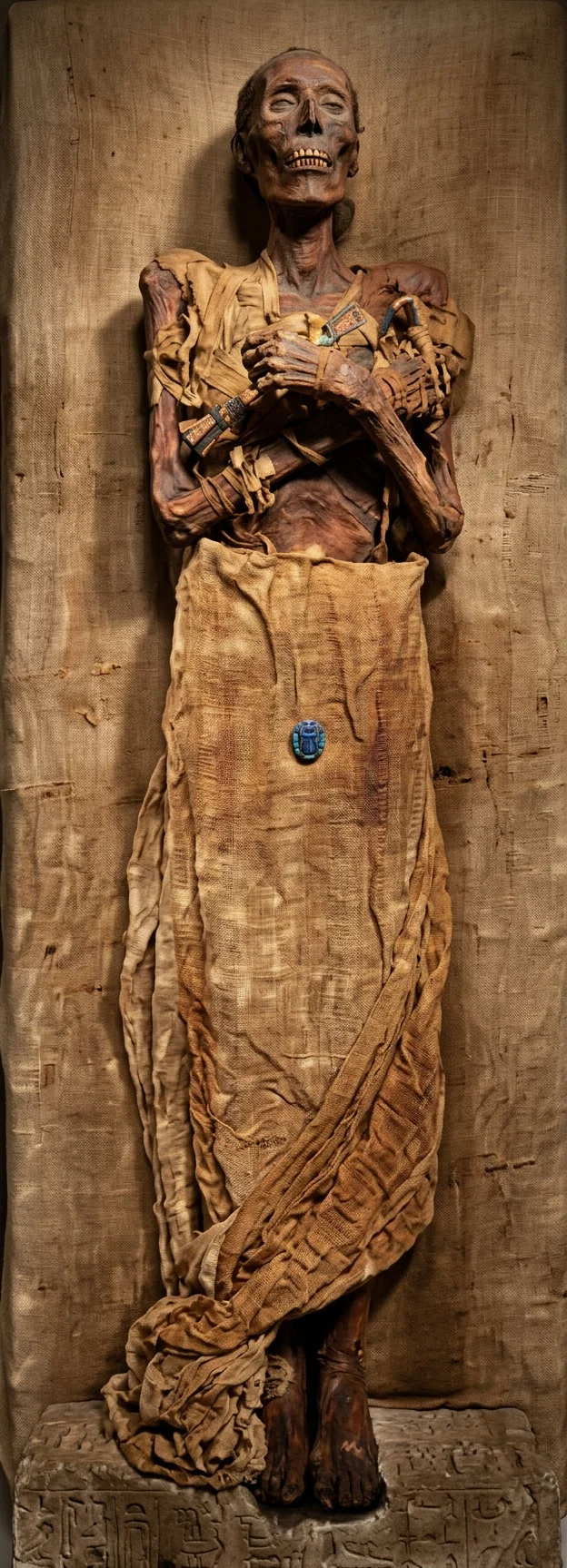
In the year 1881 there was found near Thebes in a rock cave, artificially constructed, a large number of royal mummies of the eighteenth to the twenty-first dynasties. Among them was Rameses, the Pharaoh of the Oppression, the king whose daughter adopted Moses. It seems wonderful indeed to be able to look upon the very face of him who talked with Moses. Being able to read the Egyptian, we are in many respects as familiar with his doings as with the conquest of Alexander the Great.
The eighteenth dynasty was the most glorious period of Egyptian history. The authority of Egypt extended to the Euphrates. Canaan was an Egyptian province. The kings married Asiatic wives, and the dynasty ended by an effort of Amenophis IV, the so-called “heretic” king, to supplant the Egyptian religion by an Asiatic form of faith. There was a national uprising, the Semites were driven out, and a new dynasty, or line of kings, set up, the nineteenth. Israel, who still lived on the outskirts of Egypt next to Asia, was a Semitic race, and as such was the object of greater hatred now perhaps than before. In this nineteenth dynasty we doubtless have the “king who knew not Joseph.” Two short reigns were followed by that of Rameses II, the pictureof whose mummy is here reproduced. The young king was fired with ambition for conquest. He drove his enemies before him, but in Asia he met an enemy not easily subdued, the powerful Hittites, whose very existence used to be questioned by the critics of the Bible. In a battle with them he was brought into a very close place. The poet Pentaur composed a poem commemorating his deliverance from the Hittites. The poem was inscribed on several of the temples. Rameses concluded a treaty with the Hittites, the first treaty known to history. In it is a remarkable clause known as the “extradition clause,” which provides for the return of any absconding robbers or slaves. It would almost seem that Rameses was far-sighted enough to see that Israel would some day escape. Perhaps he had learned of their hope in the promise that they should be delivered.
PYRAMID, SPHINX, AND RUINS OF TEMPLE NEAR THE SPHINX
Rameses, too, was a great builder. His name is found everywhere from one end of Egypt to the other. He built the great hall of columns at Karnak, near Thebes, and the rock-hewn temple of Abu Simbel in Nubia, a magnificent temple hewn out of the solid cliff, guarded by four colossal figures of himself.
How do we know that Rameses was the Pharaoh of the Oppression? A few years ago there was organized the Egyptian Exploration Fund to excavate in Egypt for the purpose of throwing light on the Bible, especially the exodus of Israel. Their first find was the ruins of Pithom, one of the store cities that the Bible says Israel built for Pharaoh. Ex. 1:11. And according to the inscriptions Rameses II built this city. Even the treasure chambers were found, built very strongly of sun-dried bricks. Dr. Naville tells us that some of these bricks are with and some without straw. This, then, is the man who made Israel to serve with such rigor, from whose presence Moses fled into Midian. Sayce says of the mummy:—
“It is an old face, the face of one who has attained almost his one hundredth birthday, but who still feels himself to be a ruler of men. The high forehead with its lock of pale yellow hair, the hawk-like nose and compressed lips, tell us of the kingly will that once breathed through them.”
College View, Neb.
MUMMY OF RAMESES II, THE PHARAOH OF THE OPPRESSION