JERICHO

17%

Review and Herald Publishing Association · Washington, D. C. · Aug 24, 1905

FromReview and Herald, Vol. 82, No. 34.

Read the full edition
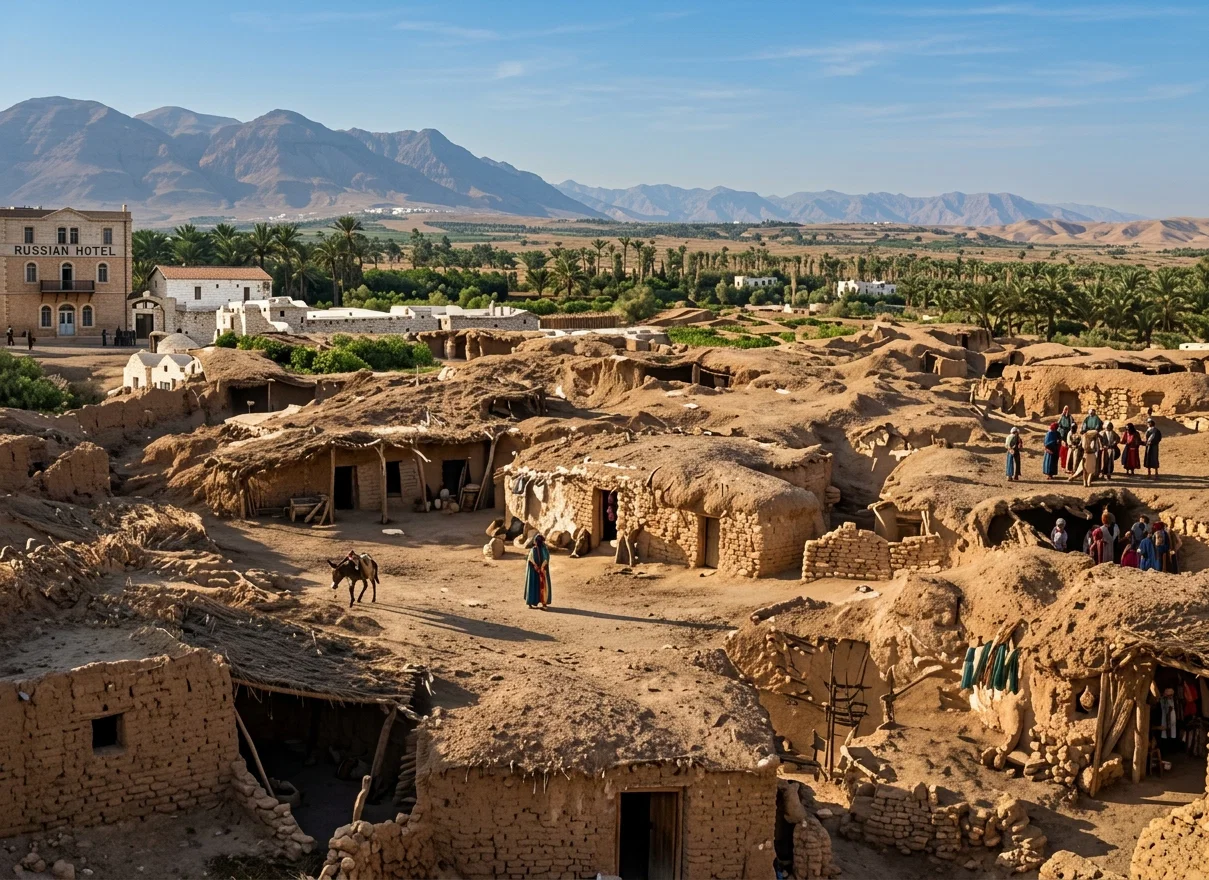
JERICHO

But little more than the site of this historic city remains to gratify the curiosity of the traveler, though for a long period of time Jericho was a leading city in Palestine, second only to Jerusalem. It was a city of Benjamin, situated about twenty miles northeast of Jerusalem, and about six miles from the Jordan. An extensive plain surrounded it, known as the plain of Jericho, the soil of which was very fertile.
Jericho was a prominent city at the time of the exodus of the Israelites from Egypt to Canaan. To this place came the spies sent out by “the harlot Rahab.” When, forty years later, the armies of Israel crossed the Jordan, Jericho was the first city taken by them, after that most remarkable of sieges terminating in the overthrowing of its walls “by faith.” God had appointed the city to utter destruction, and when this judgment had overtaken it at the hands of Joshua, God pronounced a curse upon any one who should rebuild it. Joshua 6:26. The word spoken against it was both a curse and a prophecy, which was fulfilled in the days of King Ahab, when Jericho was rebuilt by “Hiel, the Bethelite,” who “laid the foundation thereof in Abiram his first-born, and set up the gates thereof in his youngest son Segub.” At Jericho occurred the meeting of Jesus and the rich publican, Zaccheus, who became Jesus’ disciple.
Between Jericho and Jerusalem the road runs through a series of rocky defiles, which make it a gloomy and dangerous pathway. The traveler here can well appreciate the force of the Saviour’s parable of the good Samaritan, who rescued the man who “went down from Jerusalem to Jericho,” and fell among thieves. This road is considered to be the most dangerous in Palestine.
Modern Jericho is described as “a poor, nasty village of the Arabs,” and as a collection of “about fifty houses in bad condition, wherein the laborers who cultivate the gardens shelter themselves.” Modern enterprise, moved by the prospect of financial gain, has put some few touches upon the ruins for the benefit of travelers, as indicated by the building at the left of the picture, bearing the sign, “Jordan Hotel.”