Egypt (Continued)

6%

Review and Herald Publishing Association · Washington, D. C. · Aug 31, 1905

FromReview and Herald, Vol. 82, No. 35.

Read the full edition
Egypt (Continued)

M. E. KERN

Menephtah’s Hymn of Victory

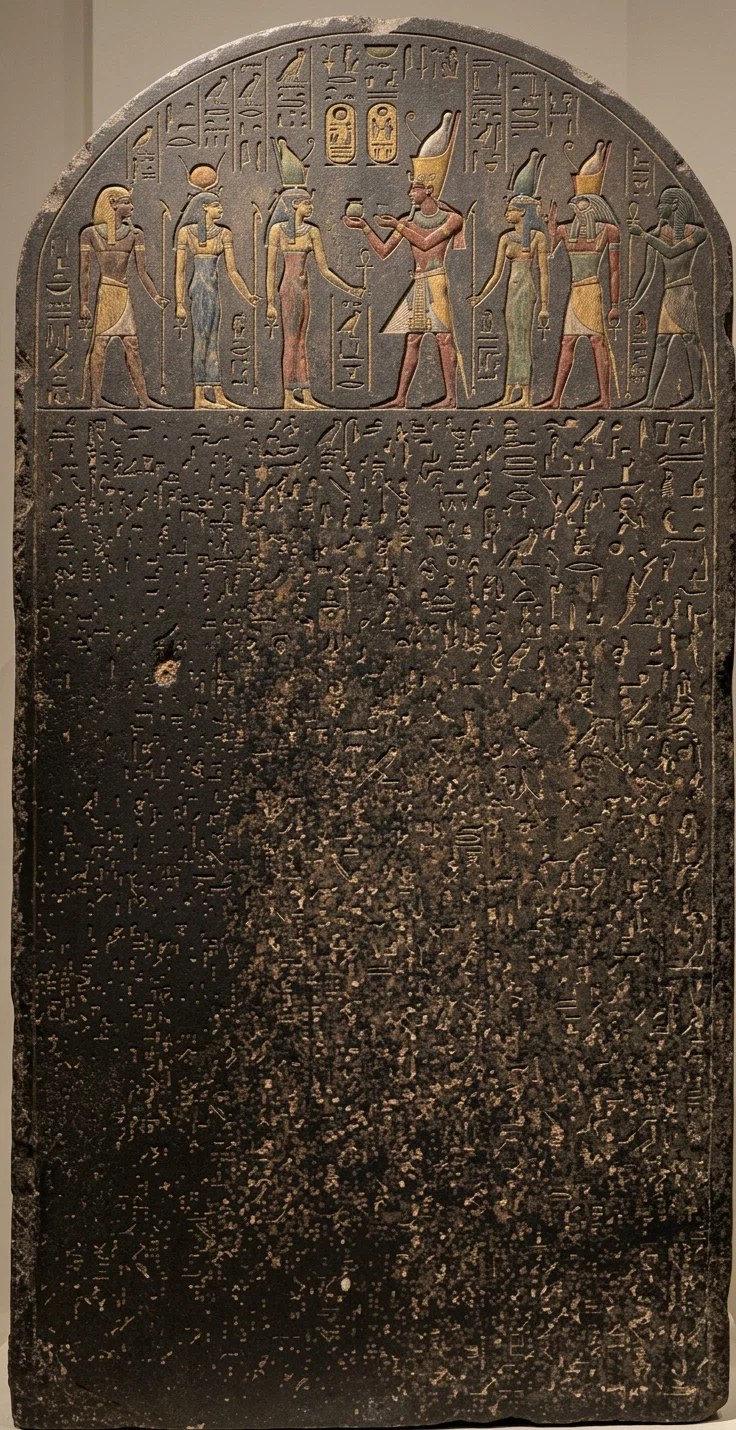
RAMESES was followed by his son Menephtah. At his accession the Libyans poured into Egypt, and the Greeks threatened the Delta. It seemed for a time that Egypt was lost, but a decisive battle nearly exterminated the invaders. To commemorate the king’s victories a hymn was composed by the court poet. This hymn was discovered by Professor Petrie in 1896.
We would hardly expect to find the name of Israel in the Egyptian inscriptions. Nor would they be apt to record the escape of a whole race of slaves in such a miraculous manner as Israel escaped. But what was not expected has really happened. Israel’s name is mentioned in Meneph­tah’s hymn of victory. It is in the middle of the second line from the bottom. The inscription reads,—
“Wasted is the land of the Libyans; the land of the Hittites is tranquilized; captive is the land of Canaan and utterly miserable; carried away is the land of Askelon; overpowered is the land of Gezer; the land of Innuam is brought to naught. The Israelites are spoiled so that they have no seed.”
This hymn is supposed to have been written after the exodus, during the period of wandering. Every nation spoken of is localized but Israel. The author seems to know no land to which to assign them. An effort had been made, you will remember, to destroy all the male children of the Hebrews. The author of this hymn seems to boast that this has been accomplished. “The Israelites are spoiled so that they have no seed.”
MENEPHTAH'S HYMN OF VICTORY, IN WHICH THE NAME "ISRAEL" OCCURS

The Tel el-Amarna Letters

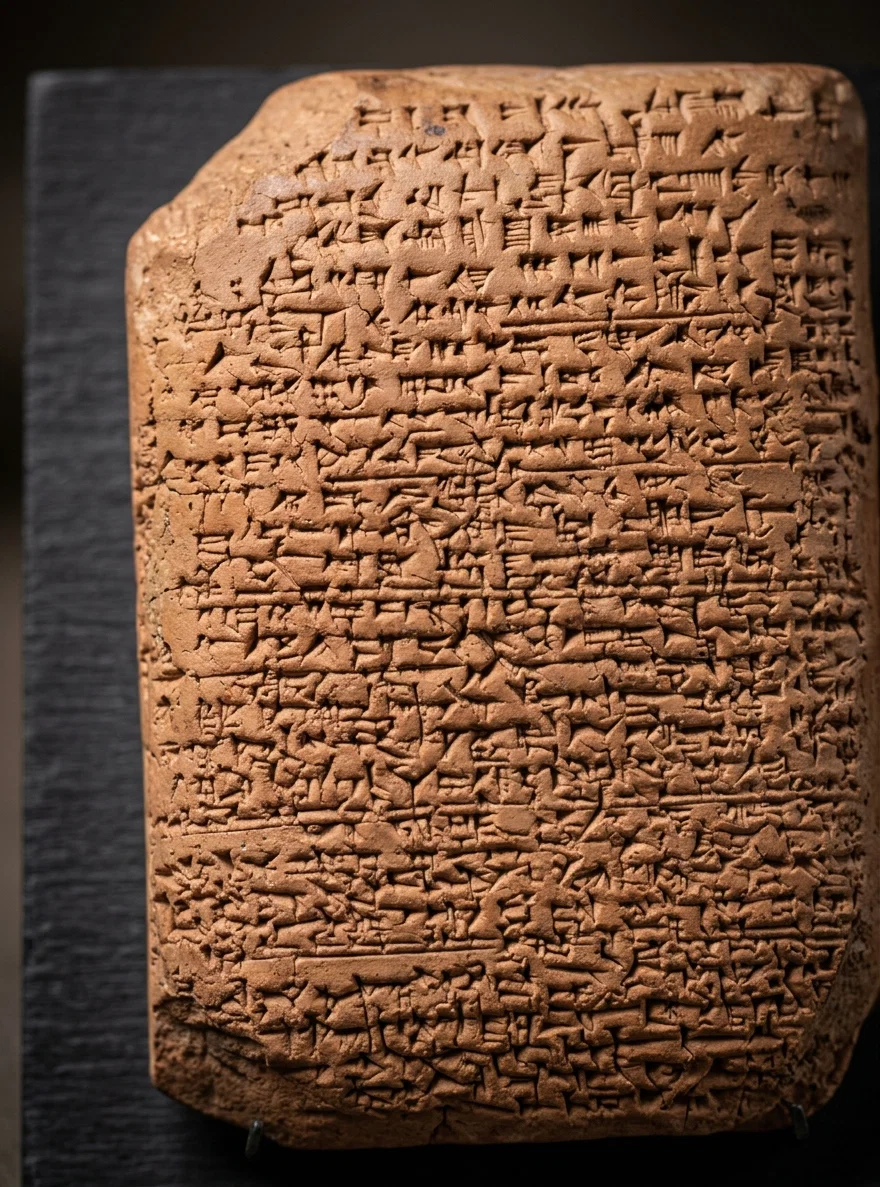
One of the most remarkable finds ever made in the East was the discovery in 1887, by a peasant woman at Tel el-Amarna, near Thebes, of over three hundred cuneiform tablets, or letters, written in the wedge-shaped characters of the Babylonian language. These are letters of correspondence between the Asiatic and Egyptian kings of the fifteenth century before Christ. Letters are here from Babylon and Assyria, from the states of western Asia, such as Ashkelon and Phenicia. These letters show that the Babylonian language was the language of diplomacy, just as the French is to-day. They bring to view a method of international correspondence which revolutionizes all our former ideas of this early period. There have been those who tried to prove that Moses could not have written the Pentateuch because the people of that time were illiterate and barbarous. But here is a whole volume of public and private correspondence written before a line of the Bible was composed. There are, among these tablets, letters from Abdi-Hiba, of Urasalim (or Jerusalem), and others which speak of a people called the Habiri, who are making inroads into the country, and imploring aid against them, saying, “If troops are not sent, the king’s land will be lost to the Habiri.” Some good authorities think these Habiri to be the Hebrews, and that the letters were written during the conquest of Joshua.
A TEL EL-AMARNA LETTER. FROM EBIMELECH OF TYRE TO THE KING OF EGYPT.

Sayings of Our Lord

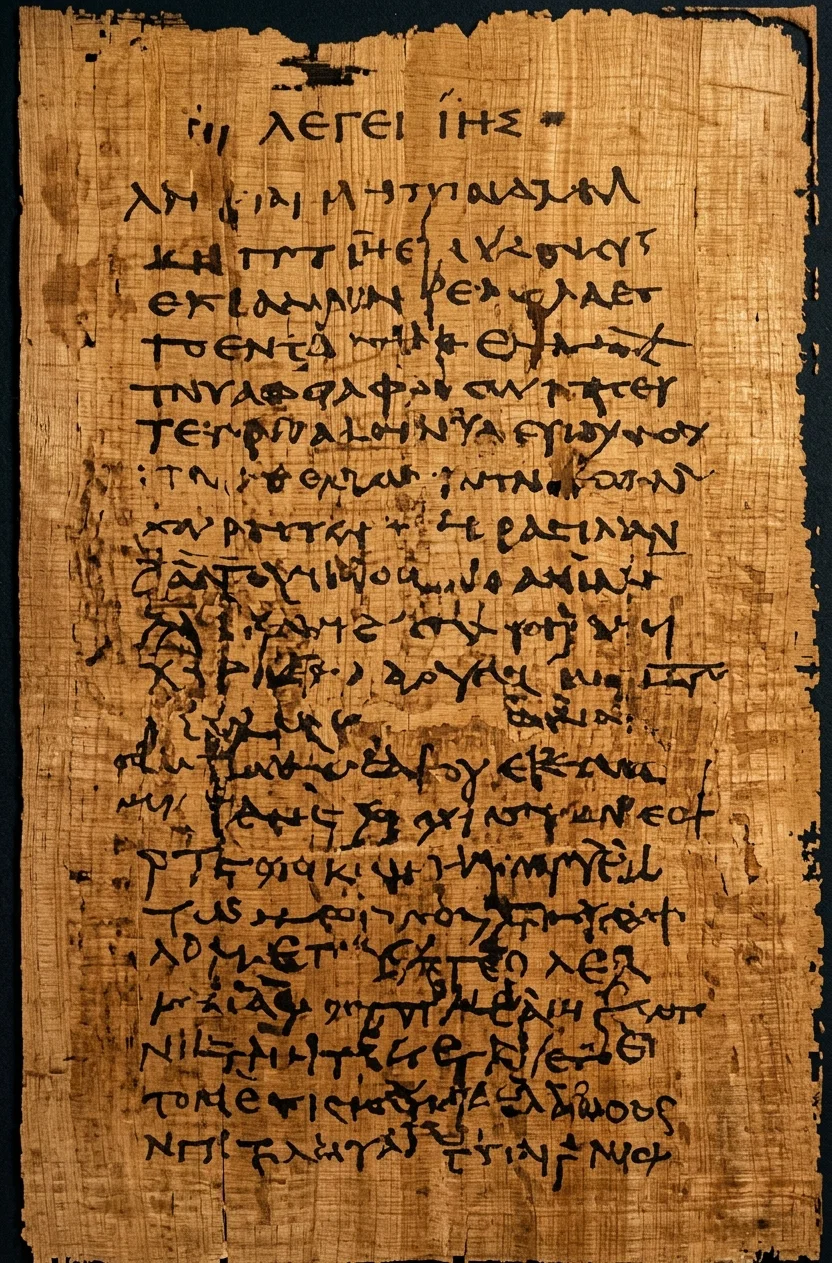
Not only have the excavations in Egypt thrown light on the old empire of Egypt, but they have brought to light many things that have increased our knowledge of the history of the early church, as well as Greco-Roman history. Alexandria was one of the centers of the early church, and there has been considerable Christian literature found in the old libraries attached to the monasteries, in the tombs, and even in rubbish heaps. There has lately been discovered a papyrus containing the Sayings of Our Lord, a picture of one sheet of which is given here. In England when Wycliffe made his translation of the Bible, extracts were published containing sayings of Christ, and many made great sacrifices to purchase them. So it was, probably, in Egypt. The writing, as you see, is in Greek. Two of these sayings are as follows:—
SAYINGS OF OUR LORD.  OBVERSE
‘SIDE
SAYINGS OF OUR LORD. OBVERSE ‘SIDE
“Jesus saith, I stood in the midst of the world, and in the flesh was I seen of them, and I found all men drunken, and none found I athirst among them, and my soul grieved over the sons of men, because they are blind in their hearts.”
“Jesus saith, Except ye fast to the world, ye shall in no wise find the kingdom of God; and except ye keep the Sabbath, ye shall not see the Father.”
College View, Neb.