Babylon and Assyria

5%

Review and Herald Publishing Association · Washington, D. C. · Sep 7, 1905

FromReview and Herald, Vol. 82, No. 36.

Read the full edition
Babylon and Assyria

M. E. KERN
The story of the deciphering of the ancient language of Babylon and Assyria is also full of interest. The valleys of the Tigris and Euphrates Rivers are literally covered with mounds or hills which are the decayed ruins of ancient cities. Travelers often picked up about the gullies of these mounds bricks and pieces of clay tablets inscribed with strange, wedge-shaped characters. Whether these characters were a language was not known. Finally men beganto dig into these mounds, when it was possible to get permission from the Turkish government, and to be free from attacks of robbers while at work. In 1842 Botta, a Frenchman, succeeded in unearthing what afterward proved to be the grand palace of Sargon, king of Assyria, a king mentioned once in the Bible, and whose existence had been doubted by the critics. Sargon was the king who carried Israel captive. The walls of this wonderful palace were wainscoted with sculptured slabs, which contained in relief pictures of battle and hunting scenes and triumphal processions. The palace covered twenty-five acres; and as Botta passed from room to room, his interest was raised to the highest point, for he realized that he was face to face with a new-old civilization. And how he longed to read the characters that evidently told about the pictures. New interest was aroused everywhere.

The Behistun Rock

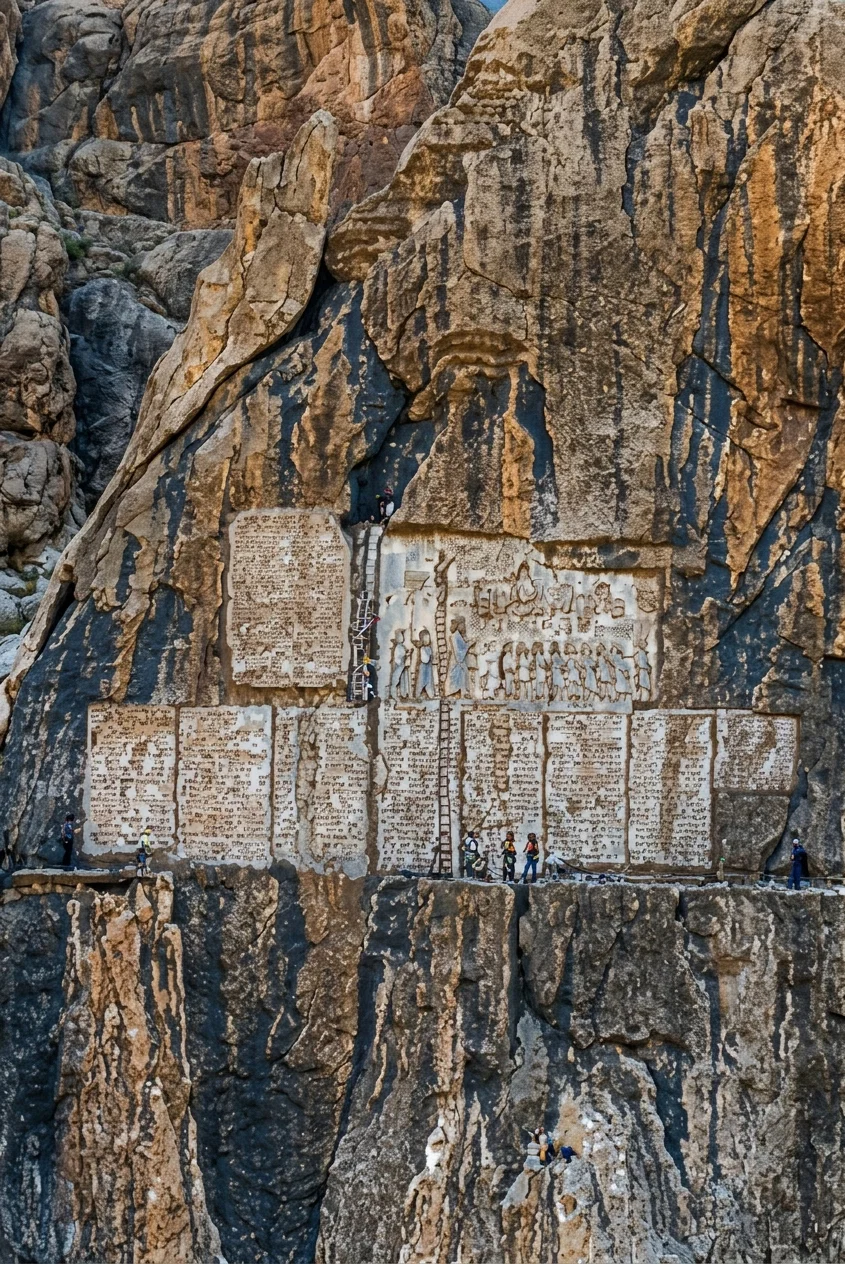
THE BEHISTUN ROCK
THE BEHISTUN ROCK
In the meantime a young English army officer had discovered the key to this language, and was diligently trying to use it. In 1835 H. C. Rawlinson (brother of Geo. Rawlinson, the author of “Seven Great Monarchies” and other books) discovered in the Zagros Mountains on a limestone cliff seventeen hundred feet high, an inscription which gave a clew to the Babylonian language. Three hundred and fifty feet above the plain, on the perpendicular side of this Behistun rock, was a polished surface on which was a large figure of a king in relief, leading a line of captives, and beside the picture several columns of inscriptions. The story is a long one; but Rawlinson, finding that he had three languages side by side, set about it to learn Sanskrit, Zend, and the Pehlevi languages, which, with the knowledge of modern Persian, which he already knew, equipped him well for his work. The three languages were Old Persian, Median, and Babylonian. In 1857 it was proved to the world that the Babylonian language could be read, “a discovery,” says a late writer, “as great in the field of history and philology as the telegraph in the commercial world.”

The Cuneiform Writing

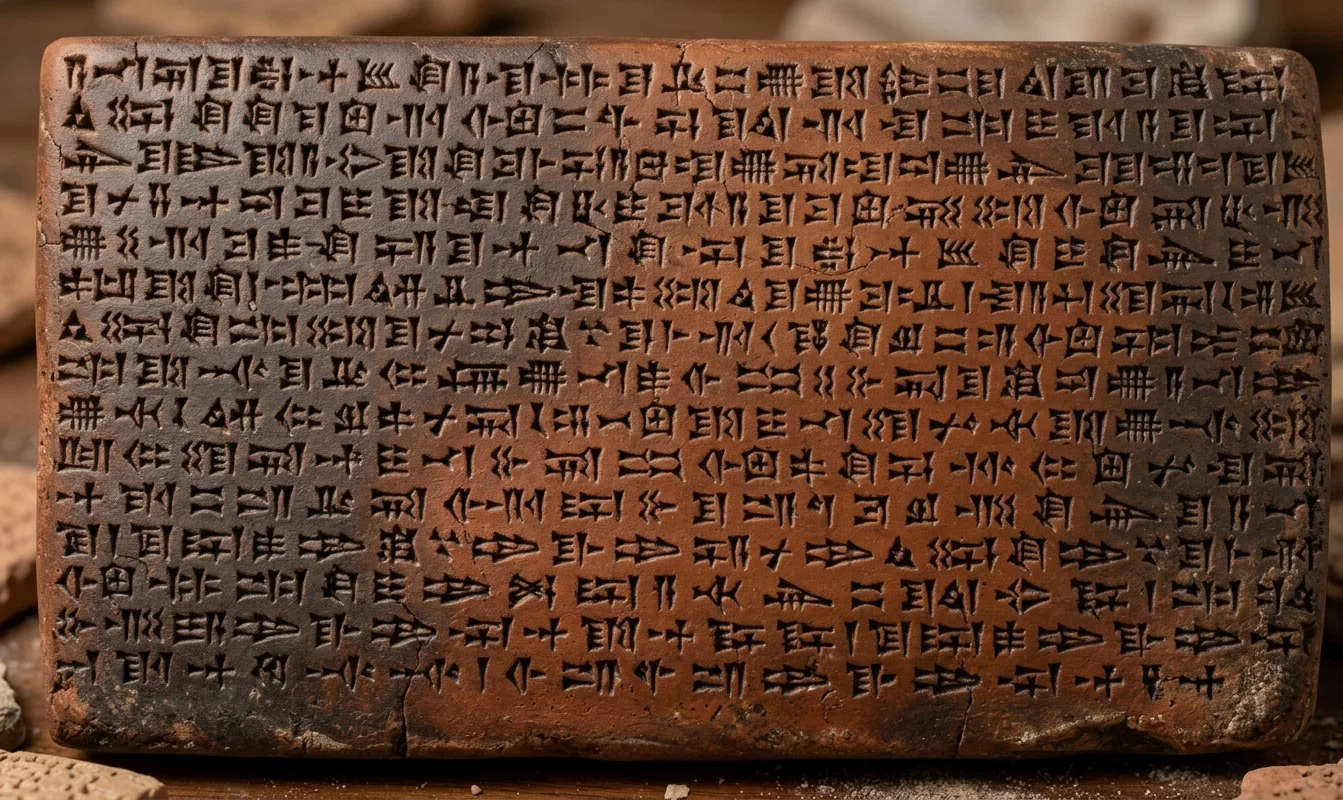
A CONDENSED ACCOUNT OF THE CAPTURE OF BABYLON (539 B.C.)
The accompanying illustration shows a sample of this beautiful writing. This is taken from the cylinder of Cyrus, and tells how he captured Babylon. We have now another cuneiform account also of the capture of Babylon, that of Nabonidus, father of Belshazzar.
The knowledge of how to read the Babylonian writing of course gave a wonderful impetus to Oriental archeology. Many have gone to this country to excavate, some with the express purpose of finding inscriptions that illustrate Bible times. The very sites of Nineveh and Babylon, those renowned cities of the ancient world, had been lost sight of. For centuries they had rested under the curse of God, but now they were made to reveal their secrets, and we are able to read their history and follow the courses of their ambitious rulers, and to read their own accounts of their contact with the chosen people of God.

The Black Obelisk

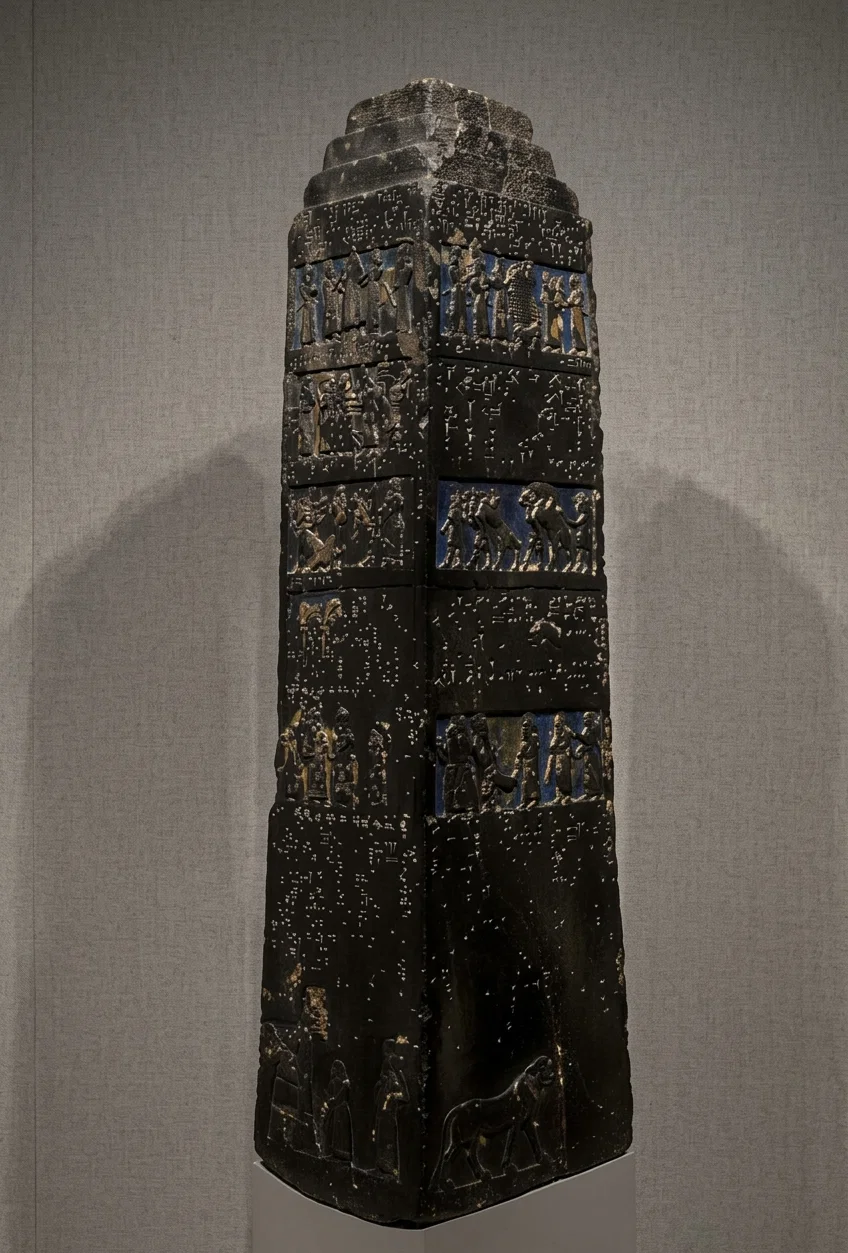
THE BLACK OBELISK, CONTAINING THE NAME OF JEHU KING OF ISRAEL
In 1845 A. H. Layard, a young English scholar, succeeded in uncovering several great palaces, among them that of Sennacherib, who ruled Assyria from 705 to 681 B. C. He found in one palace the famous black obelisk of Shalmaneser II, which contains the name of “Jehu king of Israel.” The obelisk represents, both in words and in pictures, the several nations that paid tribute to Shalmaneser. Over one line of tribute bearers (the second from the top) is written, “The tribute of Jehu, the son of Omri, silver, gold, basins of gold, lead, a royal scepter, staves, I received.”

Sennacherib’s Inscription

Another very remarkable inscription is that of Sennacherib, who in 701 B. C. made an expedition against Judah. On a six-headed cylinder fourteen inches high he wrote the records of his reign. He records eight campaigns, the third of which is against the cities of Palestine.
After a full account of the conquest of the Hittites, Phenicians, and Philistines, he gives the measures he took to subdue the fenced cities of Judah. He says:—
“And Hezekiah of Judah, who had not submitted to my yoke—forty-six of his strong walled cities together with innumerable small places in the vicinity, with the assaults of battering-rams and the blows of siege engines—I besieged, and I conquered 200,150 persons, small and great, male and female, horses, mules, camels, oxen, and sheep without number from their midst I brought and reckoned as booty. Himself (Hezekiah) like a bird I shut up in a cage, in Jerusalem his royal city I penned up—I diminished his territory. As for Hezekiah himself, the terror of the glory of my sovereignty overwhelmed him. Thirty talents of gold and eight hundred talents of silver I caused to be brought after me to Nineveh my royal city.”
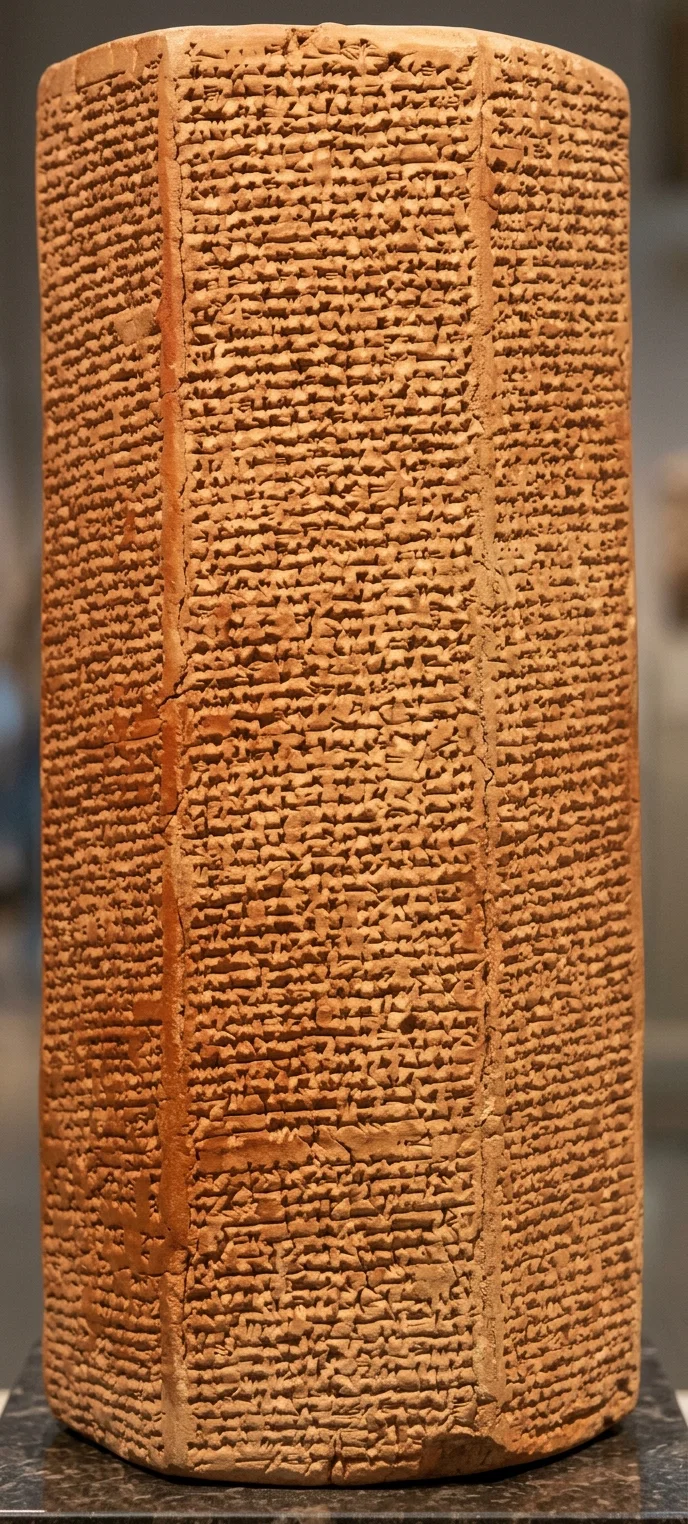
It seems strange to have such a remarkable supplementary account of this memorable invasion. The story is very much like the Bible account, and in many details is the same.
Naturally Sennacherib does not tell of the great calamity that befell his army, when, according to the Bible, “the angel of the Lord went out, and smote in the camp of the Assyrians an hundred fourscore and five thousand.” We would not expect it; for the Assyrian kings did not record defeats. But this is noticeable, that he only shut up Hezekiah and exacted tribute, and though he lived twenty years after this campaign, and carried on extensive warfare in other places, he never again returned to Palestine, no doubt because of the dread of again coming in contact with Jehovah the God of Israel.
College View, Neb.
INSCRIPTION OF SENNACHERIB, KING OF ASSYRIA, RECORDING HIS EXPEDITION INTO PALESTINE