Three Years in India

8%

Review and Herald Publishing Association · Washington, D. C. · Sep 7, 1905

FromReview and Herald, Vol. 82, No. 36.

Read the full edition

Three Years in India

L. F. HANSEN
By this time one has become quite accustomed to beholding the dark faces and often scantily clothed bodies of the East Indians. The peculiar habit of bathing much in public, which is practised by men, women, and children, no longer excites surprise. Indeed, we are familiar with their simple habits, the preparation of their food, eaten unencumbered with fork and spoon, but with fingers only, the conclusion of the humble repast by rinsing the plate and cup at the nearest hydrant; their philosophic contentment with their comfortless homes; their habitual serious looks, for even in their songs there is a vein of sadness. The sharp dealer at the market seems less given to defrauding. Withal, we feel that at times when their services are fruitless, it is more from lack of judgment than designed disobedience. This of course has reference only to the poorer classes. The wealthier Indians are imitating the Europeans in habits of living and dress. Western civilization is rapidly revolutionizing the East.
The longer we are here, the more we realize that there are mighty influences operating to disestablish time-honored customs. With the introduction of railroads, electricity, and the many lines where modern science is applied, comes an influence that has a decided revolutionary effect. In these old countries, ancestral worship enters into every detail of daily life, and influences thoughts of religion, and domestic and social life. And to hope for a change in either line, the entire life must be influenced. And so there are reserved for this generation far-reaching changes contemplated in heaven's program for the last days. To the student of prophecy there are many side-lights, which in their nature impress also to some extent every rational being. The long series of improvements in modern methods of transportation, in communication, in practical education, in the enforcement of hygienic measures by municipalities, important discoveries in sciences that govern health and disease—all these are advance lessons in preparing the way for the coming of the Lord.
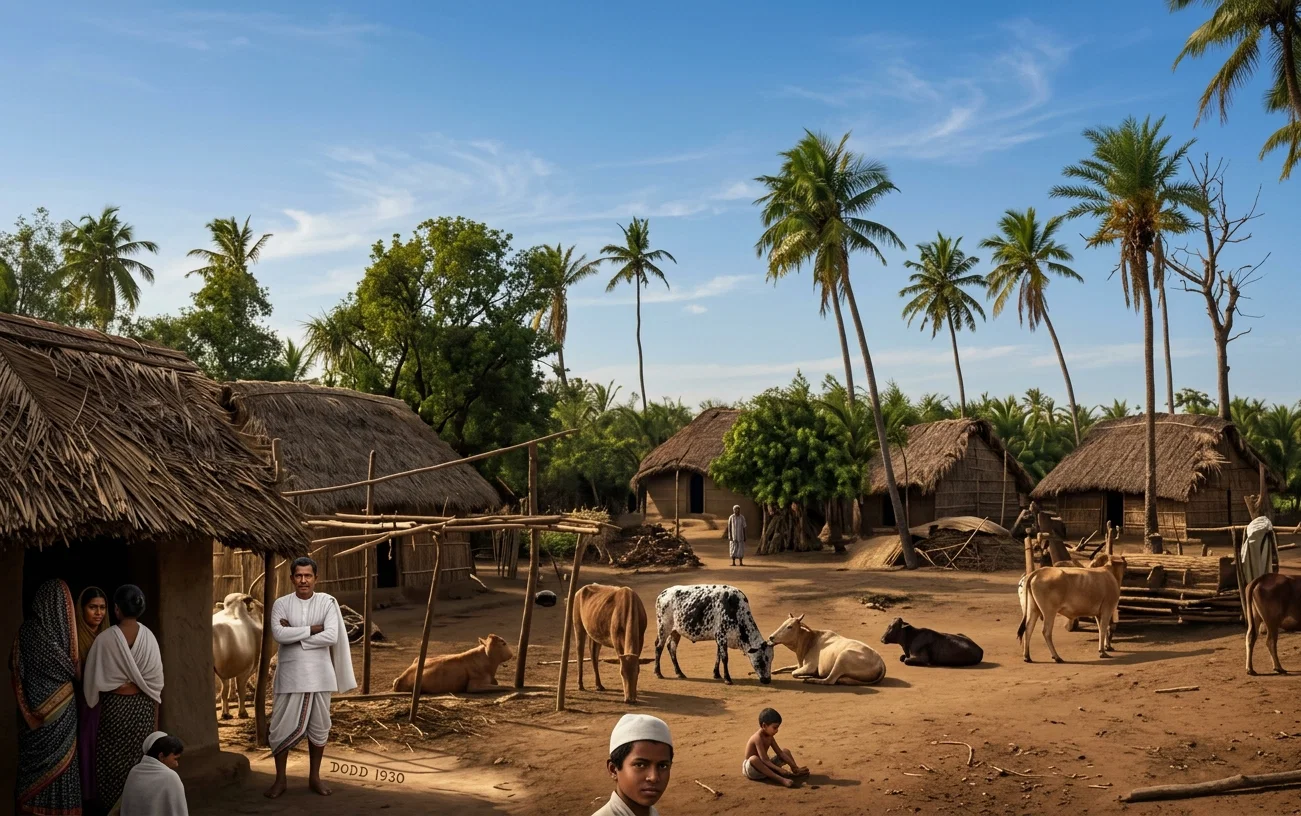
AN INDIAN VILLAGE
AN INDIAN VILLAGE

This Is an Age of Missions

is the conclusion that impresses the observer in the West; and in the very heart of heathen darkness, the progress of missions in the past century is so marked that the impression in the East is that this is truly an age of missions. William Carey arrived in India one hundred and nine years ago. By acting as cobbler, plantation manager, printer, government translator, and missionary all combined, he lived to see many converts to Christianity. This was under the aid of the Baptists. But in time other societies were represented, till to-day almost every church in Europe and America has missionaries in India. Here are Baptist, Methodist, Congregationalist, Church of England, Scandinavian Alliance, Lutheran, Quaker, First-day Adventist, Seventh-day Adventist, United Brethren, Salvation Army, etc. I have not mentioned the Catholics, though numerically they can doubtless vie with the strongest of the Protestant denominations.
Missions are established in many quarters and cities of India, Ceylon, and Burma.
Many of the societies have learned by experience that industrial schools are important factors in mission work. There are also medical missionary departments connected with most of the missions.
Inasmuch as these have the gospel, they have an influence, and are doubtless, through their many sincere missionaries, doing a preliminary work in translating the Scriptures and teaching them to the natives. And as was the case in the early church, says Jesus: “I sent you to reap that whereon ye bestowed no labor: other men labored, and ye are entered into their labors;” so to-day there are throughout the length and breadth of this great empire, devoted men and women, working, perhaps often in obscurity, conducting a school far away from kindred and fellow workers, and after a time succumbing to overwork, impoverished diet, or fever, or all combined, which is most frequently the case.
Dear reader, these are all our friends, and they are working day by day, year by year, preparing India for the last message. And, thanks be to God, the message is going.
Iusien, Burma.